 “Scarlock. The little fishing town where the story is set is so, so real to me. It’s made up of a thousand snippets of other towns and villages I’ve been to, from Cornwall to Scotland, but I’ve been wandering round it in my mind for ten years now and it’s virtually a character in its own right.”
J.A. Clement 1 January 2012
The Back Flap
On Dark Shores: The Lady
Trapped in fear and poverty after the death of her parents, the thief Nereia will go to desperate lengths to protect her beautiful younger sister from the brutality of Copeland the moneylender. No-one has dared to attempt escape before; the whole of Scarlock trembles in his grasp. Only Nereia’s cunning and some unlooked-for help give her hope….
In a country still recovering from war, events are stirring, and the little harbour-town will not remain obscure for long; but in Scarlock, right now, Mr Copeland is coming to call – and this time he’s not taking no for an answer.
Book 2 of the fantasy series On Dark Shores, The Other Nereia is due out early 2012 and the paperback comprising both over spring/summer 2012. Further books will follow.
About the Book
What is the book about?
On Dark Shores is going to be a fairly long-running series of which The Lady is the first instalment. It starts with a very brief introduction to The Mother, matriarchal leader of the nomadic Shantar, who is getting ready to leave her mountains in search of the Lady of the title. Meanwhile back in the little town of Scarlock the citizens are struggling through a day much like any other. It is a poor harbour town and much of it is under the grip of the ruthless moneylender Copeland, who has plans; in particular pertaining to the thief Nereia. She is not inclined to play along but dare not risk the safety of her beautiful younger sister…
There’s a lot going on in that world at that time, and Scarlock, obscure as it is, is about to be catapulted into the middle of world events in a big way. At the moment that’s irrelevant to Nereia. It won’t be soon, but it is in this book.
When did you start writing the book?
Back in 2002. At first I thought it might make a good poem, but it wouldn’t go into poem form properly, so I wrote another half page thinking perhaps it was going to be a short story. But it just wouldn’t come to a proper finish; every time I put it down, I had to wander back again and rework it and add a bit more. Some ten years and two hundred thousand words later, it’s not halfway through yet, and I am starting to think it won’t necessarily make a good short story after all…
How long did it take you to write it?
The first book was written in dribs and drabs over five or six years, going through a million edits along the way. It was just trickling along until in 2008 I discovered NaNoWriMo and have written much more since then, usually in November-sized chunks.
Where did you get the idea from?
I woke up one day in tears, back in 2002, with absolutely no idea what I’d been dreaming about. For two days afterwards I was weighed down with an overwhelming feeling of sadness, stabbingly poignant. I couldn’t shake it and was moping around like a wet rag for no reason that I knew of; the only way to get rid of it was to “download” it onto paper, which usually works. I had no idea what I was actually sad about so started with an image; the sea, bleak and hissing under the lash of a cold wind. There had to be someone there to actually feel the emotion, so the character appeared which would become Nereia; and then I had to work out why she was feeling that way. Then after “Why?” came “What happens next?” so I had to keep writing….
Were there any parts of the book where you struggled?
Yes. There is one point where someone is subjected to a violent beating, and it was very difficult to write. It’s a pivotal point in the story and it has to be quite serious but I absolutely didn’t want it to be over-graphic, partly because as a reader I find it uncomfortably voyeuristic, but also because horrific can so easily fall over the line and end up being grotesque or worse, sick-but-funny.
What the scene had to achieve was to give the sense of violence and hopelessness, and menace from an unexpected quarter rather than an expected one; so it occurred to me suddenly that the gory details were better left implied, and would be more powerful for it. It’s a bit like horror films; all the way through there are movements in the dark, and details and half-seen glimpses and it’s really scary….. right up until the point where the monster appears and it’s some bloke in a dodgy latex suit.
The scary bit is not the monster that’s there, but the one that exists in your mind, tailored to your own personal fears.
So in this case, there is one set-up punch, thrown in a casual way that sets the tone for the rest of it; and then the rest is done by describing the aftermath and other people’s reactions to it. It’s difficult to say, of course, but I think that is the best I could have done with that scene.
Violence in books is a difficult one to judge as it’s very subjective. I’m not sure that the logic stands up to scrutiny, but for me the power dynamic is what makes the difference between exciting and distasteful. Fights are fair game because they seem a bit more equal; but a serious beating… no.
What came easily?
Scarlock. The little fishing town where the story is set is so, so real to me. It’s made up of a thousand snippets of other towns and villages I’ve been to, from Cornwall to Scotland, but I’ve been wandering round it in my mind for ten years now and it’s virtually a character in its own right.
Would I like to live there? Hmmm…. Not sure about that. Certainly not in Book 1, and later on – well, that depends how it all pans out. I know too much about what has gone on and will go on there before the story comes to an end; but how it all comes about – that’s a different matter.
Are your characters entirely fictitious or have you borrowed from real world people you know?
None of my characters is based on anyone real – it would be tremendously restrictive to write, and someone would end up offended somehow. It just seems like asking for trouble, when you could just make ‘em up instead! Besides, my lot are all too much themselves to be anyone else. They’re an awkward bunch.
We all know how important it is for writers to read. Are there any particular authors that have influenced how you write and, if so, how have they influenced you?
Gosh, that’s a hard one to answer. Charlotte Bronte, for the sheer passion and wonderful humanity of Jane Eyre, when a lot of fictional women at the time were a bit 2D. Mary Stewart, for making Merlin’s magic raw and real and… almost understandable, rather than magic wands and spells and blue light. Robin Hobb, whose characters grabbed me and wouldn’t let go… Andre Norton whose aliens were not just humans in funny costumes, but felt really “other” and whose magic was mysterious and rich. There are so many more, but all of these women made me realise in different ways that writing could be richer, more real and so much more vivid than the humdrum everyday. I’d love to do something similar for my readers, but that’s an aspiration rather than an expectation.
Oh, and Conan Doyle. I was obsessed with Sherlock Holmes as a child and made a conscious decision to notice things about people – I’ll never solve a murder with it, obviously, but I’m fairly sure people-watching has helped make more realistic characters!
Do you have a target reader?
The book wasn’t written for a specific audience as I never expected to get it published; but now that it is published, I’m still working out who my audience seem to be. It had never occurred to me that a lot of fantasy fans are women but apparently this is true. Pleasingly I’ve had quite a lot of interest from historical fiction fans who don’t normally do fantasy but seem to be enjoying mine, which I take as a high compliment.
About Writing
Do you have a writing process? If so can you please describe it?
I sit and write whenever I can find somewhere quiet enough, and if I’m at a computer, usually start the session by reading what I wrote last time, and doing a quick edit on it. At the moment I’m really short of time but I do have a 2hour commute, so am doing new writing on the train home on my Blackberry (my thumbs have never been so toned!) and then if there’s any free time after dinner, I sit in the kitchen and input Bk2 edits on my laptop.
Do you outline? If so, do you do so extensively or just chapter headings and a couple of sentences?
I don’t tend to outline but every so often I do something like a spider chart showing what happens to each of the main characters, how it impacts on other characters, and how the timeline fits together. It gets awfully complex awfully fast, so then I write it out in timeline order. I do have the timeline (in Excel, and huge!) and a character list, though.
Do you edit as you go or wait until you’ve finished?
Editing is a constant process to me. Each re-read is done with pen in hand; and each session starts with an initial edit on yesterday’s stuff. Then I print, read and re-edit the whole chapter. Then (if not before) when I get to the end of a chunk of this storyline, I re-read and edit. At the end of the book I re-read and edit and when I’ve done that it goes off to the editors.
Did you hire a professional editor?
Specify ‘professional’! One of my editors earns half a living editing and proofing. The other one is a playwright with a flair for story arc. Both are extremely good at working with my prose, I think, and have no complaints thus far!
Do you listen to music while you write? If yes, what gets the fingers tapping?
Not while I write; but if I get stuck I go put the radio on a classical music station and lie down to listen to it with my eyes shut. Classical music is very descriptive and emotive and if you have a load of plot-strands floating round in your mind, you need something to bring them all together. Lying there concentrating on what emotion the music is trying to convey and what it describes – a storm, horses trotting, sleighbells, whatever – I often find that suddenly it becomes relevant. It’s like looking at a piece of jigsaw puzzle when the shapes painted on it suddenly resolve into an eye and part of a nose and you know exactly where it fits. And if one piece of music doesn’t help, the next comes on and you have another emotion to play with. Radio is good for that because it brings you music you’ve never heard before.
For the sort of fantasy I write, classical music has the drama and emotion and rich colours you need, but for modern comedy or something I’d probably go for a bit of rock; it all depends on what it is that you’re writing. I don’t listen while I’m at the computer though as the compulsion to type in time with the music really gets in the way!!
About Publishing
Did you submit your work to Agents?
No…I’ve been thinking about it for a long time but I figured that there was no point having an agent when there was apparently so little new writing hitting the market in my genres.
What made you decide to go Indie? Was it a particular event or a gradual process?
I watched the market for about ten years and in that time, as far as I can see, the number of new original books being published has declined massively and shows no signs of increase. It’s becoming very much about what sells, not about what is worth buying, and though publishing is (and should be) a business, I felt the numbers just didn’t add up to my chances being high. At the time the iPad came out, I began to get interested in ebooks, and having watched that market for a year or so I decided it was well worth looking into. The growth figures were impressive- at worst there wasn’t really anything for me to lose, and at best I could launch my book into an unforgiving market and hope for some utterly impartial feedback. I thought – or hoped – it could hold its own, but the best way was to see what the readers thought.
And now I’m used to having the last say in what gets done and how, so to go trad it would either have to be an advance that would pay off the mortgage and let me write full-time (some hopes!) or it would have to be a company whose books were absolutely superb. I verge on the OCD on things like spelling and formatting. I re-converted my whole ebook because there were three dashes where they shouldn’t have been… I should probably get help for that but it works in favour of my putting out a spotless copy for the reader (and if you’ve read mine and found a mistake, please tell me as I compulsively will have to correct it)! Oh dear, I sound like a nutjob now….
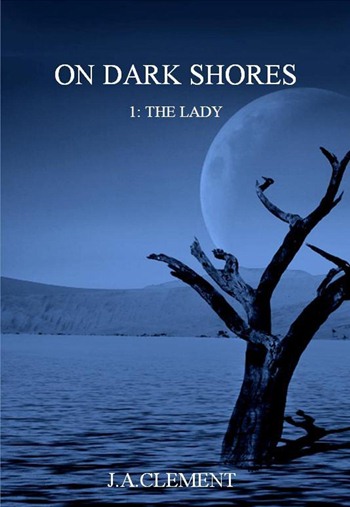
Did you get your book cover professionally done or did it you do it yourself?
Neither! A talented friend put it together. I tweaked the lettering (and it’s due a re-tweak soon as the font is too small in the thumbnail)
Do you have a marketing plan for the book or are you just winging it?
I don’t have a marketing plan as such, partly because my job takes up so much of the day that my publishing has to get done in dribs and drabs as time permits. I tried a lot of different things when ODS1 came out, with varying success, but at the moment I think getting the next two books out as soon as I can is probably the most helpful thing I can do.
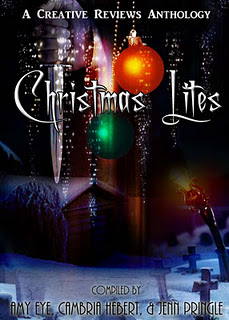
I have a freebie short story out and there is a longer one that will appear once I’ve finished with book 2. I also have a superb group of reviewers in the Creative Reviews group on Goodreads here, with whom, as it happens, I’ve just taken part in a charity anthology called Christmas Lites. [Editors note: you can read about Christmas Lites here]. They’re a great lot and very supportive, and as it consists of all sorts of people, readers, reviewers, editors, writers, you name it, it’s also a fantastic source of knowledge, links, people and suggestions, so just hanging round there has been really useful to me. I can absolutely recommend!
Any advice that you would like to give to other newbies considering becoming Indie authors?
Yes… set your expectations correctly, be appropriate, be patient and above all, be excellent!
Expectations: Some one told me that the average indie book sells 150 copies in its lifetime; I don’t know if this is true but it’s a good starting point, so aim number one is to sell 151 copies. You will find that, having sweated blood to make an excellent book you publish it, admire your Amazon page and think that as it’s such a good book, people will buy it. Wrong. That might work with the fifth or sixth one maybe, but your first book is just another one of the hundreds of thousands available, which brings me to the second point.
Appropriate: You need to go out and persuade people to take a look, and you need to ask people to review it; but you need to do both in a really personable and non-spammy way or you do all of us a disservice. No-one is going to cut you any slack because of what you’ve achieved – and be in no doubt, if you’ve produced a quality book, this is a huge achievement on a personal level, but on a professional level (and you DO need to be professional) you’re up against people with whole companies and large budgets behind them. So, chat on forums and before you even mention your book, work out how much advertising is acceptable on each as rules change between forums and between companies and between groups in the same forum. Engage with people; if they like the way you come across, they will go and investigate what you’ve done and that is a hundred times more powerful than all the spam in the world.
Patient: Don’t get discouraged if your sales are small for the first few months. Ask others how theirs went – and remember, there’s no hurry! Indie publishing is all about the long tail. We’re in this for the long-term; we’re not going away, our books aren’t going away, we’re going to be online and available ongoing. Also the more books you have available, the better sales will be of each one; with each successive book people have more chances of discovering your stuff. If you start to feel a bit discouraged, write down your sales every month, stick them into an Excel sheet and watch the line on the graph wriggle its way upwards – it might be ever so slow, but a year down the line, look how far you’ve come…
Lastly, be excellent, and DO NOT short-change the readers. If you think it’s pretty much okay, stop! If your book isn’t finished – if it hasn’t been read and error-checked, if the formatting is less than spotless, DON’T release it. If you want a bit of feedback on it, by all means find beta-readers and people to trial it for you, but DO NOT put it up for sale (or even free download) unless it’s clearly labelled as a beta. If you deal honestly with readers they come to trust you; if they feel as if you’ve tricked them or defrauded them, or otherwise palmed them off with an inferior product, they will tell everyone about it and avoid your books going forward. For the sake of one download or a bit more work, it is comprehensively not worth it.
Do the edit, be as finicking about detail as you can and give your readers a superb product, not one that’ll just about do. You owe them your best – and you owe it to yourself and to other indie authors to prove that excellent and independent can be the same thing.
About You
Where did you grow up?
Deepest darkest Yorkshire, running wild on the moors. Bronte country, basically – so beautiful! I love going back there.
Where do you live now?
Southern England. I work in London, and the commute starts at 04.30am every morning. Not recommended, esp if you’re by nature nocturnal as I am… I must admit that by choice 04.30 comes at the end of the day for me, not the beginning!
What would you like readers to know about you?
I spent a while thinking about this – there are a lot of silly or grandiose things I could have put in but when it came down to it, the most fundamental thing about me as an author and publisher is that I am passionate about storytelling and very, very fussy about books of all formats. If I want to put my books on sale to a paying public, they need to be as well-produced if not better-produced than traditionally-published books. No-one is going to cut me any slack because I’m self-published or indie – and no-one should need to; if I have put my name on it (or the Weasel Green Press stamp) it should be excellent and if you think it isn’t, I want to know about it.
Some things will be subjective and those I’ll consider, probably ask around and see what the general view is; but if there are typos, formatting errors, anything of that sort, it will have got past me, two editors and a couple of proof-readers. That being the case, if you find a glitch, I want to know about it because I’ll be wanting to change it at the first possible opportunity.
What are you working on now?
I’m inputting tweaks on Book 2 –The Other Nereia- before it goes off to both editors (one does narrative arc and general storyline, the other does use of words and general proofing. Both do their jobs very, very well – and ruthlessly, ouch!). I was hoping to have it available for Christmas but it’s going to be in 2012 now as my editors are really busy at the moment. The downside of using talented people is that they get booked up fast!! I’m also setting up for the first paperback, books 1&2 together, which I’m hoping to bring out in Summer 2012.
Going forward: I need to write another 30k words or so to finish off book 3 – The Mother – which will be a full-length book rather than being cut into novella-sized chunks like Books 1&2, and once that’s online I can go on to do the paperback of that as well.
Over and above my own stuff, I’m helping with the development of two other authors’ humorous short stories and there’s a third author with a historical fiction novel in the pipeline, though these are ongoing projects with no particular deadlines. Hopefully we’ll have the various ebooks finished, edited and out next year if not the paperbacks but it’s early days yet.
Oh, and the day-job. No rest for the wicked, then!
End of Interview
This interview was a great way to start 2012. Packed full of good advice from friend of the blog and Indieview author, J.A. Clement. Thanks for taking to time to talk to us J.A. 🙂
The J.A. Clement’s page is here, but why not do yourself a favor and check out her books which are available at Amazon US and Amazon UK.
Also a 1,500 word freebie short story, set in Scarlock, can be found here (US) and here (UK).