It took me about 25 years to write a satisfactory version of the story–one that was realistic, hopeful, and made me proud of the characters’ strength and perseverance.
Lorelei Brush – 11 August 2026
The Back Flap
When Julie Crawford’s whirlwind four-year-old is kicked out of preschool, suspected of having ADHD—likely genetic—her husband moans from his recliner that “even my genes are failures.” At work, Julie is a high school math teacher who requires her students to solve complex problems. But faced with an unsafe daycare home and no other daycare openings, a husband who hates the idea of labeling their son as a “problem,” and a supervisor who’s angry at the amount of time she’s taking off school, she’s at a loss for how to come up with a solution to this particular dilemma.
Julie’s struggle to help her son ultimately demands a number of mindset shifts: a willingness to become a student and ask for help, a humble acceptance of her errors, a burgeoning strength to reckon with a dominant father and retreating husband—and the self-confidence to trust her instincts when it comes to deciding on the best next steps for her son.
About the book
What is the book about?
The story is about a family struggling to identify and deal with the neurodiversity of its members. It seems pretty clear when their 4-year-old is kicked out of preschool for aggression that they need to do something about it, but his dad hates the idea of his child being labelled. The child’s grandfather, a Baptist preacher, believes the devil is in that boy. Some of the doctors and therapists they approach are helpful, some not so much.
My hope is that this story can spark lots of discussion about how we treat children with neurodiversity. Parents may be relieved to know others share their struggles, and they may discover new options for their own families. Book clubs can reflect on the children with neurodiversity they see in their churches or temples and devise strategies to welcome those children. Teachers and therapists may get a different view of the issues when it’s presented from the view of parents.
When did you start writing the book?
I began writing The Boy With the Butterfly Mind, in 1999 while I was still working full-time. I turned the writing process off-and-on as I had space in my life to write. I began submitting it for publication in the early 2000’s and used it as the creative part of my dissertation for the Doctor of Ministry degree in 2007. I didn’t like the ending; it was far too pessimistic.
How long did it take you to write it?
It took me about 25 years to write a satisfactory version of the story–one that was realistic, hopeful, and made me proud of the characters’ strength and perseverance.
Where did you get the idea from?
I taught child development at Wesleyan University in Connecticut for several years in the mid-1970’s where I advised a student who wanted to do a thesis on children with special needs. She inspired me to look in further depth at this emerging topic. After leaving the university, I worked on early childhood issues for a series of consulting companies. Assisting the Head Start program in its building of performance standards, especially around dealing with children with disabilities, gave me additional exposure to the topic. And having a child and spouse with ADHD (and some co-existing conditions) pushed me into significantly more research and understanding of how these issues play out in families.
Were there any parts of the book where you struggled?
I wrote and rewrote this book numerous times (I stopped labelling versions after the twentieth). Two parts were particularly difficult: the character of the antagonist, who is the father in the family; and the ending. I wanted readers to understand and—to some extent—empathize with the struggles of this antagonist, and yet he had to be a person who one cared about enough to stick with to the end. Some readers of the early drafts disliked him so much they didn’t care if his life improved. I actually wrote a draft with alternating chapters in his point-of-view to give me insight into his personal battles. I feel as though this final version, largely from the mom’s point-of-view has captured him well.
The ending was also somewhat problematic, as each of the three major characters—mother, father, and child—had to work through character arcs that showed realistic changes. When dealing with psychological disorders, it took several tries to make the arcs believable and leave the reader with true hope that working through such difficulties is possible.
What came easily?
I loved writing about a math teacher and showing how good she was at motivating a class of students who failed in their first go-round of algebra. One of the highlights of my teaching career was having a student in my statistics class say, “This is the best psychology course I’ve ever taken.”
Are your characters entirely fictitious or have you borrowed from real world people you know?
Every character has some character trait of a person or people I know. None is eerily similar to a real person. I had a great time working my way through Angela Ackerman and Becca Puglisi’s book The Emotional Wound Thesaurus: A Writer’s Guide to Psychological Trauma to pick out the perfect wounds for each character.
We all know how important it is for writers to read. Are there any particular authors that have influenced how you write and, if so, how have they influenced you?
Three writers stand out for their influences on me. Geraldine Brooks demonstrates the importance of deep research into the issues of her books. People of the Book seared my memory years ago and has stayed with me ever since. I couldn’t write without extensive research, which often provides valuable insights that enhance my stories. Jodi Picoult’s books frequently focus on complex social issues, sometimes regarding health and disabilities, and always with family drama. I’m fascinated by the variety and intensity of family interactions and try to infuse my novels with them. William Kent Kruger does an extraordinarily sensitive portrayal of children in his books, and I’d give a particular shout-out to Ordinary Grace. I work hard to build that sensitivity and grace into my portraits of children.
Do you have a target reader?
I have three sorts of target readers. The primary target is parents who may at some point wonder if anything is wrong with their child. (Don’t most of us?) The Boy With the Butterfly Mind unwinds the journey of one set of parents, introducing many of the problems parents face in finding the best help available and the support needed to follow through. A secondary target is students preparing to be teachers and training for work as therapists for children with the wide variety of potential disorders. People wanting to enter these fields often hear about diagnoses and treatments and less often hear about what goes on in the home. Working with families with neurodivergence needs a wholistic approach that doesn’t end with labels, prescriptions, and referrals. A third target are people who interact with persons with neurodiversity, be it in shopping malls, in churches, synagogues, mosques, or in schools. It’s kind to remember not all of us see the world—and act in it—the same way.
About Writing
Do you have a writing process? If so can you please describe it?
My favorite process is to head for a cozy chair in the best local coffee house, armed with a Chai Latte. I prefer to curl up in a chair next to a fireplace, facing the fire. Over the course of a morning, I visualize the situation of a scene, compose my picture of it in print, and then watch (and write) the dialogue among the characters. I often hit a snag, backtrack and start again. When I finish the scene, I head home to edit. The next morning, I begin by reading the previous day’s scene and then write the scene that follows.
I used to write by hand but switched to a laptop a couple of years ago since it’s so much faster.
Do you outline? If so, do you do so extensively or just chapter headings and a couple of sentences?
I tend to begin with a sketchy outline of chapters, a listing of characters with their major characteristics, and a picture of the emotional arc of the protagonist. It generally takes only a few days until the outline fails and revision is necessary. I’ve even been known to start from scratch.
When I hit a tough part, one that isn’t working out right, I often do a detailed outline. I usually resort to 3×5 index cards at some point defining each chapter, the characters involved, and the major plot points. When needed, I play with rearranging some scenes.
Though I try to be organized, there are also times when I just want to write and see what happens. It’s just plain fun to let the characters go and see where they lead me.
Do you edit as you go or wait until you’ve finished?
I edit before I leave the coffee house, when I return home, the next morning before I do new writing, and often thereafter. My manuscripts have many drafts with copious input from those I trust as readers.
Did you hire a professional editor?
I have hired professional developmental editors and copy editors for each of my novels to ensure I get the characters, flow, and story right and the language works well.
Do you listen to music while you write? If yes, what gets the fingers tapping?
The coffee house generally has music playing in the background. I’m rarely conscious of it, the exception being songs from my youth when I generally stop writing and sing along (not too loud to disturb anyone). When I’m at home, I don’t listen to music as I write. I want total concentration.
About Publishing
Did you submit your work to Agents?
I have submitted each of my books to agents and editors. My first book, Uncovering, made it to the final meeting of editors of HarperCollins Australia where it competed with another novel set in Pakistan. I came in second. Both of the others generated some interest, but no agent picked either one up.
What made you decide to go Indie, whether self-publishing or with an indie publisher? Was it a particular event or a gradual process?
After a sufficient number of rejections from agents and traditional publishers, I was delighted when a choosy hybrid press (Mascot Books) agreed to publish them. I thoroughly enjoyed the process, which produced books of high quality through a shared process of decision-making. I did, however, struggle with publicity as only a minimal amount was offered by the publisher. With my third novel, I chose She Writes Press, also a hybrid, because it has a marvelous process of building relationships among its authors and offering extensive opportunities to learn about publicity and marketing. This time I have a publicist.
Did you get your book cover professionally done or did you do it yourself?
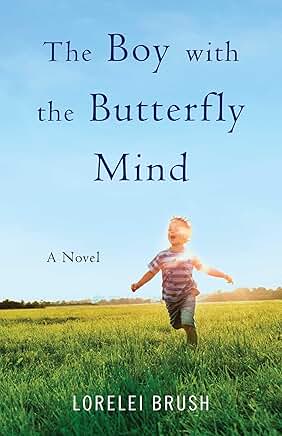
She Writes Press asked for my ideas for a book cover, produced a number of options, and I chose the one I thought best matched the spirit of the book. So, it was professionally done with my suggestions and editing input.
Do you have a marketing plan for the book or are you just winging it?
I have a publicist who is doing an excellent job of building a buzz about the book, and I am working on a marketing plan for the first year after publication.
Any advice that you would like to give to other newbies considering becoming Indie authors?
Spend some time thinking about your goals in publishing. It’s okay if you want to see your work in print, share it with friends and relatives, and don’t care if it sells hundreds of copies. Do make sure it’s something you’re proud to show off your product. That is, take the time to be in a critique group and respond to their comments, to obtain developmental and copy editing, and to seek professional guidance on a cover.
Then, choose a publisher that takes your work where you’d like it to go. Set your budget carefully for the publishing part and also publicity and marketing. It doesn’t have to cost an arm and a leg. Plan carefully.
About You
Where did you grow up?
Cleveland Heights, Ohio, among lots of relatives, an extensive group of children my age, and good schools.
Where do you live now?
I live in Falls Church, VA. Prior to landing in this retirement community, I lived in Wellesley, MA; Ithaca, NY; London, England; Middletown, CT; Cambridge, MA; Washington, DC area; and Islamabad, Pakistan.
What would you like readers to know about you?
I’m turning 80 this summer, thrilled to still be hiking, and am happily married.
What are you working on now?
I am writing a memoir in the form of a series of humorous essays about my life.
End of Interview:
Fr more from Lorelei Brush visit her website and follow her on Facebook.
Get your copy of The Boy with the Butterfly Mind from Amazon US.