The spark for the book actually came from a period of deep reflection on my relationship with my sister. We grew up in an abusive household, and a few years ago (at a time when we weren’t actively speaking) I found myself thinking about the starkly different ways, and speeds, that people process trauma.
Shane Keleher – 13 August 2026
The Back Flap
In the wreckage of 1930s Berlin, silence was survival. In 1950s Toronto, it’s a prison.
For Anna, the glass-fronted shops and bustling streetcars of postwar Toronto are merely a fresh coat of paint on a haunted house. She has spent years meticulously burying her past beneath the city’s polite rhythms, convinced that what is lost to the rubble stays there. She has survived by becoming a stranger to herself, until a chance meeting unearths the one thing she wasn’t prepared to find: her sister, Gerta, is alive.
But the girl who once skipped over Berlin cobblestones has been replaced by a woman hollowed out by the same shadows Anna tried to outrun. As the sisters reunite, the carefully constructed facade of Anna’s new life begins to crack. To find their way back to one another, they must excavate the secrets they kept to stay alive, secrets that now threaten to pull them back into the dark.
Moving between the atmospheric tension of prewar Germany and the burgeoning landscape of mid-century Toronto, Bring Me Into the Light is a visceral exploration of the archaeology of memory. It is a story of how we survive the unthinkable, and the courage it takes to finally speak the truth.
About the book
What is the book about?
Bring Me Into the Light is a historical fiction novel that explores the complex aftermath of World War II through two deeply intertwined worlds: post-war Toronto and 1940s Berlin. At its heart, the story follows two sisters navigating the heavy shadows of trauma, guilt, and displacement as they try to rebuild their lives in a world that has completely shifted beneath their feet. It’s a narrative about the human cost of survival, the search for redemption, and the difficult, often messy process of stepping out of the dark and finding a way forward.
When did you start writing the book?
I began writing the book at the very start of 2021, which, as it turns out, was statistically the absolute worst time to start a novel. Like many people during the global lockdowns, I channeled that isolated energy into a major creative project. What I didn’t realize until later was that everyone else had the exact same idea. By the time I was ready to query, submission editors gently informed me that they were completely swamped with an unprecedented tidal wave of “lockdown novels.”
How long did it take you to write it?
It took me almost exactly a year. I think I finished at the end of November, 2021. Again, not the best time to be endeavouring to get the attention of various submissions editors.
Where did you get the idea from?
The spark for the book actually came from a period of deep reflection on my relationship with my sister. We grew up in an abusive household, and a few years ago (at a time when we weren’t actively speaking) I found myself thinking about the starkly different ways, and speeds, that people process trauma. While our relationship has healed immensely since then, at the time, I wanted to explore that emotional friction creatively.
I channeled those reflections into a historical setting, using the aftermath of World War II to look at how two people can live through the exact same catastrophic environment but emerge with completely different wounds and survival mechanisms. Ultimately, the idea grew out of a desire to look at the messy, non-linear ways people heal, and how we learn to bridge the gaps between us when our paths to recovery don’t look the same.
Were there any parts of the book where you struggled?
For a long time, my biggest hurdle was the ending. I never truly loved the original conclusion; it felt too abrupt, and I didn’t feel like I had given the characters the meaningful resolution they had earned after everything they went through. When I made the decision to self-publish, I knew I couldn’t let that ending stand. I took a step back and really forced myself to sit with the story and give the finale the breathing room and thought it deserved. Taking that extra time made all the difference. I was finally able to craft a conclusion that feels incredibly fitting, emotionally resonant, and powerful, giving both the characters and the readers the closure they earned. Many readers have commented on how much they love the ending of the book.
What came easily?
Weirdly enough, immersing myself in the 1950s setting felt entirely natural. Because the book required a significant amount of historical research, I expected the world-building to be a challenge. Instead, I found myself completely at ease bringing that era to life. I reached a point where I felt so deeply embedded in the atmosphere, sights, and sounds of mid-century Toronto that writing the setting didn’t feel like a chore at all. It just felt like stepping into a very familiar room I already knew by heart.
Are your characters entirely fictitious or have you borrowed from real world people you know?
The characters are entirely fictitious. Despite my relationship with my sister being the emotional catalyst for the novel, neither of the sisters in the book are actually us.
It might sound a bit cliché to anyone outside the writing world, but the characters really did much of the heavy lifting themselves. Once the core emotional conflict was set, they just sort of stepped forward and introduced themselves to me. They developed their own distinct voices, flaws, and choices that were entirely separate from my own life. While the feelings behind their journey came from a very real, personal place, the people on the page belong entirely to the world of the story.
We all know how important it is for writers to read. Are there any particular authors that have influenced how you write and, if so, how have they influenced you?
Three authors have been massive compasses for my writing, each shaping a different element of how I approach a story: Margaret Atwood, Michael Ondaatje, and Khaled Hosseini.
Atwood’s influence comes entirely from her incredible mastery of psychological depth and her sharp, uncompromising eye for human behavior. She has a way of dissecting the quiet tensions between people, especially women navigating restrictive or challenging environments, that I constantly look to when building the internal lives of my characters.
From Michael Ondaatje, I learned how to handle memory, atmosphere, and the physical weight of history. His prose is so deeply poetic, and the way he explores the fragmented nature of trauma and post-war displacement in works like The English Patient heavily influenced how I wanted to paint the landscape of 1940s and 50s Toronto and Berlin. He taught me that a setting can hold an emotional echo.
Finally, Khaled Hosseini is my touchstone for raw, emotional stakes. No one captures the complex, painful, and beautiful dynamics of family (and the deep scars left by political and historical upheaval) quite like him. His work is a masterclass in how to ground massive, tragic historical events in intimate, deeply empathetic human relationships.
Do you have a target reader?
My target reader isn’t defined by a specific age group or demographic, but rather by a shared belief in the remarkable power of storytelling. I am writing for the readers who look to books not just for an escape, but for a deeper connection to the world around them. I firmly believe that listening to, hearing, and truly understanding the stories of others is how we heal the fractures in our society. It’s how we build bridges where connection might have otherwise felt impossible. My ideal reader is someone who opens a book ready to look through someone else’s eyes and walk away from the final page feeling like they understand the shared human condition just a little bit better.
About Writing
Do you have a writing process? If so can you please describe it?
My writing process is all about creating an environment of deep focus and strict boundaries. When it’s time to actually write, I need two things: my incredibly comfy chair and total silence. I work best when I can sink into a space for hours at a time, completely tuning out the outside world so I can fully immerse myself in the world of the story.
I am also incredibly passionate about research. This is both a strength and a trap. Because it’s so easy to fall down a fascinating historical rabbit hole and lose entire days to it, I make a point to keep my research completely separate from my writing process. Research happens separately so that by the time I sit down in my chair to write, the historical foundation is already solid. That allows me to focus purely on the emotion, the characters, and the narrative flow without any distractions.
Do you outline? If so, do you do so extensively or just chapter headings and a couple of sentences?
I don’t use a traditional, rigid outline. Instead, I write toward specific, milestone scenes that I know I want to reach.
I like to think of it as having a map marked with clear, definitive destinations. I always know exactly where the characters need to end up, but I leave myself the absolute freedom to figure out how they are going to get there. Operating this way keeps the drafting process exciting because it allows the characters to organically find their own path across the terrain, while ensuring the story never loses its underlying sense of direction.
Do you edit as you go or wait until you’ve finished?
I actually do a bit of both, mostly as a strategy to lessen my workload down the road. There’s no escaping the fact that editing is an essential, non-negotiable part of writing that requires multiple drafts. But let’s be honest—it can also be incredibly tedious.
To make life a little easier for myself later on, I tend to clean up and refine chapters as I go. By polishing the road behind me while drafting, I ensure that when I finally do cross the finish line of a first draft, I’m not staring down a completely overwhelming mess. It gives me a cleaner, stronger foundation to work with when it’s time to dive into the heavy structural revisions.
Did you hire a professional editor?
I don’t hire formal professional editors, but I have a dedicated team of beta readers who are incredibly thorough when it comes to grammar and line editing. In fact, one of them keeps me on my toes constantly. We are locked in a perpetual, friendly debate about punctuation; she thinks I overuse commas, I think she underuses them, and she absolutely dislikes when I start sentences with “And.”
And yet, she still volunteers her time to help me refine the manuscript. Having that kind of meticulous, honest feedback from readers who genuinely care about the text ensures the book went through a highly rigorous polishing process before publication.
Do you listen to music while you write? If yes, what gets the fingers tapping?
I actually can’t listen to anything at all. As I mentioned, I need absolute, total silence to fully immerse myself in a scene.
Music is just too much of a competing narrative for me. It would be a massive creative struggle to write a heavy, emotionally fraught scene set in war-torn Germany while Taylor Swift is blasting in the background telling me to “shake it off.” To give the historical setting and the characters’ trauma the weight and respect they deserve, the soundtrack to my writing cave has to be completely silent.
Don’t get me wrong; when I’m done writing, I’m perfectly content having Taylor Swift playing for the rest of the day. Just not while I’m writing.
About Publishing
Did you submit your work to Agents?
No, I didn’t submit to agents. When looking at the landscape of modern publishing, I decided early on that I wanted to bypass that particular gatekeeping process and the extensive administrative hassle that comes with traditional querying. For me, the priority was getting the story into the hands of readers on my own terms. Choosing to skip the agency route allowed me to maintain complete creative and operational control over the project from day one, which felt like the right path for this specific book.
What made you decide to go Indie, whether self-publishing or with an indie publisher? Was it a particular event or a gradual process?
For me, the decision to go indie was entirely driven by a desire for total creative and operational control. Writing the book is only half the journey; the other half is how it’s presented to the world, and I wanted to be the driver for both.
Going indie means I get to tell the exact story I want to tell without compromise. But beyond the story itself, I wanted the freedom to pick my own cover art, set my own pricing, and ensure that the marketing and promotional strategies are executed exactly the way I envision them. Instead of waiting for permission or handing over my vision to a traditional boardroom, going indie allows me to run my writing career like a true business owner, keeping the connection between myself, the book, and my readers completely direct.
Did you get your book cover professionally done or did you do it yourself?
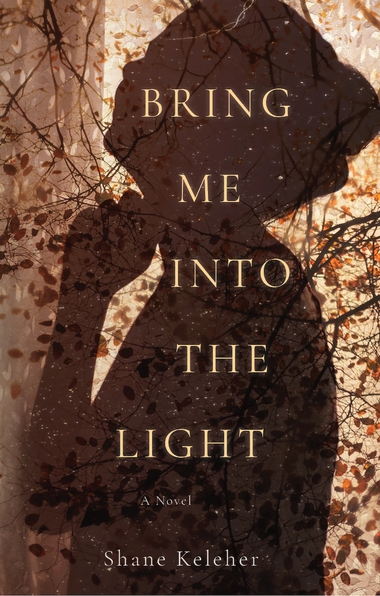
Yes, it was professionally designed, and I absolutely love how it turned out. While I knew exactly what kind of mood and aesthetic I wanted for the book, I also knew my own creative limits. I could never have done such a spectacular job myself. Working with a professional artist allowed me to hand off that vision and watch them elevate it into a gorgeous, striking cover that captures the exact essence of the story. It was worth every single penny to give the book the visual presentation it deserved.
Do you have a marketing plan for the book or are you just winging it?
Unsurprisingly, given my love for a good deep-dive, I started out with a ton of research and a very structured plan. But if there’s one major lesson I’ve learned along the way, it’s that book marketing is a living, breathing thing that requires a mixture of strategy and constant re-evaluation.
I’ve definitely learned that you can’t just set a plan in stone and walk away. Successful marketing requires a significant amount of quick pivoting. You try something, analyze what the readers are responding to, and adapt immediately. So while I absolutely have a solid blueprint guiding me (especially when it comes to local grassroots outreach, independent bookstore consignment, and upcoming literary festivals) my actual day-to-day approach is all about staying agile, learning on the fly, and adjusting the sails as I go.
Any advice that you would like to give to other newbies considering becoming Indie authors?
It is a massive amount of work, but the absolute creative and professional freedom makes every single second worth it. That said, my biggest piece of advice is to never lose sight of a very literal truth: when you decide to do all the work yourself, you are doing all the work yourself. You are the writer, the editor, the project manager, the marketer, and the distributor. It’s an incredible power trip, but it’s also a heavy lifting job.
You also have to give yourself grace right from the start. Accept that you’re going to make mistakes. You will occasionally throw money down a rabbit hole you shouldn’t have, and you will absolutely realize the perfect solution to a problem exactly five minutes after it’s too late to change it. That is just part of the tuition you pay when learning the business. Don’t let the setbacks discourage you. Embrace the learning curve, because the reward of holding a product that is entirely yours is unmatched.
About You
Where did you grow up?
I grew up in Guelph, Ontario, but moved away when it was time for university. That kicked off a long chapter of moving around and living abroad, with stints in Toronto, the Netherlands, and Asia. About 15 years ago, the pull of home brought me back to the region, and I’ve been settled in Kitchener, Ontario ever since, where I live with my amazing partner. It’s been a bit of a full-circle journey, and having both that local history and a taste of international life has been incredibly formative for my perspective as a writer.
What would you like readers to know about you?
Behind the historical fiction, I’m a bit of a comic book nerd at heart, and despite how vocal I can be on the page, I am actually astonishingly shy in person. When I’m not deep in a writing cave or tracking down vintage collectibles, I still step into the classroom to teach English as a Second Language (ESL) occasionally. For me, teaching ESL is a beautiful reminder of the incredible, transformative power of language. Of course, this ties right back into why I love telling stories in the first place.
What are you working on now?
I’m currently working on my next novel, which explores the concept of “emotional homelessness” (the persistent, unsettling feeling of never truly belonging anywhere), and constantly bouncing between the pulls of biological family and chosen family.
The story begins against the intense, chaotic backdrop of the fall of Kabul when the Taliban returned to power, and eventually moves across the world to modern-day Toronto. It’s an examination of displacement, identity, and the heavy psychological weight of searching for home. I am absolutely loving how the characters and the narrative are coming together so far, and I can’t wait to bring it to life.
End of Interview:
For more from Shane Keleher follow him on Instagram and Substack.
Get your copy of Bring Me Into the Light from Amazon US or Amazon UK.