 While I Am Rare was inspired by my own son and our family’s journey, I wrote it with the hope that it would help others better understand what it means to be different in a way that feels empowering rather than isolating.
Melissa White Boyer – 4 August 2026
The Back Flap
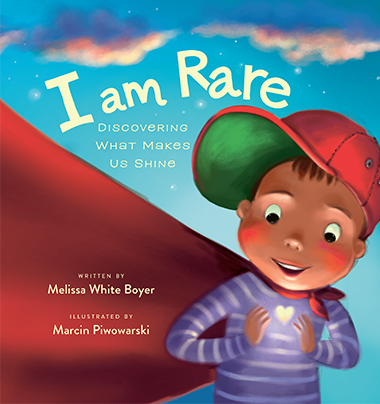
I Am Rare is a lyrical picture book about identity, belonging, and discovering strength in what makes us different. Told in the voice of a young boy with an ultra rare genetic condition, the story invites readers to explore how understanding ourselves can lead to confidence and pride.
As the boy reflects on what makes him unique, he begins to see that even superheroes draw their powers from what sets them apart. Along the way, the book gently introduces the idea of genes as the blueprint that makes each of us who we are, giving children language to understand differences with empathy and kindness.
Through poetic text and expressive illustrations by Marcin Piwowarski, I Am Rare celebrates resilience, individuality, and the courage it takes to embrace who you are. Perfect for families, classrooms, libraries, and anyone supporting a child who has ever felt like they do not quite fit, the story opens the door to meaningful conversations about inclusion, identity, and what makes us shine.
Rare does not mean wrong. It means few. And being rare is its own kind of superpower.
About the book
What is the book about?
I Am Rare is a lyrical picture book about identity, belonging, and discovering strength in what makes us different. Told in the voice of a young boy with an ultra-rare genetic condition, the story invites readers to explore how understanding oneself can lead to confidence and pride.
As the boy reflects on what makes him unique, he begins to see that even superheroes draw their powers from what sets them apart. Along the way, the book gently introduces the idea of genes as the instructions that help make each person who they are, giving children language to better understand differences with empathy and self-acceptance.
Through poetic text and expressive illustrations, I Am Rare celebrates resilience, individuality, and the courage it takes to embrace who you are. Ideal for families, classrooms, and caregivers. The story supports social-emotional learning and encourages meaningful conversations about inclusion, identity, and understanding others.
Everyone carries something extraordinary within them – and being rare is its own kind of superpower.
When did you start writing the book?
I started writing this book shortly after my son was diagnosed with a rare genetic disorder. I knew there would come a day when he would ask me why he was different, and I wanted to be ready with an answer that didn’t make him feel less than.
I knew he would need a metaphor to hold onto—something he could return to again and again that was simple enough to understand, yet meaningful enough to help shape how he saw himself. I wanted him not only to understand why and how he was different, but to take pride in who he was always meant to be.
As I thought about the conversations we would eventually have, I also imagined how he might explain his differences to his peers. From there, the words came.
Six years ago, those words were intended only for my son. Over time, I realized other families were searching for those same words to share with their own children, classmates, friends, and communities. That’s when I knew the story needed to become something more than a conversation between a mother and her child.
How long did it take you to write it?
It only took a couple of days to write the words, but it took years to decide to bring it to life.
The writing itself came quickly. The harder part was deciding that the story deserved to exist beyond my own family.
A cancer diagnosis has a way of changing your perspective on time, purpose, and the things you’ve been putting off for “someday.” It reminded me that tomorrow is never promised. If there was something I felt compelled to create, there was no reason to keep waiting for the perfect moment.
Where did you get the idea from?
I Am Rare was born out of my son’s experience navigating an ultra-rare genetic disorder. I felt a deep need for my son to not only understand himself, but to also understand where those differences come from. Most importantly, I wanted him to extract a sense of pride in who he is from those same words. I knew I wasn’t alone in wanting my child to find words to connect with and to feel seen and valued. I wrote this story for anyone who has ever wondered if they will ever fit in. That’s when I Am Rare was born.
Were there any parts of the book where you struggled?
I initially wrote from the lens of pure hope and understanding. Eventually, I decided to acknowledge the character’s moment of vulnerability by asking if he is enough and if the world has room for him. That sentiment would have been easier to gloss over, and perhaps even easier to read aloud to my son, but lacking the reality of what it means to find themself within the world. This part of the story also brings an important epiphany that rare doesn’t mean wrong…. It just means few. Finding oneself isn’t specific to those with a rare disorder, it is universal among all humans. And the need for belonging connects us all.
What came easily?
Expressing the light that shines from within when a child begins to embrace who they are came naturally to me. So did the idea that our differences are like stars in the sky, not something to be changed, but rather admired for all to see.
Those words came easily because they reflect how I see my son. I witness every day how his joy, light, and resilience positively impact those around him. I never want him to believe he is anything less than amazing.
And ultimately, that’s what I hope every child takes away from this story: that their differences do not diminish their worth. They are part of what makes them shine.
Are your characters entirely fictitious or have you borrowed from real world people you know?
The main character is based on my son. As a reflective narrator, the book follows him on his journey through discovery, acceptance, and eventual pride of his rare genetic disorder.
Peers appear alongside him in the illustrations, but the story is written in a way that invites the reader to step into the narrative as one of those peers. Rather than direct dialogue or defined relationships, the character speaks broadly and inclusively, creating a shared space where readers can feel part of the reflection rather than observers of it.
We all know how important it is for writers to read. Are there any particular authors that have influenced how you write and, if so, how have they influenced you?
One of my earliest influences was Dr. Seuss. As a parent, I spent years reading his books to my children. When I began writing I Am Rare, and especially when thinking about writing something my son would connect with, my mind naturally gravitated toward that same sense of rhythm and read-aloud quality that had captivated him for many years.
I was also deeply influenced by Emily Perl Kingsley’s poem Welcome to Holland. Not because I sought to emulate her writing style, but because of the way her words made parents feel seen, and specifically how they made me feel seen. She captured something difficult to articulate by using a metaphor that others could immediately connect with. I hoped that families, children, and their peers would gain a better understanding of rare disorders and develop a sense of pride in their differences when reading I Am Rare.
At the time, I hadn’t found a book that gave my child words he could hold onto as a source of inspiration and pride. I wanted to create something that could serve that purpose for him and for other children navigating rare disorders.
I also find myself drawn to authors whose work encourages empathy, resilience, and self-acceptance. Writers such as Kobi Yamada and R.J. Palacio have inspired me through their ability to deliver meaningful messages in ways that are both accessible and uplifting. Their work reinforces my belief that children’s literature can help young readers better understand themselves and others while celebrating what makes each of us unique.
Do you have a target reader?
My target reader is any child navigating a rare disorder, as well as the families, friends, classmates, teachers, and caregivers who are part of their world. While I Am Rare was inspired by my own son and our family’s journey, I wrote it with the hope that it would help others better understand what it means to be different in a way that feels empowering rather than isolating.
At the same time, the book is really for all children. Every child has something that makes them unique. I hope readers see that our differences are not something to hide or overcome, but something that can become a source of strength, pride, and connection.
About Writing
Do you have a writing process? If so can you please describe it?
My writing process usually begins at 2 AM with a thought that refuses to let me go back to sleep. Most of my writing starts in the Notes app on my phone. There is something about that magic hour when the house is quiet and the distractions are gone. It’s when my thoughts finally announce themselves.
The first draft is usually just getting the idea down before it disappears. Later comes the structure, depth, and refinement. Then comes the editing, and more editing. I read everything aloud repeatedly, paying close attention to how the words sound when spoken. By that point, my husband and children can hardly tell the difference between the newest version and the ones prior because each word has been reconsidered so many times.
I tend to revise until the writing feels right. And even then, I’m not sure it ever feels completely finished. At some point, you simply have to trust what you’ve written and let it go.
Do you outline? If so, do you do so extensively or just chapter headings and a couple of sentences?
My writing has primarily been focused on picture books until recently, so my outlining process has been fairly simple. I usually start with the overall message or subject I want to explore, then think through the conflict, resolution, and emotional journey of the story. From there, I look for the structure that feels most natural.
As I’ve started working on longer-form nonfiction projects, I find myself thinking more in terms of chapter headings and the key ideas that I want to live in each chapter. I usually begin with a framework of topics, lessons, or themes, and then build from there. The details often come later as I write, reflect, and refine.
I wouldn’t consider myself an extensive outliner. I like having a general roadmap, but I also leave room for new ideas and insights to emerge during the writing process. That may change as my writing evolves and I become more efficient, but I still want to leave room for when my creative energy shows up unexpectedly.
Do you edit as you go or wait until you’ve finished?
I try to let as much flow out of me as possible before I start editing. I intentionally write whatever first comes to mind without overthinking it or stopping to perfect every sentence. If I start editing too soon, I find that it interrupts the creative process.
Once that particular stream of thought comes to an end, I go back and read what I’ve written. First, I read it to myself, and then I read it aloud to someone else. That’s usually when the editing begins. Hearing the words spoken often helps me identify what feels natural, what feels forced, and what needs refinement.
So while I don’t edit much in the initial stages of writing, I probably begin revising sooner than I realize.
Did you hire a professional editor
Yes. Working with a professional editor was non-negotiable for me. I believed the message deserved the highest standard of quality possible, and I knew I couldn’t achieve that alone.
In addition to working with an editor, I invested in professional illustration and design because every aspect of the book contributes to how it is received. My hope was to create a book that children, families, educators, librarians, and healthcare professionals would take seriously and feel confident sharing with others. The better a book is produced, the more opportunities it has to reach the people who may need it most.
The editing process was invaluable to my growth as a writer. A good editor brings more than grammatical corrections. They bring perspective, experience, and an understanding of both the craft and the audience. They see blind spots, challenge assumptions, and help strengthen the work in ways an author often cannot do alone.
For me, the experience reinforced the idea that while the writing may begin with one person, creating a meaningful book takes a team.
Do you listen to music while you write? If yes, what gets the fingers tapping?
I would love to answer this with a fun vocalist or an inspiring song to add to your playlist, but I usually write in silence. The fewer distractions, the more room my thoughts have to expand and become what they are meant to become.
Most of my writing begins in the quiet hours when the house is still, and I can hear my own thoughts clearly. Music tends to compete with the words rather than inspire them.
That said, perhaps I should give the station that plays instrumental versions of today’s songs a try. If nothing else, maybe it will get my fingers tapping, if not the words flowing.
About Publishing
Did you submit your work to Agents?
No, I did not submit I Am Rare to agents.
For this particular book, I didn’t pursue traditional publishing. I had a very specific vision for how I wanted the book to be used and distributed, including getting it into schools, hospitals, nonprofit organizations, and the hands of families as quickly as possible. Publishing through my own imprint gave me the flexibility to pursue that vision on my own timeline.
That said, the experience also gave me a tremendous appreciation for everything that goes into creating and bringing a quality book to market. Working with an editor, illustrator, designer, distributors, and publicity professionals taught me just how much expertise is involved behind the scenes.
While I believe independent publishing was the right path for I Am Rare, the process has also given me a greater appreciation for traditional publishing. As I’ve learned more about the industry, I’ve found myself increasingly open to the possibility of pursuing an agent for future books.
What made you decide to go Indie, whether self-publishing or with an indie publisher? Was it a particular event or a gradual process?
As an entrepreneur, I’m used to building things. I’m not sure that simply writing a story was ever in the cards.
In the beginning, the goal was for this story to exist and reach the families who needed it most. But what began as a story gradually became something much bigger. As I moved through the publishing process, I found myself increasingly invested in every aspect of bringing it to life. From the illustrations and design to the quality and reach, every step became more important than I had anticipated.
Along the way, I assembled a team that felt almost serendipitous, transforming this project into something even more mission-driven than I originally imagined. The right people seemed to appear at exactly the right time, each helping elevate the story in ways I couldn’t have accomplished alone.
Ultimately, I created my own imprint with the intention of bringing books centered around identity, differences, belonging, and the human experience to life. As for what the imprint becomes in the future, I’m open to seeing how those pages unfold. Whether it grows into future books of my own or something entirely different, I’m excited for the journey.
Did you get your book cover professionally done or did you do it yourself?
Professionally done.
Do you have a marketing plan for the book or are you just winging it?
I have a marketing plan and have partnered with Books Forward to help guide the publicity and launch strategy, but I’m also learning as I go.
One of the biggest surprises of this process has been discovering just how much happens behind the scenes to bring a book into the world. From distribution and reviews to media outreach and launch planning, there is an entire ecosystem that most readers never see.
Right now, I don’t know what I don’t know, and that has actually been one of the most valuable parts of the experience. Every step has introduced me to something new and expanded my understanding of publishing.
What I do know is why I wrote this book. My focus has always been on creating something meaningful for children and families. The marketing strategy will continue to evolve, but the mission behind the book remains the same.
Any advice that you would like to give to other newbies considering becoming Indie authors?
I believe there is no better way to understand the publishing industry than becoming an Indie author. There are certainly “levels to the game,” as my husband says, but if you are responsible for overseeing the entire process, you will gain so much insight. That insight will guide your next step and give you massive appreciation for either having or relinquishing control by choosing the right publishing path for you.
Joining community groups, platforms like Reedsy, along with other membership organizations is the best way to learn from those who have come before you. There are so many resources and groups to help guide you through the writing and publishing process. My biggest piece of advice though, is to enjoy the journey.
About You
Where did you grow up?
I grew up on the Jersey Shore. After leaving for college in Maryland, I spent several years living in different cities across the country while building my career. It was an exciting chapter that broadened my perspective and helped shape the person I am today.
Where do you live now?
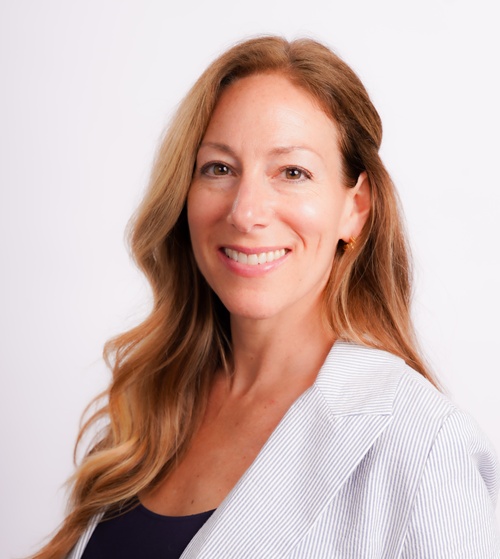
I currently reside in Point Pleasant, NJ with my husband and three children… back at the Jersey Shore.
What would you like readers to know about you?
I would like readers to know that, like everyone else, I am simply a person navigating life one day at a time. I have experienced challenges, loss, uncertainty, and moments that have profoundly shaped who I am. Through those experiences, I’ve learned that even difficult chapters can hold purpose if we are willing to look for it.
A quote that has always resonated with me is, “Be strong. You never know who you’re inspiring.” I had no idea how much I would one day need those words myself. My hope is that by sharing some of my own experiences and perspective, I can encourage others to find strength in their own journey.
Above all, I am a wife, a mother, a business leader, and a nonprofit founder who hopes to leave the people and places around me a little better than I found them.
What are you working on now?
In addition to launching I Am Rare, I have written several other stories and am currently exploring the next steps for them. Many of the stories continue themes that are important to me, including identity, belonging, resilience, and navigating differences. One is told from the perspective of a sibling navigating a brother or sister’s medical journey, while another explores the idea that our differences can bring us together rather than divide us. I have also begun developing an adult nonfiction book centered on redefining identity through life’s unexpected challenges and transitions.
Beyond writing, much of my time is spent building initiatives that create meaningful impact. Through Rare Genes Movement, I am working on the development of a platform designed to help families navigate the overwhelming gaps that exist after receiving a rare disease diagnosis. I am also focused on strengthening the foundation of our nonprofit for years to come, developing strong business leaders through my professional work, and, most importantly, being the best wife and mother I can be.
End of Interview:
Get you copy of I Am Rare from Amazon US or Amazon UK.