I am an avid reader of all types of books, but for this particular book I wasn’t influenced by other writers, this is basically a no-nonsense guide that doesn’t sugar-coat the process, it gets straight to the point and doesn’t drag things out to fill space.
Jennifer Lieberman – 31 July 2026
The Back Flap
Do you believe that your success is determined by gatekeepers like casting directors, agents, directors or producers? Are you waiting for strangers to decide to choose you? Is your creative fire turning into frustration? Take your power back.
There is no traditional path to success for an artist, and waiting for a break is the fastest way to end your career before it begins. My life changed the moment I stopped waiting and started creating my own work. Once I took control and started producing my own projects I was finally able to become the artist I dreamed of. You have the power to make your dreams happen too, you just need a proven system.
This guide strips away the mystery of independent production and hands you a battle-tested, 7-step system designed to turn your creative vision into reality—regardless of your budget or your current industry standing.
This book is not about “hacking” the industry or chasing viral fame. It is about professional self-reliance. It is for the writer with a drawer full of scripts, the actor who is tired of waiting to get cast, and the creative who knows they have more to offer than the opportunities that come their way.
About the book
What is the book about?
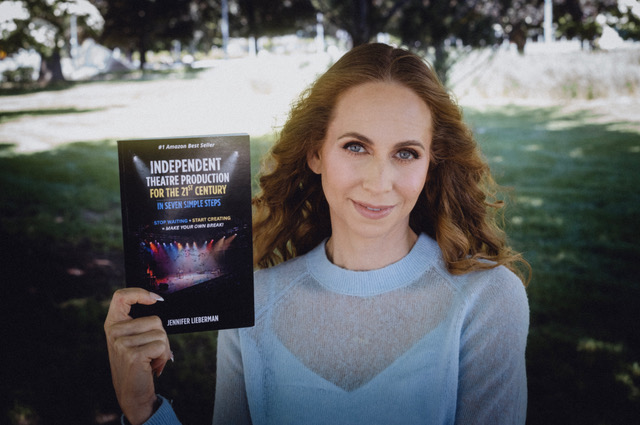
My new book Independent Theatre Production For the 21st Century In Seven Simple Steps is a straightforward guide that explains how to produce a play from conception through execution in seven clear steps. This book is intended for actors, writers, directors, dancers, comedians, performers and storytellers who wish to produce their work for the stage.
When did you start writing the book?
I started writing this book in February of 2026.
How long did it take you to write it?
The book took me 3 months to write, which included a couple rounds of editing and proofreading as well as feedback from theatre professionals.
Where did you get the idea from?
I’ve been teaching a Theatre Production Workshop for many years through my company Make Your Own Break, so this book is an adaptation of the course material.
Were there any parts of the book where you struggled?
Since this book is based on material I’ve been teaching for many years I didn’t struggle at all getting it down into the book, I knew exactly where I was going with it and how to execute.
What came easily?
What came especially easily were the anecdotal references from my lived experience. I’ve produced over two-dozen independent theatre productions in 3 countries and have performed in over 30 international stage productions. I’ve been a student of the craft for over two decades, as an actress, producer, collaborator and theatre educator, so I had a lot of source material to draw from.
Are your characters entirely fictitious or have you borrowed from real world people you know?
Everything in the book is based on my experience as a producer and my first hand experience with other creatives I’ve encountered on my travels.
We all know how important it is for writers to read. Are there any particular authors that have influenced how you write and, if so, how have they influenced you?
I am an avid reader of all types of books, but for this particular book I wasn’t influenced by other writers, this is basically a no-nonsense guide that doesn’t sugar-coat the process, it gets straight to the point and doesn’t drag things out to fill space.
Do you have a target reader?
My target reader is a struggling or frustrated creative who is tired of feeling stuck and wants to take control of their creative career. This is geared towards a very specific audience of writers, directors, and all different types of performers including actors, comedians, dancers, physical and musical theatre performers, mimes (yes, I was a mime) and can also be helpful for someone interested in planning a live event.
About Writing
Do you have a writing process? If so can you please describe it?
I don’t think I have a particular writing process, I write at all different times of day, sometimes early, sometimes late, it just depends on my mood. I’m not the type of writer who ever forces myself to write if I don’t feel inclined to, that may be because I wear so many other hats and juggle between several projects. I know other writers can be very disciplined about their work, for me I always go off of a feeling and that works for me. That being said I don’t tend to struggle with getting distracted or procrastinating when I have something important to say/create. Once I decide it’s time to begin a new piece of writing, there is no stopping me until it’s done.
Do you outline? If so, do you do so extensively or just chapter headings and a couple of sentences?
Oh yes I’m like an outline queen. I love having things mapped out from start to finish before I even attempt to sit down and write anything. Sure, oftentimes when I’m in the throes of the creative process I get inspired to take a detour, but generally I know the direction I’m gonna end up and that helps give me freedom in my process to not get lost along the way – even if new ideas get incorporated as I go.
Do you edit as you go or wait until you’ve finished?
I do a combination of editing as I go with the small stuff and then letting the manuscript breathe for a bit before I dive into the entire chunk. I want to make sure I’m happy with each chapter as I go before I move onto the next one, this also allows me to craft an overreaching ark that flows. But like I said, this current book is a guide adapted from a workshop, so a totally different process than writing a novel, a play or a screenplay – since I do all of those too.
Did you hire a professional editor
I do hire a professional editor and a separate proofreader. I used three different editors for my first novel; the first wasn’t the right fit, the second helped with story arcs and the third helped more with grammar, tenses and more nit-picky stuff that’s easy to lose sight of in such a long piece. I believe if you want to compete in the worldwide publishing marketplace you need to present a professional piece of work and there are insights professional editors will bring to light that you just can’t do on your own as a lone wolf.
Do you listen to music while you write? If yes, what gets the fingers tapping?
I do all sorts of things to inspire my imagination while I’m formulating a story and its characters, but when I’m actually writing I prefer silence.
About Publishing
Did you submit your work to Agents?
I spent years trying to go the agent and traditional publishing route before self-publishing my first novel, but once I decided to go at it alone I found success without them and have continued to self-publish my other works. This current book is targeted at such a niche audience I didn’t feel it was necessary at all.
What made you decide to go Indie, whether self-publishing or with an indie publisher? Was it a particular event or a gradual process?
Deciding to go indie was a gradual process of crickets over many years.
After 6 years of no responses, many drafts and giving up several times, I was convinced to self-publish. That idea and follow-through of doing it on my own changed my life.
Did you get your book cover professionally done or did you do it yourself?
For my novel I worked with a professional cover-artist and consulted with a marketing professional to brainstorm concepts. Rom-com books are a highly saturated market and I wanted to stand out. For my how-to-books, since they are targeting a small niche audience, I did those covers on my own.
Do you have a marketing plan for the book or are you just winging it?
Yes, I have very specific marketing plans for each book I launch, this is a business for me, not a hobby so I treat it as such. I work with professionals every step of the way from editors, proofreaders, artists, marketers and publicists. This is right for me and what I’m working towards for my books. Everyone has to decide what is right for their own journey and their personal goals.
Any advice that you would like to give to other newbies considering becoming Indie authors?
If you are passionate about writing, write. If you have an incredible story burning its way through you to get on the page, write it. Don’t worry about the end-game or where the book is going to go, just sit down and write it. Let it breathe. Then re-write it. Perhaps show it to a few trusted friends or a professional editor and take in their comments. Then re-write it again. The key to great writing is re-writing and re-writing and re-writing. Once you have the best possible version you are capable of, then consider your options. As an indie author you have full control over everything including releasing your book on your timeline on your own terms. If you’re going after traditional publishing, that can take years and still never get you where you want to go. Do your research, talk to other writers and consider your genre.
About You
Where did you grow up?
I grew up in the small town of Maple, Ontario, Canada.
Where do you live now?
I bounce around quite a bit between NY, LA, and Toronto as an actor and producer depending on the project.
What are you working on now?
As a multi-hyphenate actor/writer/producer I’m constantly juggling several projects at different stages of production. In terms of writing, I’m working on my second novel, Book #2 in the Year Of The What? series: Year of the Bitch, coming out in early 2027.
End of Interview:
Get your copy of Independent Theatre Production for the 21st Century in Seven Simple Steps from Amazon US or Amazon UK.