I wanted to explore how people experience and work through trauma, both personal and intergenerational. I was also interested in how people can feel marginalized because of family circumstances or societal expectations.
Susan L. Katch – 17 November 2026
The Back Flap
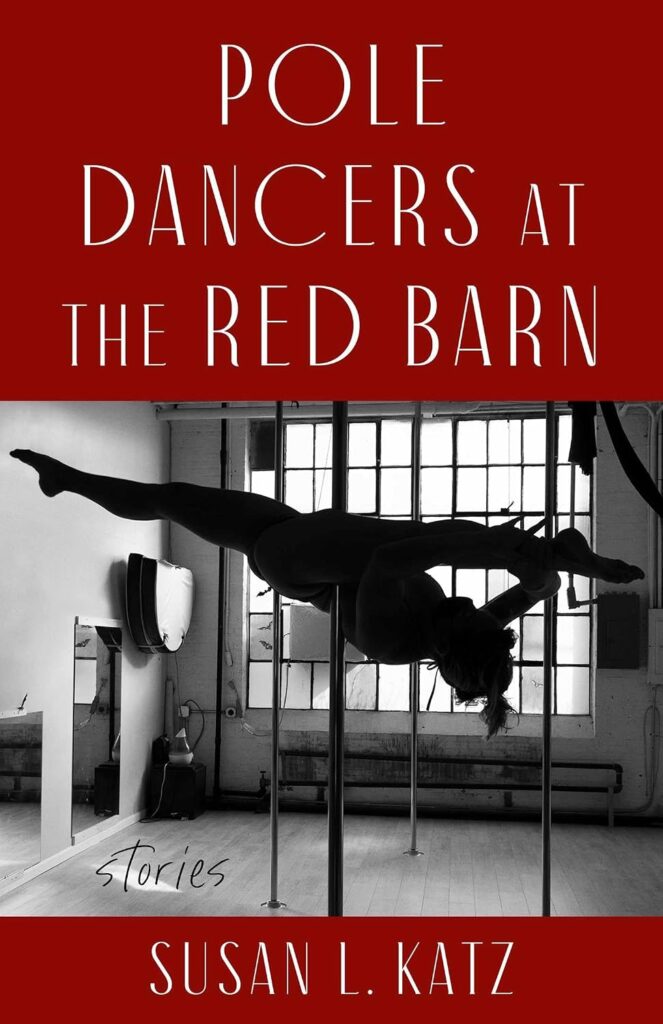
Chronicling the struggles and successes of five pole dancers, the club owner they work for, and their mothers, this debut novel-in-stories delves into the profound impact of intergenerational trauma on families striving to create meaningful lives.
The Red Barn, a pole dancing venue on the outskirts of Easton, Pennsylvania, is co-owned by Eddie and Victoria. Like the other dancers—GB, who is courageous and nonbinary; Marie, who struggles with depression; Violet, who is manifesting her dream; and Celeste, who grapples with religion and body image—Eddie and Victoria have been shaped by their mothers’ secrets and fears. These mothers have experienced domestic abuse, mental illness, and addiction, yet each is ultimately concerned with creating a safe, stable home life for their children.
Spanning the 1940s through the 1980s, these fourteen interconnected stories explore how intergenerational conflicts are confronted and resolved. Each story follows the emotional and embodied journey of one character, and together they form a larger narrative about how individual identity and community intersect in the aftermath of trauma and betrayal.
Ultimately, the Red Barn family realizes that risk-taking is not only possible but necessary, and that obstacles, no matter how heavy, don’t have to bury us. Struggle is part of life, but it doesn’t define us. What matters is trusting our own organic process of becoming who we truly are, at any age.
About the Book
When did you start writing the book?
I began writing this book about a decade ago. It originally started as the story of Bill, who became Gloria/Bill at the Red Barn. As I came to delve more into their world, I began to think about their mother and coworkers as characters deserving of their own stories.
How long did it take you to write it?
It took me about ten years to write this book. The individual stories continued to change organically as I worked on them. I then focused on connecting the family stories and, finally, had to synchronize the timelines across all fourteen stories.
Where did you get the idea from?
I wanted to explore how people experience and work through trauma, both personal and intergenerational. I was also interested in how people can feel marginalized because of family circumstances or societal expectations.
I thought about pole dancers as a group that is often misunderstood. I imagined something like Cirque du Soleil dancers with a working-class background, and that led me to pole dancers.
Were there any parts of the book where you struggled?
Each character changed throughout the revision process.
Their personalities shifted during the time I worked on their stories, and I had to intensify or diminish the action in certain scenes. I also deleted entire sections as the stories evolved.
It was difficult to let go of some of my writing, but I had to stay true to the direction each story was taking.
What came easily?
The characters themselves came to me as if I were witnessing partially formed individuals. They appeared in my imagination with an initial scaffolding of a story, and I gradually discovered who they were and what their stories needed to become.
Are your characters entirely fictitious or have you borrowed from real world people you know?
My characters are totally fictitious. And I never pole danced, as some readers have asked me!
We all know how important it is for writers to read. Are there any particular authors that have influenced how you write and, if so, how have they influenced you?
One author whom I love to read is Elizabeth Strout. I especially love short stories, and I find her collections down-to-earth, compelling, and attentive to larger existential issues. She shows how seemingly ordinary lives can reveal profound emotional and universal truths.
Do you have a target reader?
My target audience is adults in their twenties and beyond. I hope the book will appeal to readers who are interested in family relationships, intergenerational trauma, identity, and transformation.
About Writing
Do you have a writing process? If so can you please describe it?
I like to have two to three hours during the day to write, revise, and correspond. If I’m deeply involved in a story, I may go right to the computer when I awake. Sometimes I’ll continue thinking about a story throughout the day and return to it at night, after watching some TV—my time to relax and let things settle.
I usually print out my story, read it, revise it, and then return to the computer. I may print out a story several times during the writing and revision process.
I also work with a writing partner. We meet every two weeks, exchanging our manuscripts the week before so that we have time to read and prepare for our session, which usually lasts two hours.
Do you outline? If so, do you do so extensively or just chapter headings and a couple of sentences?
I don’t usually outline. Sometimes I’ll jot down or bullet a sequence of scenes for a story I’m currently writing, but I prefer to discover the story as I go.
Do you edit as you go or wait until you’ve finished?
It depends on my relationship with the story. I might line-edit a paragraph as soon as I finish writing it, but most of my revision happens after I’ve completed a draft.
Do you listen to music while you write? If yes, what gets the fingers tapping?
I don’t listen to music while I write. However, many of my stories reference music from a time period, so I research songs from the year in which the story takes place.
About Publishing
Did you submit your work to Agents?
I submitted a rough draft to about five agents. I didn’t hear from them, and eventually I began thinking more seriously about my book as a niche project. I decided to explore other publishing options rather than continue reaching out to agents.
What made you decide to go Indie, whether self-publishing or with an indie publisher? Was it a particular event or a gradual process?
Once I realized that my book might be best served by a small independent or a hybrid press, I began submitting to a few of those publishers. It was a gradual process of understanding what kind of publisher would be the right fit for my book.
Did you get your book cover professionally done or did you do it yourself?
My book cover was professionally designed by a designer at my publisher, but it was based on a photograph of mine that is also in the book.
Do you have a marketing plan for the book or are you just winging it?
I have a publicity team, and I’m glad I do as there are so many aspects of the process I would not have thought of.
Any advice that you would like to give to other newbies considering becoming Indie authors?
I would advise new authors to be realistic about their target audience, and expectations, and to think carefully about what kind of publishing arrangement, what person or publisher would best serve the needs of their particular book.
About You
Where did you grow up?
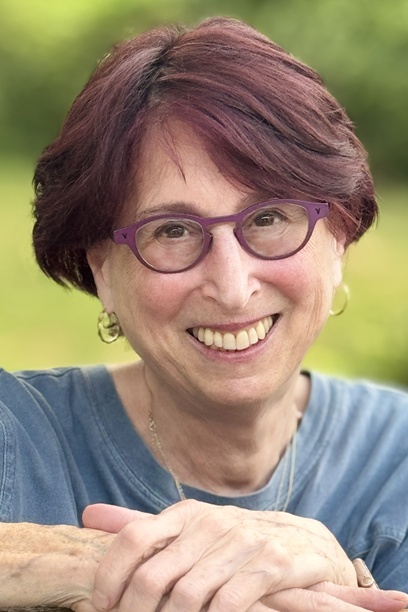
I grew up in Brooklyn and Queens, New York City. More about my background and work can be found on my website.
Where do you live now?
I live in Rhinebeck, New York in the Hudson Valley.
What would you like readers to know about you?
I am driven to explore life’s complexities through my writing, my work as a psychotherapist, and my photography. Across all three, I am guided by the Socratic idea that “the unexamined life is not worth living.” I’m interested in looking beneath the surface of people’s experiences—asking what shapes us, what connects us, and how we can change.
What are you working on now?
I’m working on a memoir-in-stories, Lifting Weights, about living with severe scoliosis and other medical conditions. I plan to explore the psychological and physical cost of living with these conditions by weaving together medical, family, and personal experiences.
I also intend to create photocollages that combine text, x-rays, and other photographic media to add a visual dimension to the narratives.
End of Interview:
Get your copy of Pole Dancers at the Red Barn from Amazon US.