
I had to stop trying to force the story to go where I thought it should go and let the characters behave like themselves. Once I did that, the story seemed to take on a life of its own.
Jonathan Gleich – 16 November 2026
The Back Flap
In the quiet, windswept reaches of Romney Marsh, Gregory Chadwick is a parish priest with an unshakeable devotion to his faith.
Until one night, he is bitten by a vampire.
He does not die.
He does not abandon his calling.
He becomes a vampire.
Which, as career changes go, is somewhat unexpected.
Gregory now has the rather awkward task of reconciling his new existence with the vows he has spent his life keeping. He still has a church. He still has a congregation. He still has his faith.
He also has fangs.
As Gregory begins to understand what he has become, he discovers that vampirism is rather more complicated than folklore would have one believe. There are rules. There are traditions. There are other vampires. And, naturally, there are opinions.
Quite a lot of opinions.
Because becoming a vampire may be the easy part.
Remaining a priest while being a vampire?
That is where things become interesting.
About the book
What is the book about?
The Vampire Priest is about a parish priest in a small church in Romney Marsh who is bitten and becomes a vampire.
But it immediately goes off course from there.
It isn’t really a traditional vampire story. I wanted to take the basic idea of “a priest becomes a vampire” and then ask, “Okay… what would actually happen?” The story follows the consequences of that one event, and it goes into some places I don’t think readers will necessarily expect.
When did you start writing the book?
I started writing it about eight months ago, but the story had been living in my head for about twenty years.
I was visiting my sister in England, and we passed a small parish church sitting alone in an empty field. I looked at it and thought, What if the priest in that church was bitten by a vampire—but remained a priest?
That was the seed of the story. It stayed in the back of my mind for roughly twenty years before I finally decided to write it.
Were there any parts of the book where you struggled?
The truth is, no. Once I let the characters write the book, it was easy. I just had to let go.
I had to stop trying to force the story to go where I thought it should go and let the characters behave like themselves. Once I did that, the story seemed to take on a life of its own.
What came easily?
What came easily was that I based the book on fact and science. Whenever I came across a difficult question, I could research it and find real information to answer it.
I call it “FACTion”—fiction built on fact. Instead of simply saying, “It’s a vampire, so that’s just how it works,” I wanted to ask how something might actually work, and then find a scientific or factual answer whenever possible.
That gave me a framework for the story, and it made even the strangest parts feel grounded in something real.
Are your characters entirely fictitious or have you borrowed from real world people you know?
I am all of the characters, and I am none of the characters.
The characters aren’t really based on specific people I’ve known. They’re based more on things that have happened to me, things I’ve experienced, and things I’ve observed.
Some of the characters are almost like photographs in my head—people I’ve met, remembered by how they looked, how they stood, and how they presented themselves to me. I might take something from that memory and put it into a completely fictional character.
So while the characters are fictitious, pieces of the real world are definitely in there.
We all know how important it is for writers to read. Are there any particular authors that have influenced how you write and, if so, how have they influenced you?
In real life, I write comedy, and I think that has had a huge influence on how I tell a story. A comedian is essentially telling you a story and getting you to live inside their “joke” world. A lot of my reading has actually been reading, watching, and listening to comedians perform.
As far as fiction goes, I’ve been heavily influenced by fantasy, particularly Game of Thrones, and by horror, especially Stephen King. I like the way both can create worlds that feel real enough that you can completely immerse yourself in them.
I think I brought all of those influences with me when I wrote The Vampire Priest.
Do you have a target reader?
Anyone with eyes.
About Writing
Do you have a writing process? If so can you please describe it?
In comedy writing, you have to be disciplined. You need to sit down and write for two hours a day, even if what you’re writing is, “I HATE FUCKING WRITING.”
The important thing is that you sit down and write. You can’t wait for inspiration to show up. Sometimes the act of writing is what creates the inspiration.
Do you outline? If so, do you do so extensively or just chapter headings and a couple of sentences?
I create a folder on my desktop called “Pitches.” I throw every idea into it, no matter how ridiculous it is. Sometimes an idea is six words. Sometimes it’s six pages.
For example, I had the idea: a 1,600-year-old vampire named Phil is a “happy vampire.” That’s the entire outline for his personality.
I don’t do extensive outlines. I collect ideas, characters, situations, and pieces of story, and then I let them develop. Sometimes a tiny idea turns out to be a major part of the story.
Do you edit as you go or wait until you’ve finished?
I write organically. I write the whole story first, and then I go back and start making sense of my rambling stream of consciousness.
I don’t want to interrupt the creative process by trying to make everything perfect while I’m writing it. I want to get the story out first. Then I can go back and shape it, clean it up, and make it readable.
Did you hire a professional editor?
For my first novel, The Strongest Bond, I didn’t hire a professional editor, and the book suffered for it.
For The Vampire Priest, I did hire one. I learned my lesson.
I’m still smarting from the cost of a real editor, but it’s one of those expenses where you understand why it costs what it does once you see what a professional editor actually does for your book.
Do you listen to music while you write? If yes, what gets the fingers tapping?
I love music. I listen to it about 22 hours a day.
But not when I’m writing.
When I’m writing, I need the music in my head to be the story.
About Publishing
Did you submit your work to Agents?
No. I’m too unsure of myself to try submitting to agents.
There are millions of writers doing exactly what I’m doing, and I felt I would just be drowned out by the noise. With self-publishing, I can put my work out there as my résumé. People can read it, or they can choose not to.
At least I can be heard.
What made you decide to go Indie, whether self-publishing or with an indie publisher? Was it a particular event or a gradual process?
There are several published writers in my family, and I’ve seen what happens when someone else dictates the rules.
I seem to be a person who needs to make it—or fail—on my own terms.
Self-publishing gives me that freedom. The book is my work, my decisions, my mistakes, and my responsibility. If it succeeds, I get to own that. If it fails, I get to own that too.
Did you get your book cover professionally done or did you do it yourself?
This is probably where I’ll get the hate.
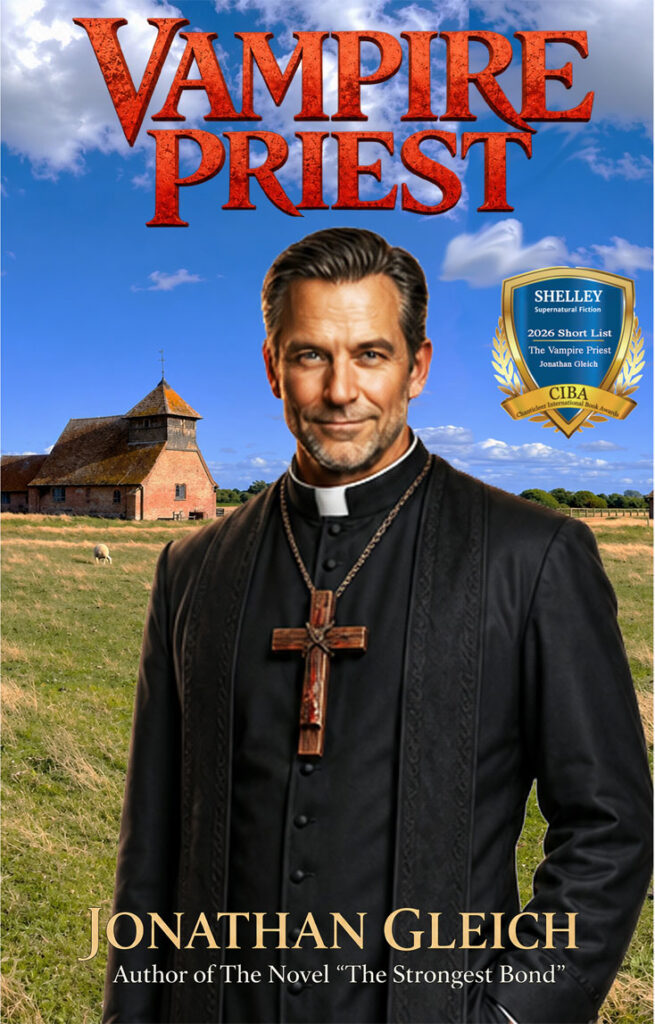
I spent months creating the story and developing the people in it. To me, the cover wasn’t the soul of the book. I created a simple cover using A.I., because I was much more concerned with what was inside the book than what was on the outside.
What shocked me was the amount of anger and hate the cover generated.
People were judging the story based on the cover without reading the story. That really surprised me. I had spent months worrying about the characters, the science, the story, and the writing—and suddenly I discovered that some people were making their decision about the entire book from a single image.
Do you have a marketing plan for the book or are you just winging it?
I don’t anticipate making any “real” money from writing. What I’m hoping for is simply to be read, and for people to like the story.
I’m essentially writing my résumé in several editions. Each book is another piece of work that says, “This is what I can do.” If I get a job from that résumé, so much the better.
I learned an expensive lesson with my first book. I went with Amazon, expecting that having the book available would lead to some level of exposure. My experience was that they put the book online, and that was essentially it. There was no marketing coming from them.
For the rest of my books, I went with Ingram. What I like about that approach is the distribution. They submit the books into a much broader range of channels and markets, rather than leaving me with a book sitting on one platform.
Any advice that you would like to give to other newbies considering becoming Indie authors?
Buy a Bowker ISBN. Don’t hand over your work for free. Make sure you copyright your work, and make sure you keep your “IP.”
I wrote one book, and then the book wrote two more books.
The people in the story make the book good.
This baby you are going to give birth to will need to be fed, dressed, loved, cared for, raised, taught what’s good and what’s bad, and sent out into the world with open eyes and an open mind.
And then it will meet other people.
Some will love the child. Some will hate the child.
As the proud parent, I let the child out into the world and say proudly, “It was the best I could do.”
And I am happy with that.
About You
Where did you grow up?
I was born and raised in Brooklyn, New York. I was raised Jewish, and I have a very New York sense of humor—dry, a bit snarky.
You can protect yourself a lot easier with a laugh than a knife.
Where do you live now?
I live in Las Vegas. It’s cheap to live, and you don’t shovel heat.
What would you like readers to know about you?
I want this on my gravestone:
“He lived… then he died.”
What are you working on now?
The sequel to The Vampire Priest—Umbra Shadows.
(announcer voice) Available 10/31.
I have about 60 “pitch” ideas for Book #3 in the series, Thaddeus.f
End of Interview:
Get your copy of The Vampire Priest from Amazon US or Amazon UK.
If you have a library card you can read the ebook or listen to the audiobook version on Hoopla.
One response to “IndieView with Jonathan Gleich, author of Vampire Priest”