I also discovered a rich history of multigenerational family businesses—and the idea of feuding sisters struggling to figure out the future of their family’s pearl farm was born.
Stacey Gordon – 6 November 2026
The Back Flap
Three estranged sisters—Helen, Anna, and Penn Lockshire—are bound by the shimmering but fragile legacy of their family’s freshwater pearl farm in rural Tennessee. When the business that once made them famous faces collapse, the sisters are pulled back into each other’s lives and forced to reckon with old betrayals, unspoken resentments, and the complicated truth of their inheritance. Soon, what began as a fight for survival becomes a reckoning with the myths that shaped them and the secrets buried in the family’s past.
From the discovery of a rare pearl in 1981 to the struggles of a failing farm in 2008, the Lockshire sisters must navigate love, loss, ambition, and forgiveness to decide whether their heritage is a blessing to preserve—or a burden to escape.
About the book
What is the book about?
The Pearl Farmers is about three sisters who inherit the freshwater pearl farm their parents founded in rural Tennessee and must overcome their differences to determine the future of the farm’s future and their family’s legacy. The story explores the complicated ties, pressures and expectations, and shifting perspectives of a family across generations and geographies.
When did you start writing the book?
I originally began the book in 2010. Then I spent the next ten years tinkering with it in small sprints—but I never stopped thinking about it. When the pandemic happened and we all got stuck at home, I renewed my commitment to it and vowed to finish a first draft—then spent the next couple of years rewriting it over and over!
How long did it take you to write it?
By the time I really committed to it, I wrote the “messy first draft” in about six months. Since it was my first novel, I then spent nearly two more years editing and refining it to get it to a place where I was genuinely happy enough to let it see the light of day.
Where did you get the idea from?
I hold a degree in magazine journalism, and my first job out of college was working for a trade magazine that covered the jewelry industry. I reported on the cultured pearl industry, a beat that took me to Japan and China, where pearl culture began. But I also learned about a very small, niche history of culturing American pearls in the Tennessee River Valley, and the fascinating link between the mother-of-pearl from Tennessee river mussels and the Japanese pearl industry. In reporting on that industry, I also discovered a rich history of multigenerational family businesses—and the idea of feuding sisters struggling to figure out the future of their family’s pearl farm was born.
Were there any parts of the book where you struggled?
After many years of thinking about it, the story actually came out quite easily. What I struggled with the most was getting to the heart of what the novel was really about—and infusing the emotion and meaning to it. It took a lot of exploration to get there, and sometimes it required me to put the book away for months and revisit it again with fresh eyes before I got there.
What came easily?
The main characters—the sisters Helen, Anna, and Penny—sort of wrote themselves. I felt like I just knew them. When I would get stuck, or disheartened, and consider throwing in the towel, the sisters always pulled me back into the project. I felt like I owed it to them to tell their story.
Are your characters entirely fictitious or have you borrowed from real world people you know?
Like most fictional characters, mine are compiled from small scraps of people I’ve known. The Lockshire family itself is entirely fictional. But every member of it is inspired here and there by people I grew up with or have run into throughout my life. They’re composite enough, I hope, that no one would ever recognize themselves!
We all know how important it is for writers to read. Are there any particular authors that have influenced how you write and, if so, how have they influenced you?
Oh yes, so many. I’ve long been inspired by Richard Russo for his portrayal of small-town life; by Ann Patchett for the layered way she writes about families and their pasts and presents; Ruth Ozeki for her warm humor; and Julia Glass for the way she shows shifting perspectives among various family members.
Do you have a target reader?
I write the kinds of stories I personally love to read, and so I suppose I am writing for a target reader who loves layered stories about family and friend dynamics, especially across time.
About Writing
Do you have a writing process? If so can you please describe it?
I’m a big believer in writing a first draft as a kind of “mining” expedition, telling the story to myself and unearthing it as I go. This usually results in a first draft that’s about twice as long as it should be—and then I set out to rewrite it several times. The rewriting process is becoming more streamlined as I get more experience. Now I’ve learned to map out the structure and beats visually, on a board, so I can chart the shape of the story and its emotion, and the earlier I do that, the more cleanly the book begins to come together.
In terms of my writing practice: I’m a morning person, and I have a full-time 9-to-5 job, so I prefer getting up early in the morning on weekdays to get a couple of quiet hours to make progress before the day begins. I let the practice lapse a little over the summer this year, but am getting back into it now!
Do you outline? If so, do you do so extensively or just chapter headings and a couple of sentences?
I create a very rough outline at the beginning—mostly just a brain dump of what I think the book is about, who the characters are, and approximately what is going to happen and when, using a beat sheet. Then I typically start writing and create a very loose outline of what’s going to happen in the next few chapters. I’m really very much a “plantser”—I start with a scaffolding, but it’s impossible for me to know what’s going to happen until I actually start writing. This is one reason why my first drafts are so long, because I’m feeling my way in the dark as I progress forward.
Do you edit as you go or wait until you’ve finished?
I do not edit as I go. I’m in a crit group with two other writers who always incorporate feedback right in the moment, but I really prefer to keep writing until the draft is finished. I think this is because I follow the Anne Lamott advice of letting the draft be as messy and unhinged as it wants to be; otherwise, I become too inhibited about all the details and have a tough time continuing.
Did you hire a professional editor?
For The Pearl Farmers, I hired a former writing coach to do a first “developmental” read of the book, mostly just to let me know if it was any good or if it was such trash I shouldn’t bother moving forward! Luckily, she gave me very positive feedback, but also help figuring out where to focus my attention. I’ve also worked with a long-time friend and colleague who is a spectacular copy editor, to ensure the writing is as crisp and error-free as possible.
Do you listen to music while you write? If yes, what gets the fingers tapping?
Yes! Music helps me overcome any anxiety. If I’m drafting a new story, the music needs to be lyric-free and relaxing. I listen to a lot of “lo-fi” and ambient music, such as playlists by Lofi Girl (a YouTube account) and lo-fi playlists on Apple Music. If I’m editing or working on marketing tasks, I’m more likely to pick energetic music or favorite artists whose music is familiar and comforting.
About Publishing
Did you submit your work to Agents?
I did several rounds of querying with The Pearl Farmers. When I first started, I got a lot of requests for full manuscripts, but over time the responses grew quieter and I was “ghosted” more—maybe as the trad publishing industry began to change. I am an older author, and the book is multi-POV and not “hooky” enough to be a bestseller, and I know it’s tough for trad publishers to take a chance on something like that.
I eventually realized I was going to need to go indie or abandon the book altogether, but by that point I’d had so many beta readers express their love of the story that I knew it needed to at least get out into the world. Luckily I connected with She Writes Press, and they’ve been such an amazing hybrid publishing partner to debut this book with.
Did you get your book cover professionally done or did you do it yourself?
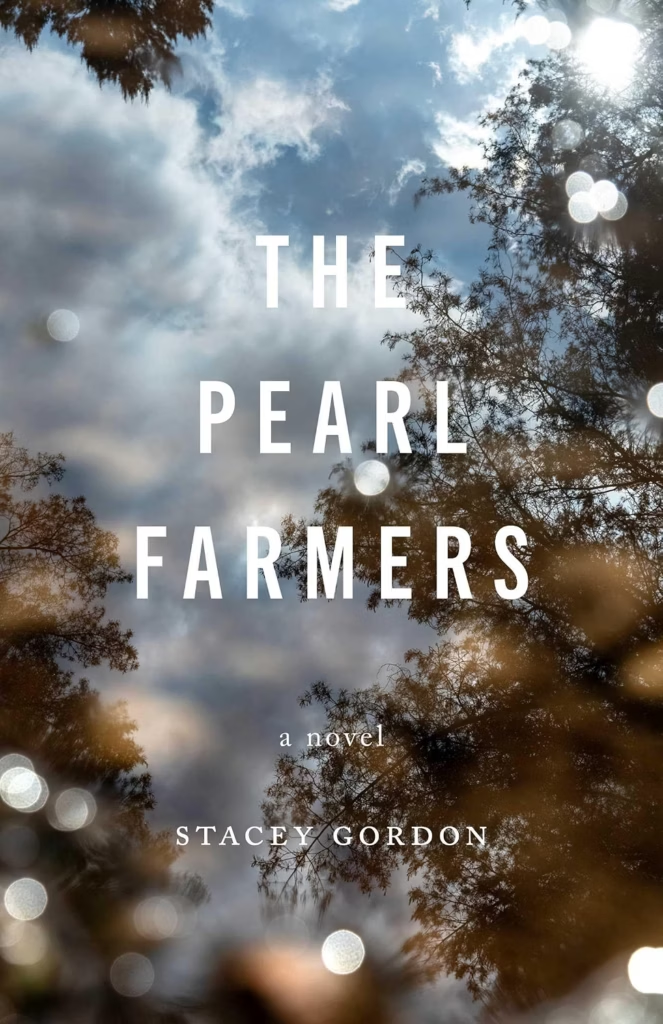
I did hire a cover artist when I thought I’d be self-publishing. She did a spectacular job with a hand-painted cover that is exquisite. But She Writes Press’s designer came up with a cover design that’s even more appropriate for the target market and comparable titles, and I love how ethereal and gorgeous it is. I’m using the painting from my own designer in marketing materials.
Do you have a marketing plan for the book or are you just winging it?
I’m working with BookSparks for publicity, and I’ve focused heavily on social media leading up to the launch. I plan to do advertising and ongoing book events after The Pearl Farmers comes out in November 2026.
Any advice that you would like to give to other newbies considering becoming Indie authors?
Going into this process, I had a hard time letting go of the idea that becoming a “published author” meant that an agent and publishing house would raise the gate to let you join their elite club—and if the gate stayed down, it signaled failure and lack of talent. Over time, though, I’ve done a complete 180 on this. There are so many beautiful books being written now, and the trad publishing companies are struggling in a time of massive change, and the gatekeeping model is no longer necessary for building an audience of loyal readers to your work. More and more, I’m seeing the indie route as a way to control my own destiny, make my own decisions, and keep more of my money!
About You
Where did you grow up?
I grew up in a small town in the Appalachian foothills of southern Ohio, about an hour south of Columbus. I also went to college in southeastern Ohio, very close to the West Virginia border.
Where do you live now?
I’ve lived in the San Francisco Bay Area for the past 26 years, working in Silicon Valley and living in the East Bay (currently in Alameda, which is an island near Oakland).
What would you like readers to know about you?
Non-writing stuff:
I’m a former journalist and have worked in user experience and content strategy for tech and healthcare companies much of my career. I live with my husband and black Lab Winston in a 100-year-old house on an island, and my daughter is a college junior studying zoology with the intention of studying elephant behavior.
What are you working on now?
The first book in my police detective series Silicon Valley Murders will launch under a pen name (Stasia Knox) in early 2027. I’m also writing a novel about GenX friends and a rom-com about travel influencers.
End of Interview:
Get your copy of The Pearl Farmers from Amazon US.