I wanted to capture that moth to flame syndrome between Thelma and the Brad Pitt character. I sat watching the movie knowing that the boy is up to no good and Thelma should run for her life and still thought he was so hot I’d go off with him too. That, I wanted to capture that attraction that overrides your sensibilities.
Catherine Marshall Smith – 21 July 2026
The Back Flap
After twenty-one-year-old Emily Miller flees her ex-husband, Lee, with the exterminator she hired to kill hornets in her backyard, she finally feels safe. Jake Clayton offers Emily and her daughter a beautiful place to live where neither Lee nor her mother, who wants custody of Jenna, can find them. Unlike Lee, Jake has a steady job, doesn’t drink (she’s never met a man who doesn’t), and doesn’t hit. And he doesn’t think Emily is too much—too mouthy (Lee), too large (her mother), too extra.
Isolated in a cabin in the Santa Cruz mountains with only a three-year-old for company, Emily distracts herself from the liquor cabinet and from worrying that Lee will track her down by planning a surprise for Jake: a reunion with the sisters he hasn’t seen since foster care. But the deeper she digs into Jake’s past, the less he seems like the man she trusts—and when she learns Lee has disappeared, she suspects Jake could have done . . . something. But that’s ridiculous, right? Sure, Jake is bossy about where she goes and who she sees. Sure, he has a temper. But murder? That’s just her being dramatic—like Lee and her mother always say she is.
Right?
About the book
What is the book about?
The Resilience of Red Thread is the story of a young single mother escaping an abusive marriage. She’s done everything right: called the police, gone before a judge, gotten a restraining order but none of it worked. She’s rescued from her ex-husband but discovers that he is more dangerous than her ex. She finds an unlikely ally in her sister-in-law but ultimately relies on her own resilience to get to safety.
When did you start writing the book?
In 2016 for daily writing, but I’d been thinking about the characters for probably five years before that.
How long did it take you to write it?
10 years
Where did you get the idea from?
The abuser, Jake, began innocently as an example of a character sketch for my sixth grade writing students. He was sweet and sad, had been a Foster child and now lived in a run down apartment in Eastside San Jose. He grew out of a real exterminator who came to my house to get rid of a rat. This exterminator really loved his job. He was in my house for 20 minutes but has been in my head for forty years.
Were there any parts of the book where you struggled?
It was a hard book to write because it is painful to look straight at cruelty by people who should love and protect your character.
What came easily?
The characters themselves. I liked both of them really. Jake was mean and while that becomes understandable in the course of the book, it does not excuse it. Still, who was there for him? I loved Emily. She’s smarter than she lets on. Wiser. She’s an observer who understands all of what is going on around her but holds herself out of it.
Are your characters entirely fictitious or have you borrowed from real world people you know?
Emily and Jake are composites of people I have known in real life. That and the characters Geena Davis and Brad Pitt played in Thelma and Louise. I wanted to capture that moth to flame syndrome between Thelma and the Brad Pitt character. I sat watching the movie knowing that the boy is up to no good and Thelma should run for her life and still thought he was so hot I’d go off with him too. That, I wanted to capture that attraction that overrides your sensibilities.
We all know how important it is for writers to read. Are there any particular authors that have influenced how you write and, if so, how have they influenced you?
Margaret Atwood, Barbara Kingsolver, Lilly KIng, but very early on, it was Harriet the Spy by Louise Fitzhugh. I read it in 6th grade and it validated the importance of writing and keeping a journal. That is when I learned even if I was writing about my own life, I could control the spin on the importance of events in my life.
Do you have a target reader?
Originally, I was seeking women like me. Women who cared but might have judged someone like Emily. I wanted them to see her as she is, alcoholic and flawed but still deserving safety and happiness. I have since found younger audiences and thought they are the ones to whom I want to carry Emily’s story. I want to carry the message: you are not alone and not at fault.
About Writing
Do you have a writing process? If so can you please describe it?
Anything worth doing is easier in a community. I have a small writing critique group and a larger group that meets Monday through Friday 8 to 12. We set goals at 8 and at 8:30, we mute ourselves and write. It feels like parallel play. I can look up at any moment and see women I respect giving time to writing. It validates my choice to write. Beyond that, I begin with characters I like. I’ve written two novels and each took ten years. That’s a long time to be locked up with someone I don’t like, so I create characters I respect. The plot usually answers a question. “Resilience” started with a question and I didn’t like the answer. The question was: Can two people damaged by childhood neglect and abuse learn to love each other in a healthy, wholesome way? I wanted an emphatic Yes but once I started talking to social workers and psychologists, it was NO. I grieved for the book I had to abandon and the mean world that made that love impossible and I wrote a stronger, more plausible ending.
Do you outline? If so, do you do so extensively or just chapter headings and a couple of sentences?
Somewhat, I know where I am going – how the book ends– and I identify key scenes that lead the way. But most of the time I write groping in the dark.
Do you edit as you go or wait until you’ve finished?
You can’t help but edit as you write but once I’m in the flow, it comes too fast to edit.
Did you hire a professional editor?
Absolutely! I wrote an acknowledgement to my editor and she edited that! Editors have skills that are different from authors. I rely on a small army of editors.
Do you listen to music while you write?
I’m a little self-conscious about this but I listen to what is called Elevation music. It’s religious, Casting Crowns and Maverick, but also Lauren Dagle. It reminds me of a higher purpose and that gets me through self doubt.
About Publishing
Did you submit your work to Agents?
For a while. I had a request for a full manuscript twice but ultimately it was returned to me. It’s difficult to build yourself up after that.
What made you decide to go Indie, whether self-publishing or with an indie publisher?
I queried for a year with American Family, my first novel, but it’s a story of gay adoption and I decided the political climate was calling for it to be published and I went with She Writes Press. It was a perfect blend of traditional publishing with the freedom of self publishing. I was going to try traditional again for “Resilience” and found I had to undergo open heart surgery. I was happy with SWP and I went back to them because I thought I might be running out of time. I am very happy with SWP. (And I am two years post surgery and hiking tall mountains!)
Did you get your book cover professionally done or did you do it yourself?
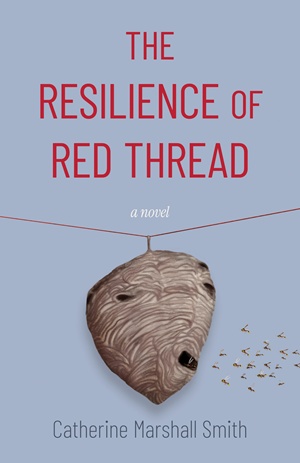
SWP has an excellent artist who does all of their book covers. The book cover for “Resilience” made me cry for joy. I realized people were listening to me and that I was making sense. That’s what publishing writing does for you; it gives you a forum.
Do you have a marketing plan for the book or are you just winging it?
No, I have a publicist. You can write the most brilliant book in the world but if no one knows your name, it’s a heavy lift to sell it alone.
Any advice that you would like to give to other newbies considering becoming Indie authors?
Find a community and stick with them. They become your most loyal supporters. They keep you writing every day, and when the time comes, they become great resources, beta readers, and buyers of your book. Community empowers always!
About You
Where did you grow up?
The Western Hemisphere! My dad was an Army officer and we moved on average every two years, including Germany. If I claim a childhood home, it would be Annandale, Virginia. Dad was working at the Pentagon. We lived there for 3.5 years.
Where do you live now?
Northern California
What would you like readers to know about you?
I am so grateful to them for reading. The scariest and most gratifying experience in my life, has been writing these two novels. None of it means anything without readers.
What are you working on now?
Bloom Blume, a delightful romp through fraud in a venture capital company in Silicon Valley in the early 2000’s. Eden Blume is a freshly graduated philosophy major from UC Berkeley with 26 thousand dollars in student debt whose father died a year ago. The book opens with her at her mother’s wedding to a man she met in her grief support group. At the wedding, Eden’s Uncle Ted, the fair haired boy of the family, a Harvard grad and spectacularly successful entrepreneur, sets her up for an interview with a highly prestigious investment firm. Where she is hired despite being completely unqualified and starts the job only to find out she’s been hired not to see what is going on – widespread embezzlement.
End of Interview:
Get your copy of The Resilience of Red Thread from Amazon US.