I wanted to explore what happens when someone appears successful and in control on the surface while privately fighting a battle that threatens to consume them. That contrast became the foundation for Quiet Suffering.
Babette Wilson – 14 July 2026
The Back Flap
Samantha Taylor appears to have it all together. As a respected paramedic, she is trusted by her colleagues, admired by those around her, and dedicated to helping others through their darkest moments. But behind the professional image lies a secret battle that threatens to destroy everything she has worked so hard to build.
As addiction tightens its grip, Samantha finds herself trapped between the life she presents to the world and the reality she desperately tries to hide. With relationships strained, trust eroding, and the consequences of her choices growing impossible to ignore, she must confront the truth before it is too late.
Quiet Suffering: The Tangled Web of a Functional Addict is a powerful story of addiction, resilience, and redemption that explores the hidden struggles people often carry behind a carefully maintained facade.
About the Book
What is the book about?
Quiet Suffering: The Tangled Web of a Functional Addict follows Samantha Taylor, a respected paramedic who appears to have her life together on the surface while secretly battling addiction. As the pressure of maintaining two lives intensifies, she is forced to confront painful truths about herself, her relationships, and the choices that brought her to that point. The novel explores addiction, resilience, secrecy, and the gap between how people appear to others and what they may be experiencing behind closed doors.
When did you start writing the book?
I began writing Quiet Suffering after becoming interested in the hidden nature of addiction and how many people struggle in silence while appearing successful and functional to the outside world.
How long did it take you to write it?
The writing process took about a year from the initial concept to the final manuscript, followed by additional time for editing and refinement.
Where did you get the idea from?
The idea came from observing how often people celebrate success without seeing the sacrifices behind it, confidence without seeing the fear, stability without seeing the struggle, and achievement without seeing the setbacks. We tend to see the polished version of people’s lives while the difficult realities remain hidden behind closed doors. I wanted to explore what happens when someone appears successful and in control on the surface while privately fighting a battle that threatens to consume them. That contrast became the foundation for Quiet Suffering.
Were there any parts of the book where you struggled?
The most challenging part was ensuring that Samantha’s journey felt authentic. Addiction is a complex issue, and I wanted to portray both the consequences and the humanity of someone caught in that struggle without relying on stereotypes.
What came easily?
The characters and their emotional journeys came most naturally. I was especially interested in exploring the gap between how people present themselves to the world and what they may be experiencing privately. Human behavior is rarely simple, and I enjoyed writing the moments where characters were forced to confront difficult truths about themselves and the choices they had made.
Are your characters entirely fictitious or have you borrowed from real world people you know?
The characters are fictional. While they are not based on specific individuals, I draw inspiration from human behavior, observations, and the complexities of real-life situations to create believable characters and relationships.
We all know how important it is for writers to read. Are there any particular authors that have influenced how you write and, if so, how have they influenced you?
I enjoy authors who explore complex human behavior and moral ambiguity. I am drawn to stories that examine why people make the choices they do rather than presenting characters as simply good or bad. That interest has influenced my own writing approach.
Do you have a target reader?
My target reader is someone who enjoys character-driven stories that explore difficult subjects with honesty and compassion. Readers who enjoy psychological fiction and stories about personal transformation often connect with Quiet Suffering.
About Writing
Do you have a writing process? If so can you please describe it?
My writing process begins with the characters. I spend time developing their personalities, motivations, strengths, flaws, and life experiences until they feel like real people to me. Once I understand who the characters are, I build the setting, relationships, and conflicts around them. From there, the story begins to unfold as I explore how those characters respond to the challenges they face.
Do you outline? If so, do you do so extensively or just chapter headings and a couple of sentences?
I prefer a flexible outline. I like to have a general roadmap of where the story is going, but I allow room for characters and scenes to develop naturally as I write.
Do you edit as you go or wait until you’ve finished?
I do some editing as I go, but I prefer to complete a draft before making significant revisions. That allows me to focus on the story first and refine it afterward.
Did you hire a professional editor?
Yes. Professional editing is an important part of the publishing process and helps ensure the manuscript is as strong as possible before publication.
Do you listen to music while you write? If yes, what gets the fingers tapping?
Sometimes. I generally prefer instrumental music because it helps create the right atmosphere without distracting me from the writing process.
About Publishing
Did you submit your work to Agents?
Like many independent authors, I explored different publishing options before deciding which path best fit my goals.
What made you decide to go Indie, whether self-publishing or with an indie publisher? Was it a particular event or a gradual process?
It was a gradual process. Independent publishing offered greater creative control and allowed me to bring my work directly to readers while maintaining ownership of the project from start to finish.
Did you get your book cover professionally done or did you do it yourself?
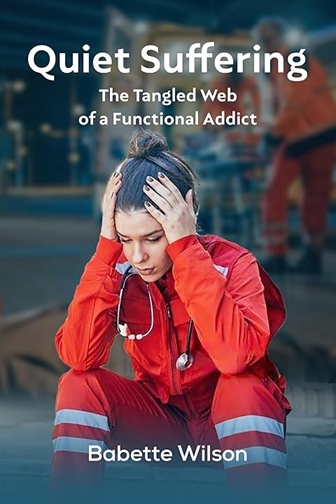
The cover was professionally designed. A strong cover is an important part of introducing readers to a book and creating a professional presentation.
Do you have a marketing plan for the book or are you just winging it?
I believe marketing is an ongoing process. My focus has been on connecting with readers through interviews, author features, book communities, and my website while continuing to build my catalog.
Any advice that you would like to give to other newbies considering becoming Indie authors?
Be patient and focus on the quality of your work. Publishing a book is a significant achievement, but building an audience takes time. Keep learning, keep improving, and don’t be discouraged by setbacks along the way.
End of Interview:
For more from Babette Wilson visit her website and follow her on Instagram.
Get you copy of Quiet Suffering from Amazon US or Amazon UK.