I was talking with my best friend about growing up and how being bullied in middle school is one of those experiences that a lot of people, especially women, seem to carry with them long after it’s over. At some point, I started wondering what happened to my own bully.
So naturally, I did a little social media stalking.
Elizabeth Diane Adams – 29 May 2026
The Back Flap
Melissa Bonetti thought she had it all figured out.
A steady job. An eight-year relationship. A life of comfortable, perfectly average normalcy. Then everything falls apart in a single day. She loses both her job and her boyfriend of eight years in less than 12 hours. Suddenly unemployed, dumped, and living in her childhood bedroom, Melissa is at rock bottom.
Then she runs into Rachel Moore, her middle school tormentor, who made her life hell. Rachel is now a wealthy CEO living a dream life.
While Melissa’s world crumbles, Rachel thrives. It’s the final straw.
Armed with cheap spy equipment and a growing obsession with justice, Melissa embarks on an increasingly unhinged mission to expose Rachel’s secrets. What starts as Internet stalking quickly spirals into something far more dangerous, and Melissa can’t seem to stop.
A darkly comic tale of obsession, friendship, and learning that sometimes the person destroying your life is you.
About the book
What is the book about?
Fully Average follows Melissa Bonetti, a woman whose entire life unravels in a single day after losing both her job and long-term relationship. Forced to move back in with her mother while trying to figure out what comes next, she reconnects with Rachel Moore, the girl who made her middle school years miserable. What starts as curiosity slowly spirals into obsession, bad decisions, emotional chaos, and darkly funny attempts to regain control of a life that no longer resembles the one she imagined for herself.
At its core, the book is about insecurity, identity, friendship wounds, adulthood disappointment, and the messy ways people try to rebuild themselves after hitting rock bottom.
When did you start writing the book?
Interestingly, Fully Average actually started as a script, which I wrote in March of 2024. I’ve been writing stories in screenplay format since I was about fifteen, so writing a novel initially felt very intimidating to me.
I had sent the script to a friend, and after reading it, she grabbed my hands, looked me dead in the eye, and dramatically told me, “This has to be a book.” To be fair, she had also had a couple drinks beforehand, which honestly made the whole moment even more memorable.
At first, I really struggled to picture myself as someone capable of writing a novel. Scripts were what I knew. But eventually I started noodling with the idea of what a book version of the story would actually look like, how the characters would think, how their inner lives would read on the page, and what emotional layers a novel could add that film couldn’t.
And then suddenly… I was writing it.
How long did it take you to write it?
The original script actually came together incredibly fast. I wrote it in less than a week. The book version took longer emotionally, even if the first draft itself moved quickly. I started writing the novel in May of 2024, and the first draft was finished in about a month.
I think already having the story as a script helped a lot. The characters and major story beats already existed, but writing it as a novel let me spend much more time inside the characters’ heads and emotional spirals.
Where did you get the idea from?
The original idea came very randomly, which honestly is how most of my favorite ideas tend to happen.
I was talking with my best friend about growing up and how being bullied in middle school is one of those experiences that a lot of people, especially women, seem to carry with them long after it’s over. At some point, I started wondering what happened to my own bully.
So naturally, I did a little social media stalking.
What I found was that her life seemed… fine. Not perfect, but good. She had built a life for herself, owned a business, and seemed happy enough. I stopped there, but the idea kept evolving in my head. I started wondering how I would feel if her life had looked much more glamorous or successful while mine was falling apart.
Then another thought hit me. What if I bumped into her while I was at the absolute lowest point in my life and suddenly felt like that bullied middle school version of myself all over again?
Once that idea got into my head, it would not leave me alone. I could vividly picture scenes and emotional moments almost immediately. Before I knew it, I was staying up until three in the morning rapidly writing out the core story.
Were there any parts of the book where you struggled?
Honestly, probably the emotional hangovers.
I tend to write best at night, and when inspiration hits, it becomes really difficult for me to shut the creativity valve off. Part of that is excitement, but I think part of it is also fear that I won’t find that rhythm again if I stop. So sleep tends to lose those battles.
When I’m writing a first draft, I also try not to force a rigid ending too early. I like letting the story pull me along a little, which means I end up emotionally experiencing scenes while I’m writing them. If a character is at their worst moment, I feel pretty wrecked while writing it. If they’re happy or hopeful, I feel that too.
There were definitely moments where I had to explain to friends that if I looked like I’d been crying, it was because of the story and not because something terrible had happened in my actual life.
What came easily?
Caring about the characters came easily.
It probably sounds a little sappy, but I get very emotionally invested in the people I’m writing about. I’m rooting for them to succeed or at least survive whatever chaos they’ve created for themselves. I get frustrated with them when they make terrible decisions, even when I understand exactly why they’re making them.
I think that’s part of why I physically feel the emotions while writing. I genuinely want to know what happens to these characters.
Hopefully, that emotional investment translated onto the page and made them feel real to readers.
Are your characters entirely fictitious or have you borrowed from real world people you know?
I already outed myself a little with the story of where the original idea came from, but Melissa is not me.
Rachel Moore is also not one specific real person. She’s more of an amalgamation of my own experiences, different personalities I encountered growing up, and stories I’ve heard from friends over the years.
Do I think “Rachel Moore” types exist in the real world? Absolutely. I’d probably put money on there being quite a few running around out there.
More than anything, I was interested in exploring the emotional impact certain people can leave on us long after we think we’ve moved past them.
We all know how important it is for writers to read. Are there any particular authors that have influenced how you write and, if so, how have they influenced you?
I’ve always been drawn to strong women with sharp comedic voices.
Growing up, I was obsessed with the women of Saturday Night Live. Tina Fey, Amy Poehler, Maya Rudolph, Kristen Wiig, Kate McKinnon… honestly, I could keep going for a while before it became concerning.
Books like Bossypants, Yes Please, and Carrie Fisher’s Wishful Drinking really stuck with me because they balanced humor with honesty and vulnerability in a way that felt incredibly human.
On the fiction side, I’ve been a longtime Suzanne Collins fan. More recently, I’ve completely fallen into the Throne of Glass series as well.
Looking back, I think all of those influences share something in common. Strong personalities, emotional honesty, humor during difficult moments, and women who are allowed to be complicated, messy, funny, or flawed instead of just “likable.” I also absolutely loved Fleabag for a lot of those same reasons.
Those are the kinds of characters and stories I naturally gravitate toward writing too.
Do you have a target reader?
I think the book will probably resonate most with millennial women, or honestly anyone, who enjoys strong female characters making questionable choices.
It’s definitely for readers who like emotionally messy stories, dark humor, complicated friendships, and characters who are trying to figure themselves out while actively making their own lives harder.
If you enjoy character-driven stories where people feel very human, flawed, and occasionally chaotic, you’ll probably connect with Fully Average.
About Writing
Do you have a writing process? If so can you please describe it?
Usually, it starts with an idea that refuses to leave me alone.
I’ll let it sit in my head for a day or two, and if it’s still pawing at my brain after that, I start writing. At that point, it almost feels like a movie playing in my head that won’t leave me alone until I get it onto paper, or more realistically, into a Word document at three in the morning.
Oddly, I also need gentle background noise while I write. Music I already know, a reality show I don’t care about, or a TV series I’ve rewatched too many times. I don’t do well with complete silence. Sometimes there’s too much noise in the quiet.
Once I’m actively drafting, I mostly just keep pushing forward. Occasionally, I’ll reread a little bit to reconnect with the emotional rhythm of where I left off, but I try very hard not to heavily edit while drafting.
If I become too critical of myself too early, it completely kills the creative side of my process. I stop letting ideas flow naturally and start overthinking every sentence. It’s much healthier for me to let the messy version exist first and clean it up later during revisions.
Do you outline? If so, do you do so extensively or just chapter headings and a couple of sentences?
I guess you could technically say the script became an outline for the novel, but I didn’t really outline the script either.
I tend to work in a much more instinctive way. Usually, I know the emotional core of the story, certain scenes I can vividly picture, and the general direction things are heading, but I don’t sit down with an extremely detailed chapter-by-chapter plan.
Part of the fun for me is discovering moments alongside the characters as I’m writing. If I over outline, I think I lose some of the emotional spontaneity that makes the process exciting for me.
Do you edit as you go or wait until you’ve finished?
I’ll procrastinate on editing as much as possible. That’s why they’re called rough drafts.
If I stop too often to critique what I’m writing, I start overthinking everything and the creative momentum disappears. So when I’m drafting, my main goal is simply to get the story out while the emotional rhythm is still there.
The messy version has to exist before I can figure out how to improve it.
Did you hire a professional editor?
I wasn’t able to afford a professional editor, though I did spend a lot of time researching those options.
I think one of the hardest parts of being an indie author is that you’re funding everything yourself. You’re basically pushing all your chips onto the table and betting on yourself creatively and financially at the same time.
Instead, I leaned heavily on some incredibly kind friends who are also avid readers. Their feedback was invaluable.
Honestly, that’s probably one of my biggest tips for newer indie authors. Ask your trusted reader friends for help. Not only do you get real feedback from actual readers, but it’s also incredibly exciting to finally talk about the characters and story that previously only existed inside your own head.
Do you listen to music while you write? If yes, what gets the fingers tapping?
Yes, but oddly I usually need familiar background noise more than carefully curated “writing music.”
I tend to put on music I already know well, reality shows I don’t care about, or TV series I’ve rewatched too many times. I’ve discovered I write much better with some level of comfortable noise in the background because complete silence makes my brain louder somehow.
That said, certain songs absolutely become emotionally tied to specific scenes while I’m writing them.
About Publishing
Did you submit your work to Agents?
Yes, I did.
Honestly, when I received responses at all, most of them were very automated and had a strong don’t call us, we’ll call you energy to them. I completely understand that agents are receiving thousands of submissions and simply can’t personally respond to everyone, but it can still be a little brutal emotionally.
You spend a huge amount of time putting your heart onto the page, so getting silence or form rejections in return can definitely feel like an ego killer.
Weirdly, the process reminded me a little of online dating. You’re hoping for a meaningful connection while preparing yourself for a lot more disappointment than reward along the way.
What made you decide to go Indie, whether self-publishing or with an indie publisher? Was it a particular event or a gradual process?
It was more of a gradual process than one dramatic moment.
I gave myself a timeline and decided I would submit traditionally for about six months. Why six months specifically? Honestly, I have no idea. It was just the number I landed on.
But I also knew I didn’t want to spend years waiting indefinitely for permission to share the story.
At a certain point, I realized I believed in the book enough that I wanted it out in the world regardless of the path it took to get there. I genuinely felt that if readers gave Melissa a chance, they would go on the journey with her.
Indie publishing felt scary, but it also felt proactive. Instead of waiting endlessly, I decided to bet on myself and the story.
Did you get your book cover professionally done or did you do it yourself?
My cover art was professionally done.
I’ve worked as a production coordinator in film and television since 2015, so over the years I’ve built connections with some incredibly talented creative people, including graphic designers and artists.
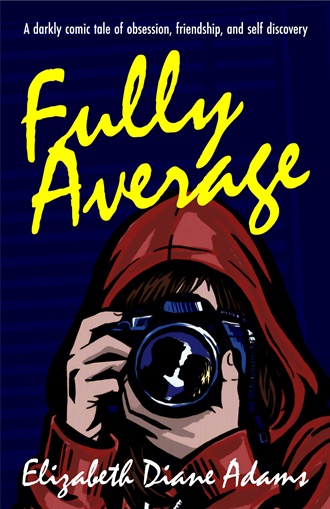
I worked with Alexandra Fernandes on the cover, and I honestly think she knocked it out of the park. I wanted something visually striking that still captured the emotional chaos and tone of the story, and she absolutely delivered.
Do you have a marketing plan for the book or are you just winging it?
Best laid plans when it comes to marketing.
Foolishly, I thought writing, editing, and formatting the book would be the hard part. Marketing has made all of that look easy.
Before release, I reached out to quite a few influencers and reviewers, but like most indie authors quickly discover, getting attention is difficult. I received a few offers for paid reviews, but personally that never felt right for me.
Since then, I’ve focused a lot on growing my presence on TikTok and Instagram, connecting with readers directly, reaching out to bloggers, podcasts, and reviewers, and trying to slowly build momentum organically.
Honestly, the Goodreads reviews helped a lot emotionally. Seeing real readers connect with the story made me feel like, okay, maybe I actually do have something here.
So I’d say my marketing approach is probably a mix of planning and winging it. I think indie authors have to be willing to pivot constantly when something isn’t working and keep experimenting until they figure out what connects with readers.
Any advice that you would like to give to other newbies considering becoming Indie authors?
Love it. Love your story hard.
Because if you don’t genuinely love the story you’re telling, it becomes very difficult to survive the vulnerable parts of being an indie author.
And by vulnerable, I mean you have to be willing to get uncomfortable. You have to put yourself out there, promote yourself, hear silence sometimes, hear criticism sometimes, and still keep believing in what you created.
Nobody is coming to magically discover the secretly brilliant wallflower hiding in the corner. If you’re going indie, you have to advocate for yourself and your work.
You have to believe in your story enough to convince other people to take a chance on it.
Also, don’t reject yourself before anyone else gets the opportunity to. Don’t decide people won’t care before giving them the chance to connect with what you made.
At the end of the day, you really do have to become your own biggest cheerleader.
About You
Where did you grow up?
I was born in Honolulu but mostly grew up in Southern Oregon.
Despite growing up in Oregon, I will always prefer Hawaiian beaches over Oregon rivers. Sorry, but rivers are aggressively cold.
I was also very much a theater kid growing up. Some of my favorite roles included Smee in Peter Pan and Aunt Em in The Wonderful Wizard of Oz.
Where do you live now?
I currently live in Portland.
I did briefly live in Los Angeles prior to the 2020 pandemic, but eventually moved back to Portland, where I graduated from Portland State University.
What would you like readers to know about you?
Storytelling has always been a huge part of my life. I love movies, television, books, theater, honestly, anything capable of making people feel something. Writing and reading both grew pretty naturally out of that.
When I’m not writing, I’m usually baking. Sourdough bagels are weirdly one of my specialties.
I also have a corgi named Luna Bear who functions as both my shadow and occasional supervisor.
In 2024, I went to The Eras Tour and got to witness Travis Kelce unexpectedly appear on stage, which caused what I can only describe as a collective emotional breakdown among roughly 90,000 Swifties.
I also love traveling. Venice and Capri have probably been my favorite places I’ve visited so far, though London is still unbeatable when it comes to theater.
What are you working on now?
I’m currently working on the rough draft of a new novel called Dead Dad Club. It follows a woman returning home after the death of her estranged father while trying to untangle grief, anger, guilt, and all the complicated emotional baggage that comes with losing someone you already lost a long time ago.
Like Fully Average, it’s darkly funny, emotionally messy, and very character-driven. It’s definitely a heavier story at times, but I think humor has a way of making difficult conversations more honest. I’m really excited about it, even if writing it occasionally feels emotionally catastrophic.
End of Interview:
Get your copy of Fully Average from Amazon US or Amazon UK.