It’s a book of ideas. It explains lot’s of different concepts regarding psychology, sociology, propaganda, belief systems, and plenty more, but not at all in an academic style.
The Back Flap
In the mornings PR and marketing man Will Camden persuades people to drink coffee, travel by train and to become vegans. In the afternoons he uses the same skills to persuade people to believe in aliens and the Illuminati.
Confessions of a Professional Conspiracy Theorist is an eye-opening real-world story about how our views, decisions and beliefs are shaped, managed, and steered — and the people who benefit from making it happen. It covers PR, marketing, psychology, sociology, persuasion, propaganda, modern mythologies, and conspiracy culture.
Funny, intelligent, and sharply observant, it explores how narratives are built, how beliefs spread, and why people are more persuaded by emotion and psychology than by facts.
About the book
What is the book about?
Based on real events, the book is a memoir-style confessional novel about a PR and marketing man who spends his days influencing and persuading the public into adopting the views, opinions and lifestyles which his client wants them to make. He is then drawn into a campaign where he is tasked with using his skills to help spread conspiracy theories, and to encourage a widespread belief in aliens and the Illuminati.
It’s not a straightforward memoir, nor is it a simple novel. It’s a mix of satire, social commentary, historical fiction, and speculative cultural analysis. It reads like a confession, an exposé, and a fable all at once, and describes how belief systems can be manufactured if you understand the levers of psychology and culture.
When did you start writing the book?
In my head, about 25 years ago. It’s based on an actual true story of a friend of mine. I spent years telling him he should write it all down, and eventually he agreed to let me have the story as my own.
How long did it take you to write it?
Once I got going, it only took a couple of months, as I already had the basic outline in my head.
Where did you get the idea from?
As I’ve said, it’s based on a real story of a friend of mine. We met when I was starting to see patterns in how we are influenced and persuaded in our normal everyday lives. We met by chance and started talking, and it turned out he was one of the people responsible for what I had already seen for myself.
Were there any parts of the book where you struggled?
I’m not a natural writer. I had the story and the outline, but I struggled to make it flow well, so there were many, many rewrites of each chapter and section.
What came easily?
The whole plot. The story. It’s all true, so it was easy having a start, middle and finish.
Are your characters entirely fictitious or have you borrowed from real world people you know?
All the characters in the book are based on very real people, but I’ve chosen to disguise their identities.
We all know how important it is for writers to read. Are there any particular authors that have influenced how you write and, if so, how have they influenced you?
I don’t follow any particular authors. It’s all about the individual books. However, I guess Irvine Welsh showed me that you can create your own style and go off on tangents whenever you wanted.
Do you have a target reader?
It’s a book of ideas. It explains lot’s of different concepts regarding psychology, sociology, propaganda, belief systems, and plenty more, but not at all in an academic style. It’s probably not for people who like a nice straightforward story, it’s more for readers who like thought provoking non-fiction.
About Writing
Do you have a writing process? If so can you please describe it?
I just started putting things down, and then expanded on them until I had the basis of each chapter.
Do you outline? If so, do you do so extensively or just chapter headings and a couple of sentences?
I already had the main bulk of the story. So it was just a case of putting the main points down as separate chapters, and then building each one up until I had a fairly complete story.
Do you edit as you go or wait until you’ve finished?
I did it all at the end.
Did you hire a professional editor?
No, I didn’t have the funds to hire a professional. Instead I had a trusted friend to proof read, plus I just read the thing over and over tweaking it until it felt right.
Do you listen to music while you write? If yes, what gets the fingers tapping?
No, I need total peace when I’m trying to concentrate.
About Publishing
Did you submit your work to Agents?
No.
What made you decide to go Indie, whether self-publishing or with an indie publisher? Was it a particular event or a gradual process?
It was the cost, and the returns. I have a good story which is interesting and original. I’ve put a lot of work into it. So, as I’m sure most authors would recognise, it seemed that anyone else you pass it over to seem to take far too much of a percentage of any sales. So, when I started muling over my options, it seemed that the tools were all there to go it alone, so that’s what I did.
Did you get your book cover professionally done or did you do it yourself?
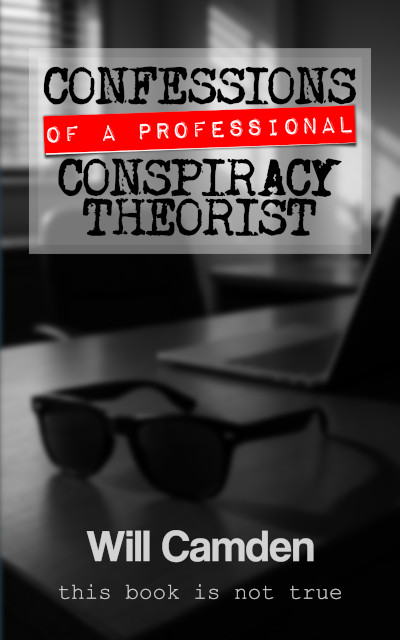
I’m lucky to have a friend who designed the cover for me.
Do you have a marketing plan for the book or are you just winging it?
I’ve decided to not sell on Amazon, as I want to do my bit in protecting the future of independent book shops. Of course, this makes it very difficult to get any exposure, so marketing is extremely hard and slow. We have a website which has background articles about the concepts in the book, so we’re using that as a platform to promote the book.
Any advice that you would like to give to other newbies considering becoming Indie authors?
All the tools are out there for you to do it.
End of Interview:
As indicated in the interview above, you can’t get this book from Amazon, but you can get it on his website here.