I noticed that much of what I was suffering was not happening in the moment at all. It was in memories of being well and in worries about what came next.
A.C. Amarasinghe – 24 November 2026
The Back Flap
Something feels missing. Not because anything is wrong with your life — but because the mind you’re using to live it has never been properly understood.
The Return of Attention offers a simple, practical method for working directly with how your mind actually functions — not through belief, willpower, or years of discipline, but through the one thing always available to you: attention itself.
This book walks you through a progressive practice that transforms how you relate to thoughts, emotions, and experience — from the inside out.
You won’t find motivational advice here. You’ll find something more useful: a clear map of how the mind works, and a step-by-step path to the only happiness that doesn’t depend on circumstances.
About the book
What is the book about?
It is a practical book about attention: where it goes, why it keeps going back, and what changes when you can see it happening. Every thought is about the past, the present or the future, and it either likes, dislikes or is neutral toward what it finds. That gives nine positions, which the book calls the Present Attention and Happiness Matrix. Overthinking, worry and regret turn out to be attention standing on particular positions, and the practice is learning to recognise the position and return to the one place where nothing is being pushed or pulled.
When did you start writing the book?
In 2022, although I did not know it was a book then. That year an autoimmune diagnosis sent me looking seriously at how the mind works, and I started keeping notes.
How long did it take you to write it?
About three to four years from the first notes to publication in March 2026. Most of that time was living with the ideas and testing them; the writing itself came at the end.
Where did you get the idea from?
From my own mind during illness. I noticed that much of what I was suffering was not happening in the moment at all. It was in memories of being well and in worries about what came next. I went looking for a happiness that does not depend on circumstances, read widely, and found many ways in but very little structure. The map was my attempt at that structure.
Were there any parts of the book where you struggled?
Keeping it simple. The ideas are old and deep, and the temptation was to explain everything. The harder job was cutting it down to what a reader can actually use on an ordinary, difficult day.
What came easily?
The map itself. Once I saw that every thought had a time and a charge, the nine positions fell into place almost at once, and most chapters grew from examples in my notes.
Are your characters entirely fictitious or have you borrowed from real world people you know?
It is non-fiction, so there are no characters. The examples come from ordinary situations most readers will recognise: a replayed argument, worry at 3 a.m., the end of a relationship.
We all know how important it is for writers to read. Are there any particular authors that have influenced how you write and, if so, how have they influenced you?
Jiddu Krishnamurti’s talks. They nudged me to stop looking for answers outside and to watch my own mind directly.
Do you have a target reader?
Anyone whose mind will not switch off: people who overthink, replay conversations, or worry about things that have not happened. No background in meditation or psychology is needed.
About Writing
Do you have a writing process? If so can you please describe it?
Notes first. I wrote down thoughts as they happened and where they were pointing, then sorted them. Chapters grew around the patterns. Any practice went in only if it worked for me on a bad day, not just a calm one.
Do you outline? If so, do you do so extensively or just chapter headings and a couple of sentences?
Lightly. The nine positions gave the book its skeleton, so the outline was a list of chapter headings with a few lines under each.
Do you edit as you go or wait until you’ve finished?
I finish a draft first and then edit hard, mostly by cutting.
Did you hire a professional editor?
No. English is my second language, so I used AI tools to fix grammar and phrasing. The framework, the ideas and the examples are mine.
Do you listen to music while you write? If yes, what gets the fingers tapping?
No, I write in silence.
About Publishing
Did you submit your work to Agents?
No.
What made you decide to go Indie, whether self-publishing or with an indie publisher? Was it a particular event or a gradual process?
A gradual process. The book was finished and I wanted it in readers’ hands without waiting a year or more for a traditional cycle. Self-publishing on Amazon also let me keep the text exactly as written.
Did you get your book cover professionally done or did you do it yourself?
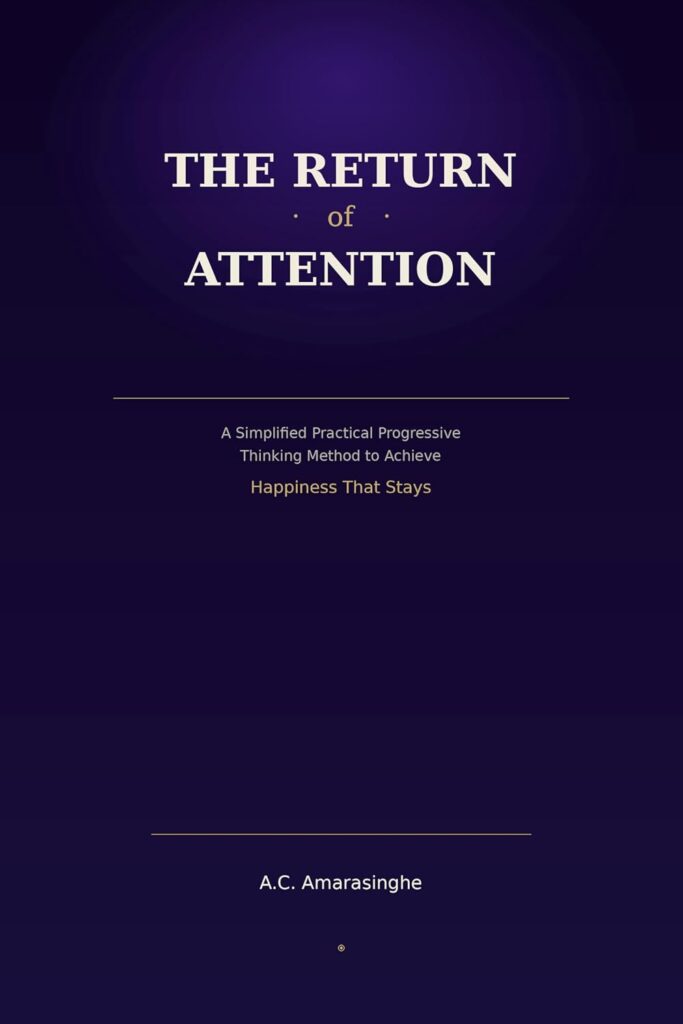
I made it myself.
Do you have a marketing plan for the book or are you just winging it?
A simple one. I write weekly on a blog that answers the questions people search for at night, like why they cannot stop overthinking, and each post shows the same map from the book. The idea is that the writing should be useful on its own, and the book is there for anyone who wants the whole method.
Any advice that you would like to give to other newbies considering becoming Indie authors?
Write what you have lived and tested, and keep the reader’s real problem at the centre. Then publish. A finished book that helps a few people is worth more than a perfect one that never leaves your desk.
About You
What would you like readers to know about you?
That I am not a therapist or a teacher. I am someone who needed this for himself, wrote down what worked, and is sharing it in case it helps someone else.
What are you working on now?
A weekly series at ayutalks.com/blog applying the map to overthinking, worry, sleep, relationships and work.
End of Interview:
Get your copy of The Return of Attention from Amazon US or Amazon UK.