For me, fiction becomes convincing not when a character resembles one particular person, but when a reader thinks, “I know this feeling.”
Svetlana Rodina – 19 November 2026
The Back Flap
Her father did not vanish. He was edited out.
At fifty-three, Rose Hood has become skilled at living beside loss: an ageing mother in Moscow, a grown son pulling away, a career quietly reducing her to “institutional memory”, and a city that keeps people company without offering comfort.
Then a worn parcel arrives at her Buenos Aires apartment: photographs, tram tickets, old receipts, and a file marked with her name. Inside is a version of her childhood that does not match the one she was taught to survive.
As Rose follows the trail through archives, railway stations, forgotten apartments and the neighbourhood where her father may have lived within reach, her mother begins to forget the only facts that might still matter. The family story is collapsing from both ends: the documents are speaking, and the witness is disappearing.
About the Book
What is the book about?
Red Riding Hood: The Letter from the Wolf begins with a disturbing possibility: what if the people who loved you also edited your past?
Rose is 53 and lives in Buenos Aires. A box of photographs, letters and documents begins to contradict the family history she has believed for decades. At first, she wants answers. Very quickly, the question becomes larger: if the story of your past changes, what happens to the person you thought you were?
The novel is about family memory, migration, identity and inherited narratives, but also about beginning again at an age when women are too often written as if their most important experiences are already behind them.
When did you start writing the book?
I started writing the book in 2025.
I began with the central question rather than with the plot: what happens when memory and evidence no longer agree? Once Rose existed, the rest of the novel began to grow around that conflict.
How long did it take you to write it?
About a year.
The first draft was only part of the work. I spent a great deal of time rewriting because this story depends on when the reader learns each piece of information. A photograph or a letter cannot simply reveal something. It has to change what Rose, and the reader, believed a few pages earlier.
Where did you get the idea from?
The novel began after a period of very strong personal emotions.
I did not want to reproduce my own life directly, but I needed to turn those emotions into something with structure, distance and meaning. Fiction gave me a way to do that.
From there came the central question of the novel: what happens when the story you have believed about your own life no longer feels reliable?
I became fascinated by the way families remember, omit, reinterpret and sometimes protect people through silence. One person leaves something out, another remembers it differently, and years later that version has become “the truth.”
That emotional starting point eventually became Rose’s story.
Were there any parts of the book where you struggled?
The hardest part was deciding how much Rose could discover before the reader stopped trusting the family story completely.
I wanted suspense, but I did not want the novel to become simply a puzzle with a solution at the end. Every discovery had to cost Rose something emotionally. She is not investigating strangers. She is reconsidering the people who formed her understanding of herself.
I also resisted making one person the convenient villain. Families are rarely that simple.
What came easily?
Rose came easily.
I knew from the beginning that she had to be 53. I wanted a woman with a full life behind her, with responsibilities, memories, disappointments and a settled explanation of who she is.
That makes disruption much more interesting. At 23, you expect your identity to change. At 53, discovering that the foundations of it may be wrong is something else entirely.
Are your characters entirely fictitious or have you borrowed from real world people you know?
The characters are fictional, but the emotional mechanisms are very real.
Families protect, forget, reinterpret and sometimes quietly rewrite their own histories. I borrowed those patterns rather than individual people.
For me, fiction becomes convincing not when a character resembles one particular person, but when a reader thinks, “I know this feeling.”
We all know how important it is for writers to read. Are there any particular authors that have influenced how you write and, if so, how have they influenced you?
Daphne du Maurier, Anton Chekhov and Fyodor Dostoevsky are among my favourite authors.
From du Maurier, I love the atmosphere of uncertainty, the feeling that something important may be hidden just beneath the surface of an apparently ordinary life.
Chekhov taught me the power of restraint. A character does not always need to explain what they feel. Sometimes a gesture, a silence or a seemingly insignificant detail says more.
And Dostoevsky fascinates me because of the intensity of his psychological conflicts. His characters are rarely simple, and neither are their motives.
I do not try to imitate any of them, but I am sure their way of looking at people, secrets and inner contradictions has influenced the way I write.
Do you have a target reader?
Yes.
I write for readers who enjoy character-driven fiction about family secrets, memory, identity and the moment when an ordinary life suddenly stops making sense.
But I also write very consciously for women who rarely see the complexity of their own age represented in fiction.
A woman over 50 does not have to be looking backwards at the end of her story.
She can be standing at the beginning of its most disruptive chapter.
About Writing
Do you have a writing process? If so can you please describe it?
I begin with a question that bothers me.
Not a plot. A question.
For this novel it was: if the story you inherited about your family turns out to be incomplete, how much of your identity survives?
Then I build the characters and structure around that question. I need to understand what each revelation changes, not only what happens next.
Once I have the emotional logic, I can work on scenes, dialogue, chronology and the documentary elements.
Do you outline? If so, do you do so extensively or just chapter headings and a couple of sentences?
I outline enough to know where the pressure points are.
With a novel built around documents and discoveries, information cannot appear randomly. I need to know what the reader believes at each stage and what will disturb that belief next.
But I do not outline every emotional movement. If the plan becomes too rigid, characters start behaving like employees following instructions, and nobody wants to read that.
Do you edit as you go or wait until you’ve finished?
Both.
I edit as I write because voice matters to me. If a scene sounds wrong, it usually means something deeper is wrong.
But the most important editing happens after the manuscript exists as a whole. Only then can I see whether a scene is genuinely necessary or whether I simply became attached to it because I spent three hours writing it.
Writers are sentimental creatures. Editing is where sentiment has to lose occasionally.
Did you hire a professional editor?
Yes. The Spanish edition also went through professional editorial work.
That was especially important because translating and adapting a novel is not simply replacing one set of words with another. The emotional rhythm, dialogue and cultural texture have to feel natural in the new language.
Do you listen to music while you write? If yes, what gets the fingers tapping?
Usually no.
When I am writing dialogue or working closely with prose, I need to hear the rhythm of the language itself.
Music is wonderful, but it has the irritating habit of already having its own rhythm.
About Publishing
Did you submit your work to Agents?
I have explored both traditional and independent routes.
I do not see them as opposing religions. They are different ways of getting a book from a writer to a reader, and each book may need a different route.
What matters to me is keeping enough control to develop the work internationally while remaining open to traditional opportunities when they make sense.
What made you decide to go Indie, whether self-publishing or with an indie publisher? Was it a particular event or a gradual process?
It was gradual.
Independent publishing gave me something extremely valuable: speed and control.
I could publish internationally, work across several languages and test different ways of reaching readers without waiting for every decision to pass through a long chain of approval.
But independence is not the easy option. You gain control and immediately discover that control comes with an invoice.
The author becomes responsible for the book, the editing, presentation, distribution and promotion.
Strangely enough, I found that part interesting too.
Did you get your book cover professionally done or did you do it yourself?
I created the original concept myself.
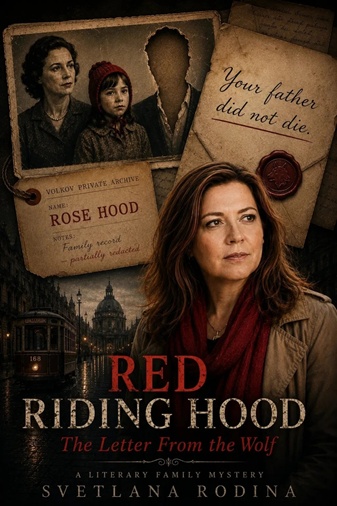
I used one of my own photographs and then worked with ChatGPT to transform it into the visual background for the cover.
That mattered to me because I did not want a generic image. I wanted the cover to begin with something personal and then become part of the fictional world of the novel.
The final image needed to suggest a woman in the present, Buenos Aires, and fragments of a past that has not stayed quietly in the past.
Do you have a marketing plan for the book or are you just winging it?
Definitely a plan.
Although every marketing plan eventually has the pleasure of meeting actual human behaviour.
The strategy is international because my books are published in English, Spanish, Russian and Icelandic. I am working with reviewers, book blogs, reader communities, written author features and direct outreach rather than relying on one platform.
What fascinates me is the moment when a complete stranger stops scrolling and becomes curious.
Marketing a novel is another form of storytelling, except you have considerably less space and several million competitors.
Any advice that you would like to give to other newbies considering becoming Indie authors?
Do not confuse publishing a book with making a book available for sale.
Those are two completely different achievements.
Finish the book properly. Edit it. Make the presentation professional. Then assume nobody knows it exists.
Independent publishing gives writers enormous freedom, but freedom means responsibility. You suddenly have to understand things that appeared to have nothing to do with writing: metadata, distribution, covers, pricing, reader behaviour and promotion.
And do not wait until everything feels perfect.
Perfect is remarkably efficient at keeping books away from readers.
About You
Where did you grow up?
I grew up in Russia and now live in Buenos Aires.
Living between countries and languages has made me very aware of how much identity depends on context: language, place, family history and the stories we use to explain where we belong.
That inevitably finds its way into my fiction.
Where do you live now?
I live in Buenos Aires, Argentina.
Buenos Aires became more than a backdrop for Red Riding Hood: The Letter from the Wolf. Its neighbourhoods, architecture, migration history and mixture of past and present fit naturally with a novel about memory.
It is a city where history is often physically visible around you, which made it the right place for Rose’s story.
What would you like readers to know about you?
I am a multilingual writer based in Buenos Aires, and my books have been published in English, Spanish, Russian and Icelandic.
I am interested in the moment when the story a person has been telling about their own life suddenly stops working.
Memory, migration, identity and reinvention keep bringing me back for that reason.
And I am particularly interested in women over 50 as protagonists.
I do not think their most interesting stories should automatically belong to their past.
What are you working on now?
Red Riding Hood: The Letter from the Wolf is the first of four contemporary novels that use familiar fairy-tale structures to examine the lives of adult women.
They are not traditional fairy-tale retellings.
I am interested in the expectations those stories leave behind: the wolf, the prince, the glass slipper, the idea that eventually someone will arrive and make everything resolve itself.
My characters are old enough to have waited for those endings.
The interesting part begins when they stop waiting.
End of Interview:
Get your copy of Red Riding Hood: The Letter from the Wolf from Amazon US or Amazon UK.