A story about freedom has to leave room for the reader’s freedom, too. The difficult balance is allowing the questions to live through the characters, rather than having the characters explain what I want the reader to think.
Alex Newman – 8 November 2026
The Back Flap
He wakes in a future he cannot explain. His past has vanished. His body knows when danger is coming.
Beyond the vast university ships, an unexplained death draws him into armed conflict and a search for answers that reaches across worlds. A growing attachment gives him something to live for—and something his enemies could take.
The Consent Chronicles begins with a space opera of lost identity, dangerous discoveries, and love caught in a struggle over who gets to decide another person’s future.
About the book
What is the book about?
It begins with a man who cannot remember his own life. Vittorio wakes in a future that has continued without him, and the question of who he was becomes inseparable from the question of who he is allowed to become.
Around him is the much larger world of The Consent Chronicles: a space opera where power reaches into memory and choice. I want the reader to feel that scale, but also to stay close to a person trying to find his footing. Somewhere between an intimate uncertainty and a vast political struggle, the story asks how much of a life really belongs to the person living it.
When did you start writing the book?
I began around 2014, after a conversation with a Buddhist monk about the story I wanted to tell. He listened and suggested that not everyone would be ready to read it. I should finish it when I felt the time was right.
I carried that thought with me. There were other projects, other books, and long pauses between visits to this one. But I kept coming back. Its people were still there, and there were things I had not yet said through them.
How long did it take you to write it?
I finished the manuscript in 2024, about ten years after I began. That sounds like ten years at a writing desk, but life was rather less orderly. Other books and projects needed my attention, and I wrote this story in stretches, returning to it when I could.
Then came revision. Writing the last scene did not mean closing the door. I went back through the pages, finding what needed to be clearer, what needed more room, and what I had rushed past while trying to catch the story in my head.
Where did you get the idea from?
An early conversation with a Buddhist monk became an important part of this story’s journey. I spoke to him about what I wanted to write. He thought some people might not be ready for it and encouraged me to finish when I felt the time was right. His response made me think about the responsibility that comes with opening difficult questions in a story.
The questions that kept drawing me back concerned memory, identity, and a person’s freedom to choose. Growing up in Asia and travelling through different cultures had already taught me how much our understanding depends on where we stand. Science fiction gave me room to explore those questions on a much larger scale while keeping a human life at their centre.
Were there any parts of the book where you struggled?
A story about freedom has to leave room for the reader’s freedom, too. The difficult balance is allowing the questions to live through the characters, rather than having the characters explain what I want the reader to think.
In a space opera, the scale can be enormous. I want a reader to sense that wider world while still hearing the hesitation in a voice or understanding why someone cannot say a particular thing. Those small moments need as much care as the forces moving around them.
What came easily?
The human questions are the part I feel closest to: what someone wants to protect, what they are afraid to lose, and how love can make a decision more difficult. Poetry has always lived alongside my prose, so the sound of a voice matters to me as well.
I am drawn to the moment before an answer, when a person knows that a few words may change something between them and someone else. That is a place I recognise, even when the conversation happens in a world far from our own.
Are your characters entirely fictitious or have you borrowed from real world people you know?
They belong to the world of the novel. The feelings I want them to carry are recognisably human: uncertainty, attachment, the wish to be understood, the fear that someone else may decide your life for you.
Travelling and speaking with people from different cultures has made me more attentive to how differently we can understand the same situation. I bring that attention to my characters. I want each of them to have an inner life, including things I cannot reduce to a simple explanation.
We all know how important it is for writers to read. Are there any particular authors that have influenced how you write and, if so, how have they influenced you?
My reading moves between very different worlds. Tolstoy interests me for the way private lives continue inside the great movement of history. In Dune, I am drawn to the scale of the imagined world and the pressure that belief and power place on a person. Foundation opens another kind of distance, asking us to think beyond a single lifetime.
I also love books such as The Alchemist and The Midnight Library, which make room for very intimate questions about a life and its possibilities. What connects these books for me is the feeling that I have left with something still moving in my mind. I would like my own stories to leave that kind of space.
Do you have a target reader?
I think of a reader who enjoys a vast imagined universe and still wants to feel close to the people inside it. Someone who is curious about memory, identity, and power, and who likes a mystery that opens into larger questions.
They do not have to arrive with the same answers I have. I would rather we meet in the uncertainty. If they care about a person’s freedom to choose, even when that choice is difficult to understand, there is something in this story I hope they will recognise.
About Writing
Do you have a writing process? If so can you please describe it?
Before I ask what a character will do in the story, I try to understand how they live. Who is waiting for them at home? Who is their family? What work fills their days, and what sort of people do they spend those days with? In a space opera, I also need to know their planet. The world they come from may have shaped their appearance as well as their way of looking at someone else.
Then the scenes begin to move. I write quickly, because it feels as though I am watching a film and taking notes while it is still running. A look, a reply, a sudden change in the scene: I am afraid of losing something if I stop too long. The page can become a mess. But somewhere in that mess I have caught the feeling of the moment, and later it helps me find my way back.
Do you outline? If so, do you do so extensively or just chapter headings and a couple of sentences?
Yes. Once I know something about a character’s life, I plan what happens to them at the beginning, in the middle, and at the end. It gives me a way into the story.
Of course, the character does not always arrive at the end in the condition I had intended. Someone may leave the story, be cut from it altogether, or merge with another character and become a new person. I can begin with two people and discover, while writing, that the story needs the one they become together.
So I make a plan, but I keep listening. There is little point in learning more about a character if I refuse to let that understanding change anything.
Do you edit as you go or wait until you’ve finished?
I edit afterwards, and I can spend a long time on it. When the thought and the scene are there, I want to write them down before they disappear. I write fast. Sometimes, when I reopen the pages, I have to wonder who was in such a hurry. Then I remember: it was me, trying to keep up with the film in my head.
The sentences may be untidy, but they hold the emotional key to the moment. Once I find that again, I can slow everything down. I look at the small details, work out what needs to be seen or heard, and put the scene into words a reader can follow. That is when I correct the mistakes, too. There are usually plenty waiting for me.
Did you hire a professional editor?
No. At the time, I knew much less about the practical side of publishing than I do now. Friends read the pages and pointed out mistakes, and most of that patient reading came from my family.
They had to make their way through a story I had been living with for years, including the places where I could see everything perfectly in my head and had somehow forgotten to put enough of it on the page. Their comments helped me come back and look properly. I am grateful that they gave the book their time and told me what needed attention.
Do you listen to music while you write? If yes, what gets the fingers tapping?
Yes, there is almost always music playing at home, and it comes with me when I travel. Usually it is soul, jazz, something quiet, or music for meditation.
It is a familiar presence while I write. I may have a whole scene rushing through my head, but the room around me can stay calm. I like that feeling.
About Publishing
Did you submit your work to Agents?
I did not send the manuscript to agents myself. Friends who had read my work often insisted that I publish. Quite a few manuscripts had accumulated, and apparently my drawers were enjoying a rather unfair monopoly on them.
One friend sent several chapters to a publisher without telling me. The manuscript had been introduced. Its author, unfortunately, had not.
What made you decide to go Indie, whether self-publishing or with an indie publisher? Was it a particular event or a gradual process?
My friends had been asking me to publish for years. Some had passed the stage of asking politely. I had written plenty, they had read it, and they wanted me to let the books reach other people.
Then one morning, after a concert and a party that had ended rather late, my phone rang. A woman said she liked my manuscript and wanted to work with me.
This was excellent news. I was simply not awake enough to recognise it.
Who was she? Which manuscript? I had sent nothing to anyone. I explained this with all the confidence of a man who knew absolutely nothing about what had happened, and put down the phone. Some writers wait years for an editor to call. I answered mine and informed her that she must have made a mistake.
Later, my friend confessed that he had sent several chapters to a publisher. At last, the mysterious woman’s call made sense. My response, rather less so. I never called her back.
But I kept remembering it. My friend’s confession and that missed conversation helped me see that perhaps these books should leave the drawer after all. I write about things that trouble me, things I hope might help someone understand a life a little better or find the courage to change it. Eventually I published my books, including MANGO and The Consent Chronicles, through Amazon KDP.
I would like to say I now greet every unexpected opportunity with perfect composure. At least I try to stay on the phone long enough to hear who is calling.
Did you get your book cover professionally done or did you do it yourself?
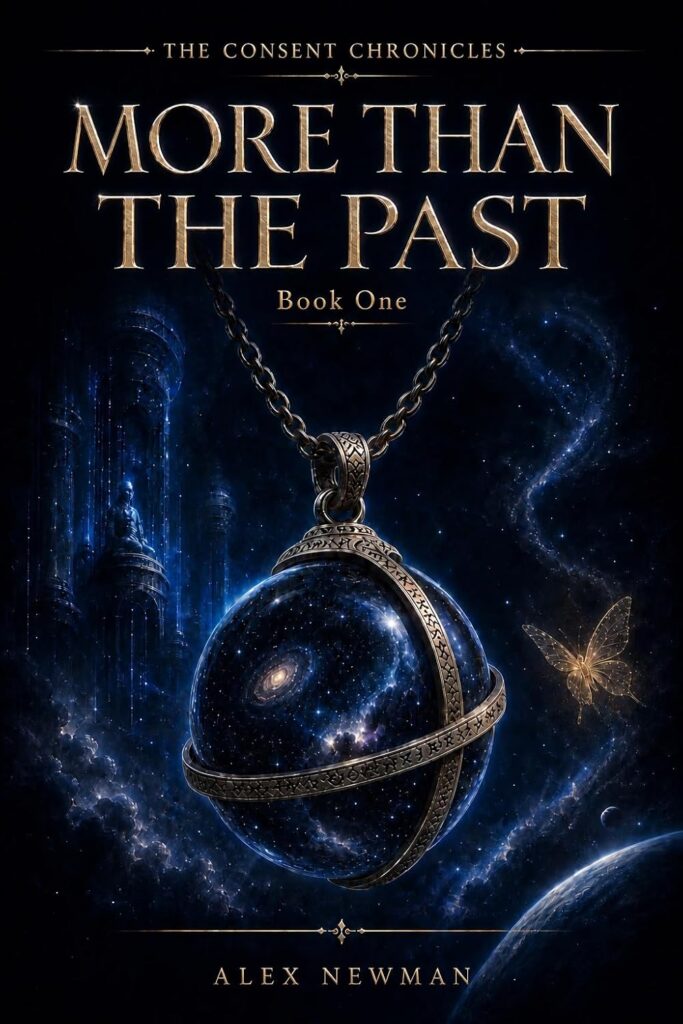
My daughter helped me make it on her iPad. She had read the book, and then I tried to explain the picture I could see in my head. There were probably enough words in those explanations to begin another book.
She had the advantage of understanding the story already. She also had to work out what her father meant when he described something as though it were a scene everyone else could see. Somehow, between her reading, my explanations, and the iPad, the cover took shape.
I like that it began that way: my daughter looking at the world I had written and helping me give it a face.
Do you have a marketing plan for the book or are you just winging it?
I am building my readership through author profiles, written interviews, and original pieces about the questions behind my stories. I want people to have a chance to meet the writer and decide whether the books might speak to them. My Amazon Author Page brings the published titles together.
I am still learning what reaches the right readers, so I cannot claim a method has already proved itself. For now, I try to make each introduction worth reading in its own right, while leaving the discoveries in the novels for the reader.
Any advice that you would like to give to other newbies considering becoming Indie authors?
Do not let fear make the final decision about your book. Give the work your attention, listen to honest criticism, and then let it leave the drawer. You cannot know who will open it. That uncertainty can be frightening, but it is also where its possibilities begin.
A reader may find words for something they have carried alone. They may understand another person a little better, or discover the courage to change something in their own life. We cannot promise that our stories will do those things. We can give them the chance. That is a reason to publish that still matters to me.

About You
Where did you grow up?
I grew up in Asia. Living among its different cultures, and later travelling more widely, taught me that the world can look very different from another person’s side of a conversation. I have spoken with monks and with people whose lives were far removed from my own, listening to their stories, beliefs, and customs.
Those encounters have changed the way I look at people. They also keep me curious about what lies beyond the version of the world I already know.
Where do you live now?
I live mainly on the island of Phuket, in Thailand. I also love travelling, so there are journeys between the stretches of writing. Asia remains a familiar part of my life, and I keep finding new things to notice there.
What would you like readers to know about you?
I began writing at school, with articles about protecting nature and defending human rights. Later came newspaper pieces about history and remarkable lives, work in television, and poetry that continued alongside everything else. Outside writing, I love travelling, drawing, and racing.
What has stayed with me through those different parts of life is an interest in people: what they hope for, what they protect, and what they find difficult to say. I want my books to make room for that complexity. However distant the world of a story may be, I hope a reader can meet someone there who feels alive.
What are you working on now?
For more than two years, I have been working on another novel, which I plan to publish in early 2027. It returns to questions about how deeply we can know another person, what love asks of us, and how much remains unspoken in a shared life.
I am giving that story the care it needs. At the same time, I am introducing MANGO and The Consent Chronicles to readers and making my published books available in more languages. I want the feeling behind them to remain intact wherever a reader finds them.
End of Interview:
For more from Alex Newman visit his website.
Get your copy of More than the Past from Amazon US or Amazon UK.