At its inception, Foxtail was never meant to be a commercial product; it was a private psychological and emotional exercise designed to excavate and exorcise my demons.
David Barnett – 2 November 2026
The Back Flap
I was a creature born of the frequency, driven by an insatiable hunger to stir the air and rattle the cage. I didn’t just want to be heard; I wanted to orchestrate a commotion so resonant it would vibrate the entire universe. While the landscape around me was built on the quiet prescriptions of conventional expectations, I was already pulsating with grandiose intent.
When I was sixteen years old, a tectonic shift fractured the foundation of my home life, and a surge of primordial electricity detonated something inside me. I couldn’t decrypt its arcane message, and I could no longer contain the beast within.
And thus, the Rooster was born.
On a hell-bent quest for the glory of the stage, I set out to conjure my very own rock and roll band. Amidst a landscape of existential dread and chemical disillusionment, the music became my sanctuary—the only way to survive the dissonance was to manifest a cacophony of it without.
Standing in the wake of this transformation was Doug: the archetypal golden boy, my gilded mirror, and my closest friend. We’d always been two sides of the same coin, linked by a bond forged way back in the fourth grade. But while he chased varsity basketball glory and found strength and order atop the hardwood court, I was busy learning how to breathe the fire. We were two juxtaposed souls chasing different versions of the same impossible dream—trying to outrun our own shadows.
Foxtail is a visceral reckoning with the cost of our own alchemy. It’s a chronicle of duality, blind ambition, and the desperate belief that the world owes us a destiny. In this unflinching memoir, David Barnett explores whether the selves we create to survive the fire are the very ones destined to burn us down.
About the Book
What is the book about?
At age sixteen, with his home life shattered following his mother’s breast cancer diagnosis, David Barnett escaped into the underground music scene, and in a desperate quest for salvation, conjured his own rock and roll band. Foxtail is the unflinching chronicle of the events that generated that line of demarcation—and the chaos that transpired thereafter. It recounts not only the events that occurred, but a fundamental shift in perspective brought upon by a profoundly traumatic experience, a subsequent descent into madness, and the complete fracturing of his relationship with his childhood best friend, Doug—the quintessential “golden boy” who possessed a latent, destructive rebellious streak. Traversing the treacherous terrain of the road less traveled, the narrative conducts an honest autopsy of failed ambitions and the collateral damage left in the wake of blind ambition. Ranging from a transformative first experience with illicit substances to the confounding nature of ego and identity, this memoir explores whether the selves we create to survive the fire are the very ones destined to burn us down.
When did you start writing the book?
The composition of the manuscript began roughly eight years ago, but the reality is that I didn’t start off with the conscious intention of becoming an author. At its inception, Foxtail was never meant to be a commercial product; it was a private psychological and emotional exercise designed to excavate and exorcise my demons.
My initial life’s ambition was to be a real-life rockstar—not an author—and after failing spectacularly at that goal, I descended into a pitch-black abyss of despair. Writing ultimately became my absolute salvation—and I mean “writing,” not “authoring.” I never expected to be a published author. At first, this was all just an exercise—an exercise to exorcise my demons—but somewhere along the line, maybe around the time I finished the fourth draft, I came to the realization that perhaps I’d become a halfway-decent writer, and that the world might just appreciate my work.
When I finished draft one, it was absolute dogshit—but I thought I was God’s gift to writing. I thought that all I had to do was edit for grammar and syntax, and bing-bang-boom: NY Times Bestseller. Once I began “editing,” it didn’t take me long to come to understand that, in my current form, I was a God-awful writer. It was soul-crushing, and I shelved it for about six months. I always knew I’d pick it up again. I just had to wait long enough for my bruised ego to heal. I had to do ego rehabilitation, which required quite a few sleepless nights—and quite a few Coors Lights. Once the mortification had subsided to a degree in which I could begin a revision—or a rewrite, rather—without wanting to stick my head in the oven like Sylvia Plath, I dove back in.
Over the next eight years, I underwent a transformation. I evolved in many ways, but the most essential development was humility. The reason draft number one was such an abomination was that I was still writing from a place of immense arrogance. I was also an insecure wreck, and those two qualities are a pernicious combination. The writing process itself was what humbled me—it was what healed me—because when you force yourself to crack the door, enter into all your dark rooms, and come to terms with your faults, your follies, your mortal sins, and shine a comic light on them, you gradually learn to stop taking yourself so seriously. Because what’s there to be so sad about? This existence is truly wondrous, ain’t it? I mean, look at all the cool shit we have: air conditioning, microwave popcorn, and an ocean of free internet pornography.
How long did it take you to write it?
The layout process of those eight grueling years was anything but linear; the timeline encompassed at least five complete, top-to-bottom revisions in which I went back to the absolute beginning and essentially just rewrote the entire thing from page one. For the first five or so years, I never considered the idea that Foxtail would ultimately turn into a series of books with multiple installments. The manuscript just kept expanding and expanding until I realized that if it were one book, it would be a near-endless tome.
Where did you get the idea from?
The initial spark was ignited by a raw, incandescent rage that followed a perceived interpersonal betrayal by my oldest childhood friend. After that, I promptly went on the bender to end all benders, which concluded with a booze-and-cocaine-fueled manic rant to another dear friend, Alonzo. Zo provided a listening ear and some sage advice: he told me the only way to process the fury and hopefully reach some sort of catharsis was to write it all down, as it were. I began the exercise with vengeance in my heart. I wanted to rip my betrayer’s heart out of his chest and devour it. But that vengeance gradually precipitated self-reflection, which brought about deep introspection, and ultimately, I stumbled ass-backwards into a place of forgiveness and acceptance—both for myself and for my oldest friend.
Were there any parts of the book where you struggled?
For roughly the first six and a half years, every part of writing was hard. That was because I hadn’t uncovered my true voice yet. And please note that I used the word “uncovered”—not the word “discovered.” As a self-proclaimed oh-so-brilliant wordsmith, I recognized the distinction between the two. To discover is to find something that already exists, but was previously unknown, while “uncover” means to excavate something that was hidden deep, deep down below the surface. I truly believe that each of us has a true voice that can be revealed to us—but only over time. No one is born with a voice. It’s something that develops over time. As we evolve as individuals, so does our hidden voice. That’s why it’s so hard to find: because it’s always on the move. They’re sneaky bastards, our voices. I also believe that the only way to uncover that voice is through a process of distillation. You must burn away the impurities until there is nothing left but raw, uncorrupted, unvarnished, unapologetic truth. There is so much dishonesty in this world, and there is nothing more liberating than finding your voice, and projecting it into the world.
I finally discovered my true voice on July 5th, 2024, at around 4:00 AM. I remember it specifically, because I’d been up all night listening to the fireworks and silently, inwardly cursing all the noisy bastards in my neighborhood for their fireworks shenanigans. Now don’t get me wrong: I’m a patriotic guy. I just hate fireworks. I’ve always hated them. Personally, I don’t understand the appeal. I get why other people enjoy them: they’re loud and bright and stuff. To me, though, they’re the embodiment of the colloquialism, “meh”—(or whatever the analog of “embodiment” is for inanimate objects). Once you’ve done ayahuasca, fireworks are pretty dull.
Three days earlier, I’d herniated two discs in my back. As a proud American male, I immediately manifested a state of cognitive dissonance in which a severe injury like that could be twisted and misconstrued into a “minor muscle tweak.” Anyways, that night was when the delusion faded away.
The day prior, my friend Cole had sent me a text in which he mentioned how the visage of Vigo the Carpathian from the movie Ghostbusters II had haunted him since he was a child. I identified with this in a profound way, as Vigo has also haunted my dreams—especially when I had a run-in with a police officer who bore a striking resemblance. As I lay awake in bed, listening to the booms and bangs of the fucking idiot fireworks—my mind racing as it always does, but exacerbated by the noises—I revisited Cole’s Vigo comment. That’s when I realized that I’d written about the cop encounter in my book—but I didn’t even mention the striking resemblance he bore to the tyrannical ruler. I shot up out of bed, because I needed to immediately inject that comparison into the book. When I sat up, I felt a pain in my spine the likes of which I’d never felt before—and the delusion shattered. Yep, I’d really hurt my back this time around. This wasn’t like the dozens and dozens of pulls and strains I’d experienced in the past due to my shitty spine and nervous mind. A visit to the doctor was in order. However, first things first: I had to get this Vigo story out. So I hobbled to the living room, grabbed my computer, and lay down very carefully on the couch.
I don’t know why, but for some reason, that was the session in which the last impurity burned away. My true voice had been uncovered. Finally, I’d found that sneaky bastard. Perhaps that breakthrough was facilitated by the crippling pain. Or perhaps it was just time. Perhaps it was just the universe rewarding me for letting go of delusion.
I spent the next two months getting to know the moon. If you’ve never herniated a disc, well, sleeping is damn hard. And my physical therapist had told me after the initial excruciating pain had subsided that the best way to keep the process moving was to keep moving—physically, that is. “Motion is lotion,” she said. I appreciated the rhyming. I like rhymes. So I heeded her advice. Almost every night between the hours of 2:00 AM and 4:00 AM, I went on nighttime walks. The whole world was asleep. I spent every other waking hour writing, and six short months later, my manuscript was finally finished. It was good enough to be professionally edited.
So my advice to you: herniate your discs. Blessing in disguise, my friends.
But before I end this rant, I’d like to establish that there was one component of the publishing process that stands alone in its very own echelon of difficulty: securing the licensing rights for the lyrics I needed to use in my book. It was a grueling, confusing, convoluted process full of scammers, charlatans, snare traps, and slimy lawyers. I can’t say much about it at this juncture, because the legal proceedings are ongoing; but suffice to say, I had to report my entertainment lawyer to the bar for multiple infractions—fabricating correspondence logs with artists, overbilling me, and misspelling the name of my fucking book… and leaving it that way for over a month after I explicitly instructed them to change it. They sent the initial contract offers to the artists with my book’s name misspelled. But again, I can’t go much further.
After that, I took matters into my own hands and started reaching out to the artists on my own. There was one particular artist, from one of my top three favorite bands, who strung me along for months and then just disappeared. It was pretty crushing, and I have trouble listening to their music now. That really fucking sucks, because their music has meant the world to me. Now, I recognize that there are a million different reasons that could justify why they went silent. After all, they’re a big-time band with a zillion different responsibilities: tours, recording a new album, drinking beer, and getting stoned. So I don’t hold anything against them, and eventually I’ll be able to listen to their music again. I’ll just have to wait a while, because honestly, my feelings are hurt. Which is weird because I thought I’d done so much damage to my soul that I no longer had feelings. So in a strange way, I guess you could say it was a positive thing.
Plus, it wasn’t a lyric that was essential to the narrative. In the beginning, I was seeking licenses for thirteen songs. In the end, all but two of them fizzled out and fell through. However, I kid you not: the two that I did secure were the only two that were essential to the narrative. So I think the universe was looking out for me.
So in summation: writing is hard until you uncover your voice, but then it becomes the easiest thing in the world. You just sit down and write whatever the fuck pops into your weird-ass head. And in that spirit, I’m not going to edit or revise this answer—as a “professional” writer should do. I’m just going to leave it as is, a beautiful brain dump—replete with grammatical and syntactic errors, logical incongruities, and egregious redundancies. And if that bothers you, take it up with your local congressman.
Despite my advocacy for brain dumping, I would be remiss if I didn’t mention that not everyone appreciates it when you shoot from the hip, and speaking your mind can definitely get you into hot water sometimes. It really is quite funny when people perceive you as a villain when your true intent is to uncover and expose the verities of this mad, mad world—and to help people uncover their own true voice. So I’m afraid I’ll just have to live with the consequences of my dumps and continue living my life with a “no cap” ethos (as the kids say)—precisely like the infamous hero seaman, Popeye the Sailorman, whose personal credo was, “I says what I means, and I means what I says.” He might not have always been the most articulate mariner, but you can’t deny that that spinach-guzzling sumbitch spit straight facts.
Then, of course, there’s the humble hero Horton’s ethos, which can be exemplified by a single line of prose from Dr. Seuss’s literary masterpiece, Horton Hatches the Egg: “I meant what I said and I said what I meant. An elephant’s faithful one-hundred percent!”
I suppose you could say that when I herniated those discs back in the summer of ‘24, I also caught a permanent case of elephantiasis.
What came easily?
Honest answer: nothing. I wasn’t born with an innate, eloquent inner voice. I’m somewhat of a cretin. What I was born with was an introspective, analytical mind. I’ve also always been an observant, perceptive little fucker. The types of thoughts that I’m now capable of articulating in words were always within me; however, it wasn’t until I went to college at the age of twenty-eight that I was forced to develop my ability to articulate. I didn’t choose to go to college because I had any intention of graduating. I went because, as a proponent of education, my father had always told me that if I went to college, he’d support me financially throughout the process so that I could dedicate all of my time, focus, and energy to it. I took him up on the offer, but only because I was tired of scraping by waiting tables. I had every expectation that I’d flunk out after a year, but that wouldn’t matter, because I also had every expectation that I’d be dead in a year. The narrative twist: this crude, rude cretin discovered a passion for learning. I quickly realized that with every bit of information I ingested and digested, the prism through which I perceived reality sharpened, which gave me the ability to process my own traumas more effectively. I graduated Summa cum laude and became a teacher at a school for neurodivergent kids. Imagine that: me, a teacher. Ha.
We all know how important it is for writers to read. Are there any particular authors that have influenced how you write and, if so, how have they influenced you?
In addition to the aforementioned perceived betrayal I suffered at the hands of my best friend, a writer named Damien Echols was also a definitive catalyst for this entire project. I was first exposed to his story via the Paradise Lost documentaries during one of the darkest periods of my life when I was actively addicted to heroin. Echols was one of the infamous “West Memphis Three,” a group of teenage boys who were convicted of murdering a young child back in the mid-’90s, during a period dubbed as the “Satanic Panic.” During this era, there was mass public hysteria based on the falsehood that America was full of underground devil-worshipping cults that tortured and killed children. Damien spent eighteen years in prison for a crime he didn’t commit, and was ultimately exonerated in 2011 after new DNA evidence was introduced that didn’t match any of the West Memphis Three. His exoneration was influenced heavily by a collection of rock and roll musicians who became fierce advocates for the Three, including but not limited to Eddie Vedder of Pearl Jam, Lemmy Kilmister of Motörhead, Marilyn Manson, and every member of Metallica.
Years after watching the Paradise Lost trilogy of documentaries about the Three, and after I quit shooting dope into my veins, I came across Damien Echols’s book. I was sober(er), but I was in an even darker place because I was deeply grieving the necessary, voluntary decision to abandon my lifelong ambition of becoming a real-life rockstar—a decision I made solely to save my own life, because had I pursued it any further, I’d have surely died. Reading Damien’s book, Life After Death, triggered a profound subconscious awakening. One specific line always stuck with me—where he describes his days becoming as rich and twisted as the kudzu vines that grew around his grandmother’s house. I knew exactly what that felt like. It made me feel less alone, kept me moving, and gave me the courage to look into my own dark rooms and write the truth.
Do you have a target reader?
This book is written for anyone who has had completely enough of the never-ending, invasive barrage of distorted noise emitted by the cultural crazies arguing about all the trivial nonsense that plagues our modern, quasi-dystopian society. Hell, it’s for those who love the arguing too. This book is for everyone. You will find no moralizations or manicured author personas within; I let the readers make their own judgments. Foxtail is a universally relatable chronicle, because above all, it’s about the human condition—specifically, the constant state of subconscious bewilderment we all face due to existing as conscious entities whilst trapped inside a sack of meat, collagen proteins, nucleic acids, and calcium phosphate.
About Writing
Do you have a writing process? If so, can you please describe it?
My workspace tracking requires a direct ritual. Typically, I’ll put on some low-volume audio accompaniment—usually Beethoven, Mozart, or Mendelssohn (although sometimes I’ll switch things up and go with Slayer. Sometimes Avril Lavigne. Sometimes Wu-Tang Clan). The volume must remain low, though, because if the music is loud, it takes precedence over all other stimuli passing through my perceptive prism. I also keep a hot cup of English Breakfast tea handy—heavy on the cream and two scoops of sugar. Oh yeah, and I must have my ChapStick nearby, because I unconsciously chew on my lips throughout the entire duration of a writing session. It’s something I’ve tried to stop doing, but I simply can’t do it. It’s a byproduct of the extreme, esoteric type of focus necessary to find my creative space.
It’s also worth noting that although I still allow myself to indulge occasional recreational mind-altering activities, I must be absolutely, positively, 100% sober to write. It’s always been that way—even back when I was a mediocre musician. Performing live concerts was a different story altogether. But writing songs? Writing prose? I must be clear-minded. I can’t say why that is, because that’s not the case for everyone. Charles Bukowski, F. Scott Fitzgerald, and Stephen King famously wrote some of their best work whilst totally shitfaced. On the other hand, although Ernest Hemingway was a notorious boozehound, he had a strict policy against boozing while writing. “I drink helper-beers after work, never before,” he said in regard to his process.
I suppose I take after him.
Do you outline? If so, do you do so extensively or just chapter headings and a couple of sentences?
The outlining of Foxtail didn’t live on a neat whiteboard or standard summary grid. For me, outlining consisted of countless sleepless nights spent forensically retracing every single footstep I’ve made in my entire lifetime and trying to put them into the proper chronological sequence—because we sometimes misplace our memories.
Do you edit as you go or wait until you’ve finished?
I do a calculated combination of both. I line-edit continuously for momentum while tracking individual chapters. I reread every sentence in real-time, optimize the prose, then move onto the next. But that’s not a perfect method, because it becomes tedious and tiresome. I hate getting bogged down, and if a sentence or idea is very complex, I often think to myself, “Screw it, I’ll get to it later Bifrost.” But the true optimization process occurred across five massive, comprehensive revisions in which I completely dismantled the existing framework and rewrote the entire manuscript from page one to lock in absolute narrative cohesion.
Did you hire a professional editor?
Yes. I privately contracted a high-leverage team of three independent professionals to insulate the layout from technical errors. The operation consisted of two copyeditors to fact check and refine the structural prose, as well as one dedicated proofreader to do a final pass. And I also did my own final pass in which I discovered over 350 more errors. And that’s not to impugn my hired guns—they all did tremendous jobs. It’s just that a book that consists of 203,000 words is going to contain lots of errors, and I’d say that, altogether, my team of three editors caught 80% of ‘em. And the fact that they missed some actually speaks to the quality of the writing. If someone is immersed and invested in the narrative, it becomes far more difficult to focus entirely on errant commas or subtle misspellings. So, if you hire editors (which you absolutely should do), just know that their work will be imperfect, and the responsible thing to do is to do your own final pass, because you have the advantage of not becoming immersed and invested in the narrative—because you already know it like the back of your hand. (Or at least you should.)
Do you listen to music while you write? If yes, what gets the fingers tapping?
Yes; but again, strictly on low volume. (Unless I’m writing something like a questionnaire. In fact, at this very moment, I’m listening to Suicide Silence’s second album, No Time to Bleed, at a deafeningly loud volume.)
About Publishing
Did you submit your work to Agents?
In September of 2025, I attended WriterCon in Oklahoma City. Leading up to the convention, I was extremely nervous and self-conscious. It would be the very first time I’d be around other writers. Until then, I’d spent roughly seven years sharing my work only with friends and family. As I established, I never aspired to be a writer. I never anticipated I’d become one, so I’d naturally never become part of any writers’ community. And thus, although by then I’d learned to drink responsibly, I made a hard rule: No boozing at the convention.
Every WriterCon attendee was permitted to submit ten-page writing excerpts as submissions to win the prizes for various genres. Obviously, I submitted one for the memoir competition. But I also thought: Hey, I might as well submit some of my freaky-ass poetry as well. I mean, why the fuck not?
I knew my poem submission had no chance of winning. It was too strange. Too avant-garde. One could read that thing a hundred times and not even scratch the surface of what it actually meant, so to most people it’d seem like utter gibberish. However, in regard to the memoir contest, I was cautiously optimistic. I knew there would be some pretty damn good writers there, so my competition would be stiff.
When I registered for the convention, I paid extra for three private pitch meetings with real-life literary agents. These meetings occurred in the afternoon on day one of three.
The instant I began delivering my opening pitch, their eyes would light up—and they’d stay that way until I’d drop the caveat: the book is 203,000 words long. Their eyeballs would instantly glaze over. Each of the three agents flippantly dismissed the work as unmarketable nonsense and told me to cut 50-60% of my life’s work so as to not exceed an arbitrary industry threshold of 80,000 words.
Livid, I broke my sobriety protocol, hit the hotel bar, drank profusely, snuck into a private banquet, got obnoxious, made a drunken ass out of myself to the rudest agent from that afternoon, and blacked out. Needless to say, I didn’t attend day-two of the convention. And because I was so disillusioned by the industry bullshit, I didn’t bother to attend most of day-three. However, I did show up for the final awards ceremony—solely because I couldn’t allow myself not to. And Foxtail won First Place in the Memoir Contest, completely vindicating my work in front of the very agents who’d dismissed it—who’d dismissed me.
That weekend in Oklahoma City completely shattered the illusion that getting signed to a corporate publishing house is what officially stamps you as a “real” writer. Watching corporate suits unilaterally dismiss a work of deep artistic merit solely because of an arbitrary spreadsheet metric proved they are just industry pimps looking to sign another writer to a contract and exploit their creative talent. Winning first place proved that my style was unassailable. I realized I didn’t need their acknowledgment or their approval. I certainly didn’t need their guardrails.
What made you decide to go Indie, whether self-publishing or with an indie publisher? Was it a particular event or a gradual process?
See previous answer. After that weekend, I chose to establish my own publishing entity, David Barnett LLC, in order to maintain absolute structural control over my cover art, typesetting, legal strategy, my direct consumer royalty flow, and most importantly, my writing.
Did you get your book cover professionally done or did you do it yourself?
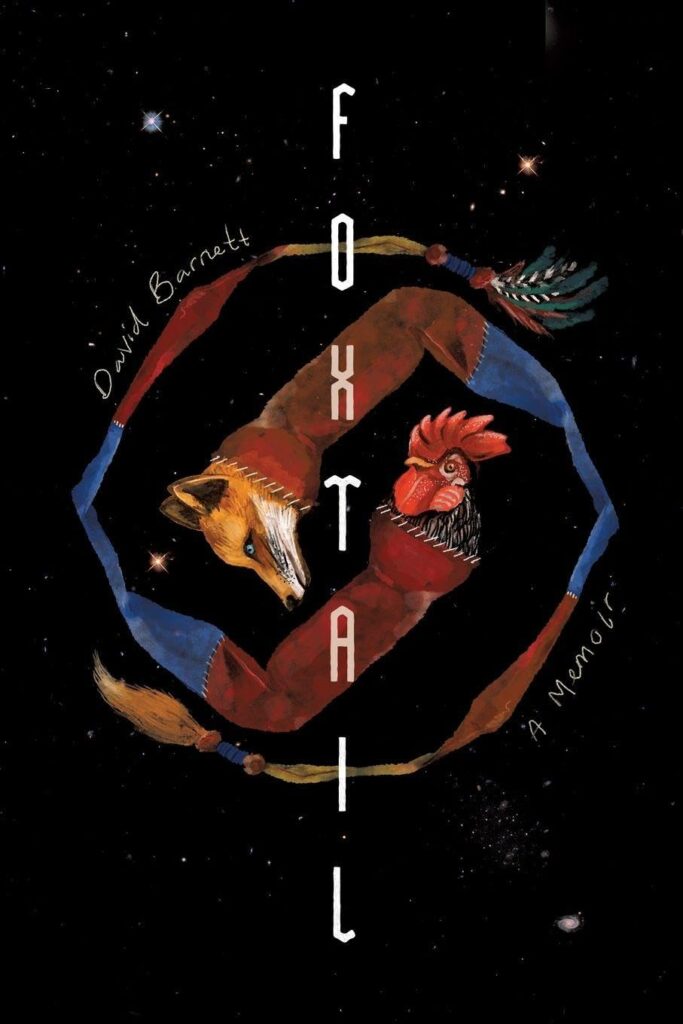
The entire layout was outsourced to Faceout Studio. They executed the pristine, high-contrast visual front jacket and the custom interior design elements under a strict work-for-hire contract, securing 100% corporate ownership for my firm from the exact millisecond of creation.
Do you have a marketing plan for the book or are you just winging it?
I am executing a highly calculated, multi-tiered campaign. On the national front, Books Forward is currently spearheading a major media publicity runway, including national press releases, live spoken word appearances, as well as podcast and radio spots.
Independently, I am deploying a hyper-localized counterculture activation strategy. On Saturday, November 7th, two days before the official publication date, I’m staging a massive live Heavy Metal Showcase and Spoken Word event at The Loading Dock ATX in Austin. The gate is engineered under a unique $25.00 door cover model that includes entry to see regional metal heavyweights Hatewaker and Nemesis, an open bar handled by a TABC mobile service, and a physical paperback copy of Foxtail handed to readers directly at the door. I put the entire thing together myself. I contracted the bands, secured the venue, hired the sound crew, and filed a trademark for my logo so that I could sell merchandise at the show. I’m extremely proud that I was able to put that together, because despite spending a decade as a performer in the underground music scene, I never learned a thing about the logistics of putting together a show. (Shout out to my mother who brought up the idea of acquiring event insurance. Without her, it never would have crossed my mind, and should someone have broken their neck in the mosh pit, I’d have been personally liable.)
Any advice that you would like to give to other newbies considering becoming Indie authors?
Remain true to your voice and never compromise if you know in your heart what’s right. If an artist gives you advice, it is worth heeding; but if a suit gives you advice about writing, just nod your head and think about what you’re gonna write as soon as they shut their big, fat yapper. Never let someone who is not an artist dictate what your art should be.
Also, young writers should know that voice isn’t innate; it must be cultivated and developed. There are many ways to do this, but for my money, the best two tracks are to just go out and live life (and by “live life,” I mean do a bunch of crazy shit and see what happens. Travel. Experience other cultures, and go out of your way to party with the locals). The other key to developing your voice is to keep an honest journal—even if you’re a fiction writer, even if you do social commentary, even if you do historical non-fiction. Retrace your steps, reflect, look inward, get introspective, and examine the grains of your psyche. Describe your feelings. And this part is crucial: look at your experiences panoramically. Consider how other people perceived your actions. Consider how you may have made them feel. Who knows… maybe someone you thought betrayed you didn’t really betray you at all. Maybe it was you who betrayed them.
Oh yeah, and stop fucking with your stupid magic phones—they are melting your brains.
About You
Where did you grow up?
I grew up navigating the landscape of Texas, which serves as the core atmospheric backdrop for the entire narrative trajectory of the book.
Where do you live now?
I operate out of my personal corporate headquarters in Round Rock, Texas.
What would you like readers to know about you?
The linear timeline of Foxtail leaves me at eighteen years old. I am 38 years old now, and I hope that readers will recognize that the person on the final page of that manuscript was an intensely confused, profoundly fractured teenager doing anything and everything he could to survive a psychological and emotional abyss that he, himself, had manifested over years of self-abuse. Since then, I have done heavy internal work, healed, and grown into a semi-functional, semi-contributing member of society. I also discovered that I’m a far better writer than I ever was a musician—so there’s that too. I’d like the readers to know that I scraped the internet of any and all traces of my high school band, Dome Factor. However, if you’re a good sleuth, you can probably find some other shitty performances from the other shitty bands I played in.
What are you working on now?
I have some dank-ass chili brewing in my crockpot in the kitchen right now. However, I’ve been trying to watch my figure given that the book’s going to be released in a little over a month, and in my vanity, I want to look my best at speaking events and such—so I’m considering just dumping it in the trash. On the other hand, I feel like I knocked this questionnaire out of the park, and thus I deserve to treat myself to my favorite meal.
Oh yeah, and also on deck are the Foxtail sequels. I almost forgot about that. So yeah, keep your ear to the ground, because Parts II and III are coming out sooner than you might expect, and all the subsequent parts are already in the drafting process—and they’re looking pretty damn good if I do say so myself.
Also, if anyone wants to come to the Foxtail release party on November 7th, you can find all the pertinent details and purchase tickets here: https://www.eventbrite.com/e/foxtail-release-party-tickets-2002562162335?aff=oddtdtcreator
End of Interview:
Get your copy of Foxtail from Amazon US or Amazon UK.