Sometimes a book can be a saving grace. It is the conversation we need, the encouraging word, the truthteller. We may not find what we crave out in the world, but we can find that intimacy on the page.
Tara Badstubner – 8 October 2026
The Back Flap
After losing her husband Wyatt to a sudden accident, interior designer SJ believes she is alone with her crushing grief. Meanwhile, Wyatt, trapped in a liminal state, must watch in silence as the woman he loves mourns all that remained unresolved in their marriage – the children they never had, the depression that stalked him. Over the following months, with the company of Wyatt’s dog, Hawk, SJ takes on a restoration job for the historic Osprey House in her hometown of Beaufort, South Carolina. There, she reconnects with family and finds new friends – a community determined to see her reclaim her life. Even signs from the natural world urge her forward. But not everyone wishes her well. Though trouble looms ahead, ever-watchful Wyatt is determined to see SJ happy once more.
About the book
What is the book about?
Every Room Remembers explores the deep grief and slow reawakening of SJ Monroe’s life after the unexpected death of her husband, Wyatt. Convinced she has been left alone to grieve everything that went unresolved in their marriage, she takes a job restoring an old home in her hometown of Beaufort, South Carolina. But Wyatt is surprisingly close: a ghost caught in a liminal state, grieving his own loss and determined to find a way to reach her before it’s too late.
When did you start writing the book?
I started writing this novel at the height of COVID, in 2020. Like so many others, I grappled with the loss that filled the news every day. A friend suggested I write about my fears instead of trying to deny them, and that suggestion turned out to be a gift in more ways than one.
Where did you get the idea from?
I experienced a haunting alongside a group of other writers at a writers’ retreat in upstate New York. Had the others not been there, seeing what I saw, I might not be so willing to admit to it now. But it got me thinking about what it might be like to be yanked out of your life, an unfinished life, and about the mourning a dead person, or a ghost, might have to face.
Were there any parts of the book where you struggled?
Yes. I struggled at first with Mae, SJ’s sister. She started out one-dimensional, bossy and a bit of a know-it-all, but as I pinned her down on paper she evolved into someone far more nuanced and thoughtful. The relationship between Mae and SJ grows over the course of the novel in a way I think is true to a lot of adult sibling relationships.
What came easily?
Wyatt’s longing for SJ came easily, and so did his belated understanding of who she really was.
Are your characters entirely fictitious, or have you borrowed from real-world people you know?
No one in the book is a portrait of a person I know. But life gets in. Wyatt’s accident came from one that happened across the street from where I live: a landscaper cutting back a tree after a storm, ordinary work on an ordinary morning, and then he was gone. That is really the answer. I don’t know how to write without pulling from my own life, even if it is just a conversation with a barista or a taxi driver. It all feeds the work somehow.
Do you have a target reader?
I imagine my reader is a bit lonely, or bruised by something. Sometimes a book can be a saving grace. It is the conversation we need, the encouraging word, the truthteller. We may not find what we crave out in the world, but we can find that intimacy on the page.
About Writing
Do you have a writing process? If so, can you please describe it?
My process evolves with each book I write. I wish I had an exact formula! The truth is that I write in bursts, with long fallow stretches in between, and I have made my peace with that. What I do know is that I have to refill the creative well as I go: art museums, poetry, concerts, long walks. I talk through all my ideas for scenes, for characters, for pivotal moments with my husband. He’s not a writer, but he has good instincts. The rest of it resists routine.
Do you outline? If so, do you do so extensively, or just chapter headings and a couple of sentences?
Not formally, no. I usually know my final scene, and from there it is a matter of working toward it a couple of scenes at a time. That is not to say the ending never changes as I write, but knowing it gives me a north star to steer by.
Do you edit as you go or wait until you’ve finished?
I read my scenes out loud while I am drafting, but the major edits happen once the whole first draft is down.
Do you listen to music while you write? If yes, what gets the fingers tapping?
Not while I write, but I do put music on if I am having a hard time slipping into the work. I’ll play a singer with a lyricist’s sensibility, like Lord Huron, and then turn it off and, hopefully, start writing. Sometimes I go to poetry for the same reason.
About Publishing
Did you submit your work to agents?
Oh, yes. Good grief, yes.
What made you decide to go indie, whether self-publishing or with an indie publisher?
Initially, I was choosing between sending my manuscript to a well-respected agency and going with the team at Sibylline Press, who were enthusiastic about my novel and had an aggressive marketing plan for debut authors. I had no illusions about getting a yes from the agency after so many noes. Their reputation and their ethos made the decision easy.
Was it a particular event or a gradual process?
Gradual. The querying went on for a year. Lots of effort, lots of almosts, but I did gain a thicker skin along the way, something I dearly needed.
Did you get your book cover professionally done, or did you do it yourself?
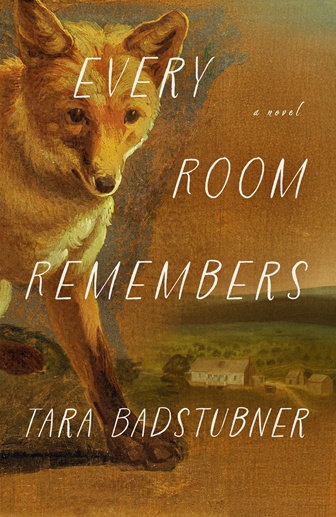
Professionally. Sibylline has a very talented art director, Alicia Feltman, who has won awards for her covers.
Do you have a marketing plan for the book, or are you just winging it?
Sibylline handles the marketing. I also work with an excellent publicity team at Books Forward.
We all know how important it is for writers to read. Are there any particular authors who have influenced how you write and, if so, how have they influenced you?
I love George Saunders, both his fiction and his Substack. There is an adventurous quality to his work that I find thrilling. I am also drawn to the goodness of the men and women who populate Leif Enger’s novels. There is an everyman, Jimmy Stewart quality to them. I suppose both writers capture aspects of humanity that I see less and less of in literature. Cynicism is easy. Imperfect goodness takes a deft hand.
Any advice you would like to give to other newbies considering becoming indie authors?
My advice to a tender newbie: this is a shifting landscape. In some cases you may get more marketing money behind your debut with an indie press than with one of the big publishers. An indie press may also take a longer view of your career, where a bigger house expects decent sales right out of the gate.
Also, covers matter. You may not have final say over yours, but be willing to push for one that is beautiful. I have walked into bookstores with my book, trying to convince the buyer to carry it, and when they see the cover they lean in. Obviously the writing has to hold up, but the cover gets me in the door.
End of Inteview:
Get your copy of Every Room Remembers from Amazon US or Amazon UK.