
If there’s one lesson I’ve learned, it’s that our greatest wounds can sometimes become our greatest source of purpose. I believe writing is at its best when it serves others, and I hope this book helps readers feel less alone in their own struggles.
Paul Drugan – 7 July 2026
The Back Flap
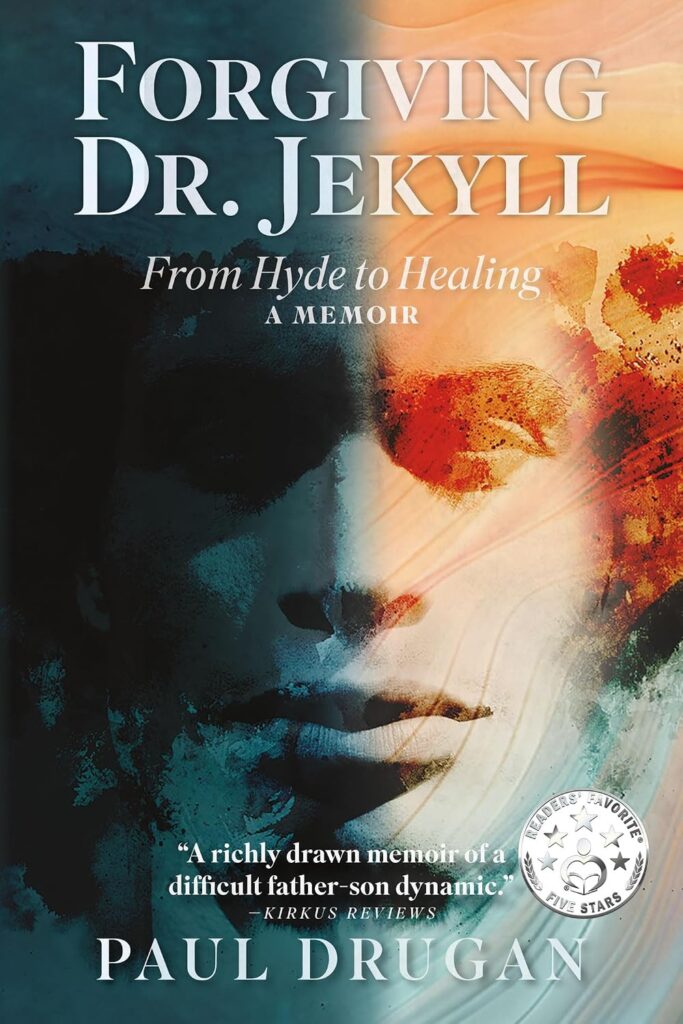
A powerful memoir of childhood trauma, addiction, and recovery, Forgiving Dr. Jekyll redefines forgiveness as an act of self-liberation. Paul Drugan’s journey from shame and self-destruction to healing and freedom offers hope to anyone carrying the weight of the past.
About Writing
Do you have a writing process? If so, can you please describe it?
For this memoir, I wrote organically. Going forward, I expect to work from a more structured roadmap, allowing room for discovery during the writing process.
Do you outline? If so, do you do so extensively or just chapter headings and a couple of sentences?
For future projects, I plan to create a framework that includes major plot points, character arcs, and thematic milestones. I don’t want an outline so rigid that it stifles my creativity.
Do you edit as you go or wait until you’ve finished?
Both. I edit while drafting, but the substantive work begins after the first manuscript is finished. Personally, writing my first draft is discovering the story; editing is learning how to tell it effectively. Marion Roach Smith’s The Memoir Project was particularly influential in shaping my approach.
Did you hire a professional editor?
Yes. Professional editing was one of the most valuable investments I made. Developmental editing helped strengthen the narrative structure and sharpen the book’s themes. In my opinion, every serious author should consider professional editorial guidance.
Do you listen to music while you write?
Yes. My playlists range from reggae and jazz to Chopin and Baroque classical music. Instrumental music helps me create the emotional atmosphere I need without distracting me from the words.
About Publishing
Did you submit your work to agents?
Yes. I received fifty-six rejections. While discouraging at times, the experience taught me perseverance and reinforced my belief in the story.
What made you decide to go indie, whether self-publishing or with an indie publisher?
I ultimately partnered with an independent publisher because they believed in the manuscript and shared my vision. The decision allowed me to retain a meaningful voice in the publishing process while benefiting from professional support.
Was it a particular event or a gradual process?
It was gradual. Each rejection became less about validation and more about finding the right home for the book. Eventually, my choice became clear.
Did you get your book cover professionally done or did you do it yourself?
Professionally. A book cover is often a reader’s first encounter with a story, and I wanted the visual presentation to reflect the quality and seriousness of the work. It also provided me with early validation that this was a serious project. I was thrilled with the choices I received because they matched my conceptual vision.
Do you have a marketing plan for the book or are you just winging it?
I have experimented with newsletters, author interviews, podcast appearances, book review services, and online outreach. Like many first-time authors, I continue learning about marketing every day. Building meaningful connections with readers remains my primary goal.
Any advice that you would like to give to other newbies considering becoming indie authors?
Invest in editing. Invest in a professional cover. Seek objective reviews early. Most importantly, understand that publication is not the finish line—it’s the starting line. Success often comes from persistence long after the book is released. And success need not be defined primarily with sales; it can also be successful if it touches its readers in some way.
About You
Where did you grow up?
I grew up in Wakefield, Massachusetts, a middle-class suburb just north of Boston. The town and its culture play an important role in shaping many of the experiences described in the memoir.
Where do you live now?
Chicago, Illinois.
What would you like readers to know about you?
I’m a late bloomer who never completely abandoned the dream of becoming a writer. The memoir took decades of lived experience and years of work to complete. If there’s one lesson I’ve learned, it’s that our greatest wounds can sometimes become our greatest source of purpose. I believe writing is at its best when it serves others, and I hope this book helps readers feel less alone in their own struggles.
What are you working on now?
I’m developing a literary novel that continues exploring themes of forgiveness, transformation, identity, and personal growth. While it is fiction, it will build upon many of the emotional and philosophical questions that emerged during the writing of Forgiving Dr. Jekyll.
End of Interview:
For more from Paul Drugan, visit his website.
Get your copy of Forgiving Dr Jekyll from Amazon US or Amazon UK.
One response to “IndieView with Paul Drugan, author of Forgiving Dr Jekyll”