The themes of grace, accountability, and transformation were already living inside the material, so my job was to get out of the way and tell the truth with craft.
William Palmer – 7 April 2026
The Back Flap
“Trapped inside the machinery of an evil system, one Chaplain dared to teach prisoners the true path to justice and freedom.
Set in 1990s Los Angeles amid riots, racial unrest, and the height of mass incarceration, Redemption Row tells the incredible true story of Chaplain Robert Palmer—a US Army chaplain who enters the California State Prison system not to preach sermons, but to spark a quiet revolution of the soul.
Inside, he meets men the world has discarded: gang leaders, lifers, wrongfully convicted seekers. Through secret discipleship, relentless compassion, and radical ordinations, Palmer transforms the prison chapel into a sacred battlefield—where scripture becomes a sword, brotherhood is forged in fire, and faith defies the machinery of punishment.
But Palmer’s mission threatens powerful forces, including Warden Calvin Drake, a man who sees inmates as irredeemable cogs in a carceral empire. What follows is an embodied spiritual war—one that challenges the very nature of justice, grace, and human dignity.
Redemption Row is not just about surviving prison—it’s about transcending it. With rich biblical symbolism and raw emotional power, this is the story of men who break the chains of oppression to become new men that exemplify faith, divine love, revival, and goodness as they return to minister in the same neighborhoods that once abandoned them. It is a story of defiant love, luminous transformation, and the legacy of a man who believed that no soul is too far gone to be born again through Christ.”
About the book
What is the book about?
Inspired by Jesus’ stated mission, “To Set the Captives Free,” and amidst the chaos of the Los Angeles prison system in the 1990’s, a different kind of Chaplain emerges to revive condemned human souls and teach authentic freedom through Christ.
Based on the true story, Redemption Row chronicles a spiritual war against the machinery of the fallen world—and the men who rose from chains to become ordained pastors and shepherds of freedom in the same neighborhoods that once locked them away.
When did you start writing the book?
I began writing Redemption Row in earnest after my father’s passing on Memorial Day 2024, when I met the men whose lives were changed by my father’s secret ministry and the full scope and inspiring impact of what sparked a revival from a tiny prison chapel inside one of the most notorious and dangerous prisons in America. What started as grief and curiosity became a calling—part investigation, part testimony, part story that wouldn’t let me go.
How long did it take you to write it?
From first pages to a launch-ready manuscript, it’s been a multi-year process of drafting, interviewing, researching, and revising. The writing itself moved in waves—fast when the story “broke open,” slower when I had to get the human truth right.
Where did you get the idea from?
The idea came from discovering that my father’s prison ministry wasn’t just “chaplain services”—it was a kind of secret seminary in a place designed to trap and crush souls. Hearing the men’s testimonies—of how their lives were completely transformed in service to Christ and how they lived everyday feeling “authentic freedom” from the day they started working with my father—shocked me to say the least. I was curious to learn how such profound redemption occurred all around me for decades and how such a courageous, incredible, tidal wave of victory in Christ could go unnoticed by nearly everyone . The veil had been lifted to how Christ works miracles in people’s lives every day. Also, reflecting on my 1990s Los Angeles childhood—the pressure cooker intensity-riots, “tough on crime” policies, and cultural upheaval, felt very relevant to current affairs in America demonstrating a narrow, inner path of faith that unifies, transcends and redeems wild polarization.
Were there any parts of the book where you struggled?
The hardest part was honoring real pain without exploiting it—especially when writing violence, injustice, and the moral complexity of men who’ve done harm and still seek God. I also wrestled with how to dramatize spiritual warfare in a grounded way, without turning the story into either propaganda or cynicism.
What came easily?
The chapel scenes came naturally—the dialogue, the heat of conviction, the strange tenderness that can exist in brutal places. The themes of grace, accountability, and transformation were already living inside the material, so my job was to get out of the way and tell the truth with craft.
Are your characters entirely fictitious or have you borrowed from real world people you know?
Many of the characters are composites—fiction shaped from real-world testimony, events, lived experience, and historical context. However, the key family member and inmate characters are closely inspired by real people who I interviewed and have collaborated with to properly represent their experience in the novel. I’ve blended timelines and traits to serve the narrative truth rather than a documentary record.
Are there any particular authors that have influenced how you write, and how have they influenced you?
Dostoevsky taught me to take the soul seriously—to let characters wrestle with guilt, mercy, and meaning. Tolstoy influenced the “wide lens” of moral realism: the sense that private choices ripple into public consequence. And Frank Peretti helped me imagine spiritual warfare as something felt and fought in ordinary spaces, not just in sermons.
Do you have a target reader?
Yes: readers who love emotionally honest, redemptive stories with real stakes—people who’d resonate with The Shawshank Redemption energy, but want a deeper spiritual and social dimension. I also wrote it for anyone who feels “imprisoned” or trapped in some way—by regret, addiction, shame, ideology, or oppressive systems of any kind.
About Writing
Do you have a writing process?
My process blends research and contemplative prayer with disciplined drafting. I interview, outline, and gather sensory detail—then I write in focused sprints, usually early in the day, treating it like a vocation rather than a hobby. After drafting, I revise in layers: structure, voice, character truth, then line-level polish.
Do you outline? Extensively or just chapter headings?
I outline extensively—beats, turning points, and thematic “spine”—because the story is complex and historically anchored. But I leave space for discovery, because the best scenes often arrive as surprises once the characters start breathing.
Do you edit as you go or wait until you’ve finished?
I do light edits as I go to keep the voice consistent, but I try not to “sand” the story to death mid-draft. The real editing happens after the full arc is down—when I can see what the book is truly about.
Did you hire a professional editor?
Yes—I believe in professional editorial support, especially for a book that wants to stand shoulder-to-shoulder with traditionally published work. Fresh eyes help refine structure, pacing, and clarity without diluting the story’s edge.
Do you listen to music while you write? If yes, what gets the fingers tapping?
Sometimes—usually instrumental music that can carry intensity without pulling my attention into lyrics. Gregorian chant, epic orchestral, and cinematic textures help me stay inside the emotional weather of the story.
About Publishing
Did you submit your work to Agents?
I explored a few paths and conversations, but I didn’t want the story’s mission to be dependent on the slow roulette wheel of gatekeeping. This book has a purpose, and timing matters.
Why go Indie? A particular event or gradual process?
It was a gradual conviction that became a clear decision: indie publishing lets me protect the integrity of the story, move at the right pace, and directly serve the communities this book is for. It also gives me freedom to build a larger ecosystem around it—audio, speaking, and outreach—without asking permission.
Did you get your book cover professionally done or did you do it yourself?
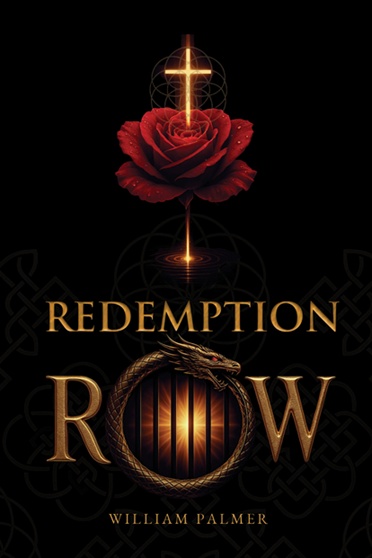
I have a background in graphics and visuals and designed it myself. A cover is a promise, and I wanted it to signal both cinematic storytelling and spiritual depth from the first glance. I am in favor of professional cover design, and actually hired three different graphic artists, before realizing that I had a very specific vision for the cover that only I could realize by doing it myself. It took me eight weeks and about 60 versions to complete, but i think it was worth it and enjoyed the creative process.
Do you have a marketing plan or are you winging it?
I have a plan—podcasts, interviews, church and prison-ministry networks, email community building, launch teams, and strategic partnerships. But I’m also leaving room for what I can only describe as “open doors”—the kinds of unexpected momentum that come when a story hits a nerve.
Any advice for newbies considering becoming Indie authors?
Treat it like a craft and a business: finish the book, invest in editing and a professional cover, and build direct relationships with readers early. Don’t chase trends—chase truth—and keep your long game strong. And remember: the goal isn’t just to publish; it’s to deliver an experience worthy of someone’s time.

About the Author
Where did you grow up?
I grew up in Los Angeles, shaped by the cultural heat and suburban decay of the LA region and the moral complexity of that world. Those years gave me a deep respect for how environment, policy, and pressure can shape a life—for good or ill.
Where do you live now?
I live in Austin, Texas now which I feel is a great balance and core home for the heart of the country , but Southern California still lives in me—especially my formative teenage years in the 1990s era that forms the crucible of this story.
What would you like readers to know about you?
I’m writing Redemption Row as both a son and a storyteller—trying to honor what my father and these men built as an exemplary spiritual legacy that we can all learn and heal from. I believe redemption is real, but not cheap: it requires truth, surrender, and often a kind of holy endurance. Above all, I want readers to feel hope with muscle in it—hope that costs something, and therefore means something.
What are you working on now?
I’m building the broader Redemption Row world—next is a companion book called A Practical Field Guide to Modern Spiritual Warfare: Lessons from Redemption Row. Creating resources that support prison ministry and community restoration. I want this novel to be more than a book launch—I want to remind people that grace and resurrection are available to everyone and that even in the darkest places and times, miracles of unconditional love are happening all the time.
For more from William Palmer visit his website.
Get your copy of Redemption Row from Amazon US or Amazon UK.