About twenty years ago, after my wife, Debbie, finished one of these mixed-genre novels, she looked over at me and said the four words we all need to hear from time to time from our significant others: “You could do this.”
Gary Fields – 26 February 2026
The Back Flap
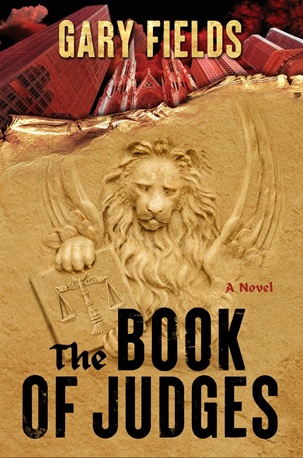
A beloved judge is murdered. His virus-infected laptop holds an ancient secret. Young lawyer Joshua Sutton, doctoral candidate Samantha Bollinger, and tech wizard Mark Roth are thrust into a deadly three-day quest for answers—a quest that leads them across millennia.
While Mark extracts clues from the computer, Josh and Sammi are chased around Florida by the hulking murderer and others who desperately want the laptop. On the run, Josh and Sammi realize they’re both being haunted by dreams about historical figures—judges in Mongol-ruled China, Imperial Rome, Byzantium, post-Renaissance Venice, Henry VIII’s England, and Charlemagne’s Frankish kingdom who uncover a startling secret as they heroically seek justice in life-and-death cases that come to define human rights. As they put the pieces of this puzzle together, Josh, Sammi, and Mark find themselves in a pulse-pounding race to New York City to stop the murder of another judge—one who could potentially save humanity.
About the book
When did you start writing the book?
Over twenty years ago.
How long did it take you to write it?
It took three years for me to complete my first draft of The Book of Judges. I had the bones of a story, but far from enough craft to make it a truly readable novel. A wonderful editor, Margaret Lucke, helped me see much of what I needed to do, and I wrote a few more drafts. But my life (three kids, a busy solo law practice, coaching youth sports, local political activism, a golden retriever) was too busy. I put the project aside for a number of years until I had the time to devote to my writing. Once I did, I exercised my writing muscles by writing scripts, taking masterclasses, and learning about things like pacing and cliffhangers, until I felt ready to get back to working on the novel. I edited away, completing several more drafts, and was then referred to an amazing editor, Tanya Egan Gibson. I worked with Tanya for two years. She taught me so many more things about the craft: getting deep inside my characters’ heads, foreshadowing, holding back. Tightening, always tightening. And, finally, letting go. Finally, after fifteen drafts it seemed ready.
Where did you get the idea from?
I love historical fiction, but also the pacing, suspense, and twists of a good thriller. People who combine these genres effectively, like Dan Brown and Katherine Neville (The Eight) give us modern-day thrillers with weight. About twenty years ago, after my wife, Debbie, finished one of these mixed-genre novels, she looked over at me and said the four words we all need to hear from time to time from our significant others: “You could do this.”
Three days later, leaning on my legal background, I started with a simple premise: What if different historical judges came across a secret that tied into something potentially world-changing today? Having an interest in human rights, I researched laws over the past two thousand years across numerous cultures to see which ones either directly or indirectly might affect human rights. That enabled me to build my historical stories. I wove them into my modern-day thriller as a series of startling dreams that come to my two protagonists.
Were there any parts of the book where you struggled?
The middle was a muddle. Particularly in the modern-day thriller. The eight stories of historical fiction seemed to take shape organically once I had the premise for each. From early on, I knew what the beginning and end of my main story would be. But what were the twists, settings, scenes, and backstories that would take my readers from start to finish? I worked hard to give each of these areas every bit of juice they deserved.
What came easily?
The historical stories. Maybe it’s my love of historical fiction or my passion for human rights. Once I found real laws, real court procedures, and real punishments that existed in different cultures across the past two thousand years, I somehow quickly arrived at characters (mostly fictitious, though some real like William the Conqueror, Emperor Justinian, Charlemagne, Sir Thomas More, and Henry VIII) and conundrums placed upon my historical story protagonists.
Are your characters entirely fictitious or have you borrowed from real world people you know?
As stated above, a number of real-world characters play significant roles in the historical stories. In the modern-day thriller, my co-protagonists draw deeply from my family. Write what you know. That’s what they pound into our debut writers’ skulls. So I drew on my background as a lawyer and computer systems analyst in constructing the book’s plotlines. I drew on that same background, as well as my family, in creating Josh, Sammi, and Mark. Besides the lawyer and systems analyst part, Josh has some of me and some of my two sons mixed into his personality. There’s some strongheadedness, some logical thinking to avoid heavy emotions, but a caring heart and a powerful sense of right and wrong. His past, however, is nothing like ours. Sammi is definitely an amalgam of my wife and daughter. Eternal student, empath, sweet, sharp, and with endless grit. No matter where she is, a part of her is always somehow back in Brooklyn. Mark draws from some of the lovable, quirky personalities I worked with back in my days in the tech world. He’s geek level ten, but definitely not to be underestimated.
We all know how important it is for writers to read. Are there any particular authors that have influenced how you write and, if so, how have they influenced you?
As far as the genre (or, perhaps more accurately, the mixed genre) within which I chose to write, I’ve surely been influenced by Dan Brown and Katherine Neville, with perhaps a sprinkling of John Grisham. However, I’m not sure where my writing style comes from. Authors whose work has reached far inside me range from Joseph Heller to Amor Towles, from Abraham Verghese to Erik Larson, from Laura Hillenbrand to Andy Weir, from Alexandre Dumas to Frank Herbert, from Jane Austen to Ian McEwan, from Caleb Carr to Stephen King to Delia Owens. Their writing speaks to me in how deeply they live within their characters, their protagonists’ heart, bravery, introspection, and eternal quest for justice, and, even in tragedy, the ways they ultimately lift my spirits.
Do you have a target reader?
If you love thrillers from Dan Brown or historical fiction from Geraldine Brooks or Ian McEwan, you are my target reader.
About Writing
Do you have a writing process? If so can you please describe it?
At the outset, I don’t overly outline, but I sketch out my main plot points: core idea, beginning, ending, and some of the middle, along with my protagonists. Then I research any big ideas to flesh them out. The research influences directions in the story and with my characters. I lay out specifics about my primary characters: names, descriptions, backstories, how they fit in the story. Once I have my primary ideas together, I’ll roughly outline an overall flow for the book. But I leave major space to create and further research along the way, allowing me to pursue new paths on smaller, and sometimes larger, issues. As I progress, I’ll outline the next few chapters ahead. My process is similar with each historical story within the overall novel. Going back for redrafts, I’ll constantly look at tightening, sharpening my cliffhangers, reassembling chapter placement, improving flow and heightening suspense. As far as how much I write and when, this has varied greatly. In my early years on the novel, my life was so busy that I crammed writing into whatever hours I could, often late at night when my wife and kids were asleep (which, as a day person, was less than ideal). It took three years for that first draft. In more recent years, having much more time, I find that I am a sprinter, not a marathoner. Rather than writing every day for a set number of hours or pages, I find that I write best when I am inspired. I write in bursts, not on a regular schedule, but I’m usually at my best in the first half of the day. I know that’s not the typically recommended process, but when my mind gets going on a specific part of the book, I run with it – that’s my “happy place” as a writer. Then I go back to the rest of my life until I’m ready for more.
Do you edit as you go or wait until you’ve finished?
I edit constantly, far more than I should, as I write. I can’t help myself. I’ll look back at yesterday’s results and ask, “What was I thinking?” But I edit far more once my draft is done. Hence the fifteen drafts I referred to earlier. As I’ve (hopefully) learned a few things over my years of doing this, I expect far fewer drafts with the sequel that is well underway.
Did you hire a professional editor?
As stated early on above, the professional editor I hired was invaluable. And I had a final fine tuning with my publisher’s in-house editor.
Do you listen to music while you write? If yes, what gets the fingers tapping?
Although I love music (listening and playing), when I write I want to be deep inside my novel’s world and characters. I find that music takes me away from that.
About Publishing
Did you submit your work to Agents?
Yes, and I found one. But I was unhappy with the relationship. A number of other agents were encouraging, but my mixed-genre approach didn’t fit what they sell.
What made you decide to go Indie, whether self-publishing or with an indie publisher? Was it a particular event or a gradual process?
After my unhappy experience with an agent, a successful author I know told me about an independent publisher, SparkPress, run by a very respected person in the industry, Brooke Warner. SparkPress publishes only around twenty books per year. I applied to them and was thrilled when they accepted The Book of Judges for publication. Brooke and her team have been incredible throughout the process of editing, cover art, internal layout, marketing, and everything else needed to take this novel from digital hopefulness to print, e-book, and audiobook reality.
Did you get your book cover professionally done or did you do it yourself?
It was professionally done by Brooke’s team, working from images I suggested.
Do you have a marketing plan for the book or are you just winging it?
I have a marketing plan with my publicist, Crystal Patriarche, and her team at BookSparks.
Any advice that you would like to give to other newbies considering becoming Indie authors?
Do your research on independent publishers. Find one who is well-respected in the industry and by the authors who have published with them. Quality independent publishers will be understanding if you want to retain some of your publishing rights (e.g. – television, film, sequels). Verify what aspects of publishing on which they will assist you. Do they provide editing, cover art and internal design, marketing assistance and/or direction, metadata (the information about you and your book that gets populated on major online retail sites) guidance?
About You
What would you like readers to know about you?
I was born in Brooklyn, raised in Queens, and dreamed of playing centerfield for the Yankees. But music and lyrics were always in my heart. I started writing poetry early on, enamored with meter and rhymes. As an undergraduate at SUNY Albany, I taught myself guitar and wrote a song on the first two chords I learned. Three hundred songs later, I performed professionally for a time as a solo acoustic artist around New York City. But the real world, and the limits on my musical talents, came calling.
I’d hoped to become a lawyer. Again, it was the words. Putting words together convincingly, poetically, passionately, on behalf of my clients. But, as a college freshman, I’d been warned that there were too many lawyers and not enough jobs. So I earned a degree in math/computer science and went on to program and design computer systems for American Express and Ryder Trucks.
Making corporations more efficient, it turned out, didn’t appeal to me. The love of my life, my wife, Debbie, and I decided to put ourselves through law school at night at the University of Miami. Three grueling years later, we earned our degrees. It was there, in Coral Gables, where I first was entranced by banyan trees.
We settled in Palm Beach Gardens, Florida, where we raised our two sons, David and Dan, and our daughter, Lauren, along with Goldie, our golden retriever. I coached youth sports for eighteen years, coaching all three kids in basketball, our boys in Little League, and our daughter in softball.
I built a law practice specializing in community associations and soon found myself pulled into civic activism in the local community. I ended up leading a six-thousand-person volunteer effort to control a major airport planned nearby. After a multi-year battle that included a media campaign, coordination with a roster of aviation experts, and arduous negotiations with county and city governments, my team succeeded in keeping the airport a small, tightly regulated facility. The experience meshed with my interest in individual rights. That, along with my passion for historical fiction and thrillers, led me back, again, to the words.
The Book of Judges is my first novel. I am currently working on a sequel. Debbie and I now live in Southern California, close to the rest of our family, though New York still deeply clings to my soul (and, unmistakably, to my accent).
For more on The Book of Judges and me (plus an opportunity to read an extended version of one of the historical stories from the book, in which you’ll get an introduction to The Words), please check out my website: www.garyfields.com.
End of Interview:
Get your copy of The Book of Judges from Amazon US.