I wanted to share how mental illness doesn’t just affect one person. In fiction, I could portray this more intimately, in the hope of offering the reader more understanding and compassion.
Rae Dumont – 17 February 2026
The Back Flap
Eva’s lonely childhood has given her an intuitive connection with kids and teenagers. She is a gifted child psychiatrist. Single, she dreams of having her own children, and she yearns for love. The future seems bright when she meets Lyman; They build a family. They share adventures. They meet life’s challenges as team. They navigate a bout of Lyman’s depression; treatment works.
They share rich, fulfilling years while their careers develop, and their children grow up.
When their sons enter adulthood and their daughter is a teenager, they plan an entire summer as a family. But Lyman abruptly stops both therapy and medication. He spirals into a dark and irritable isolation that none of them can penetrate.
After his brutal suicide, Eva is left to cope and to guide her children through the trauma, as they each rebuild their lives.
About the book
What is the book about?
The book describes a vibrant family, and then the ripple effects of the father’s depression. It is told from Eva’s point of view, as a wife and as a mother. Her experience of the events is layered with her professional knowledge as a psychiatrist.
When Lyman stops treatment and commits suicide, the story traces the brutal impact on each family member. Eva tries everything she knows but fails to help him, and none of the children can reach him; their love cannot save him. Each of the three children is affected differently, and from their distinct personality and position in the family.
When did you start writing the book?
I began the first draft in August 2022
How long did it take you to write it?
The first draft took nine months. I made several revisions in the course of the next couple of years before considering publication.
Where did you get the idea from?
I witnessed a similar tragedy in my own circle. It left all of us, friends and family, disoriented and stunned. Everything we thought we knew came into question. In particular, the effect on the man’s children was devastating; I suspect it will never leave them.
As a family therapist, I saw how people and their relationships were deeply affected. I wanted to share how mental illness doesn’t just affect one person. In fiction, I could portray this more intimately, in the hope of offering the reader more understanding and compassion.
Were there any parts of the book where you struggled?
In terms of style, I had to unlearn the dispassionate, factual style of many years of professional writing. It took time to allow vulnerability and turmoil to appear on the page.
What came easily?
The narrative told itself. I knew, before I even started, what I wanted to say, and why, and for whom.
Are your characters entirely fictitious or have you borrowed from real world people you know?
Eva borrows heavily from my own life, but all other characters are fictional. Several people have lived through the events that inspired me, and it is not my place to tell their experience of it. But in writing fiction, I discovered a greater freedom. I can express deeper underlying truths I have learned from personal and from professional experience.
We all know how important it is for writers to read. Are there any particular authors that have influenced how you write and, if so, how have they influenced you?
James Baldwin is my biggest influence. He writes of his own raw experience with a force I can only aspire to. He is eloquent about his commitment to writing only what is true, and clear about his purpose. “If one can live with one’s own pain, then one respects the pain of others, and so, briefly, but transcendentally, we can release each other from pain.” (From Tell me how long the Train’s been Gone.)
Ernest Hemingway’s style has also influenced me; even as an adolescent, I was mesmerized by his sparse language, evoking powerful images without a superfluous word.
Do you have a target reader?
This book is for anybody who has struggled with depression. I want you to know that you are loved, and help is available.
I wrote this especially for anyone who has loved someone as they struggled; for those who tried to help, and those who felt helpless. For people who lost a loved one, I want you to know you are not alone, and it is not your fault.
About Writing
Do you have a writing process? If so can you please describe it?
I trust my inner writer, and do not try to control her. I am freshest in the morning. I take long walks – my dogs are happy to come along, and the next scene often comes to me while I’m in the woods. The writing also unfolds in my sleep, and comes to me as I wake up.
Do you outline? If so, do you do so extensively or just chapter headings and a couple of sentences?
First, an idea percolates without taking form, flitting in and out of awareness. Then I outline a crude idea, a few sentences. Later, to clarify choices about where to go next, I might write out a sequence of events. Chapter headings only come later, for my editor, or when submitting the manuscript.
Do you edit as you go or wait until you’ve finished?
I do some of each. Light editing the most recent pages this often carries me into the next section. Extensive editing comes in second and third drafts.
Do you listen to music while you write? If yes, what gets the fingers tapping?
I cannot listen and write at the same time. Instead, I listen to music, or play piano, to get out of the headspace of writing.
About Publishing
Did you submit your work to Agents?
Yes.
What made you decide to go Indie, whether self-publishing or with an indie publisher? Was it a particular event or a gradual process?
I learned from the querying process that agents and publishers must accept what sells. I had somehow imagined otherwise, briefly forgetting about the business aspect! As a debut novelist, I spent too much time on query letters, but it taught me a lot. But I need to focus on my short stories and on my next novel.
I have no interest in writing any of the popular genres. What I have to say may or may not be lucrative. But I want to speak in my own voice, and to reach the people my book is for.
Did you get your book cover professionally done or did you do it yourself?
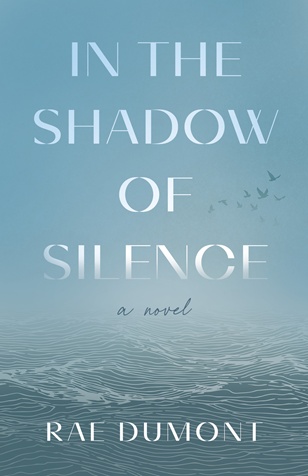
I searched far and wide for an image that was beautiful, sad and meditative, conveying just the right mood. I found this image on Etsy of all places. I traced the artist in Dubai and to obtain a license. Then the team at She Writes Press worked with it and created the cover of my dreams.
Do you have a marketing plan for the book or are you just winging it?
I am working with a publicist.
In the meantime, I will present the book to the network of mental health providers in my community. A respected colleague agreed to interview me, and we are working on the questions to cover. I hope to present the book to professional conferences for psychologists, family therapists, social workers and psychiatrists, and to support groups such as NAMI as well.
Depression awareness month and Suicide awareness months will give opportunities for a lecture and a book presentation at my library.
Any advice that you would like to give to other newbies considering becoming Indie authors?
It helps to be clear on why you write, I think. And then, to take the time and write the best manuscript you are capable of. Polish, get feedback, polish some more.

About You
Where did you grow up?
Belgium
Where do you live now?
Montclair, New Jersey.
What would you like readers to know about you?
I am a mother, a widow, and a friend. Life has brought its share of pain, my own and that of loved ones, and I know its ripple effects.
As a pediatrician and as a family therapist I have borne witness to many people’s experiences, and I have tried to help. Sometimes, despite my best efforts, I could not ease their suffering.
In writing fiction, I hope to bring these many lives to the page, and to share what they have taught me.
What are you working on now?
My second novel is about a teenager in a dysfunctional family. She has to grapple with the codependency and the secrets that surrounded her. Her maturation as she creates a life and has a family of her own, also pushes her mother to change as much as she is able.
End of Interview:
For more from Rae Dumont visit her website.
Get your copy of Shadow of Silence from Amazon US