I always hope to connect with readers looking for a good story, ideally those who love, as I do, trying to understand what makes human beings tick.
Jane Ward – 10 February 2026
The Back Flap
While studying art history at a London university, Noel Enfield falls passionately in love with aspiring artist and art school student Bryn Jones. Shortly after Bryn leaves for a five-month painting trip through Italy, Noel discovers she is pregnant. She is ecstatic and believes Bryn will be too—they have plans to marry, after all. But mishaps part the two lovers, and a desperate Noel makes a split-second choice to move forward in a way that will change not only her life but also the lives of everyone she loves. Three decades later, when she is offered a six-month secondment to a London museum, Noel decides it’s time to prove she really has moved on from that difficult period by returning to the city where she met and lost Bryn. But the move lands Noel in the thick of London’s insular art world, with only one or two degrees of separation from her past and the people she once loved. After she reconnects with an old, dear friend and learns finally what kept Bryn from returning to her all those years ago, the very underpinnings of her life are rocked to their core. Some decisions made in the past can never be put behind her, she realizes, and armed with this new understanding, she sets out on a journey to reclaim what—and who—she left behind.
About the book
What is the book about?
Should Have Told You Sooner is a story about a woman named Noel Enfield, and the hasty decision she made thirty years earlier as an exchange student in London to give up a child. Over the course of the story, Noel comes to understand how decisions like hers will ring like a struck bell throughout a life, even when we tell ourselves we’ve moved on from the difficult events. Her decisions also have unintended consequences for others she loved, and while she can’t change what she’s done in the past, she can change how she moves into the future.
When did you start writing the book?
I began writing this in earnest at the beginning of 2022.
How long did it take you to write it?
Almost exactly two years. I turned it in to the publisher in December 2024.
Where did you get the idea from?
The idea for Should Have Told You Sooner came to me while I was immersed in a book of Welsh folk tales. One story in particular, “The Lady of Llyn Y Fan Fach,” captivated me and set my imagination racing. In it, a young farmer named Gwyn visits the lake named in the title, and while he is there, a most beautiful fairy rises from the water and speaks to him. She is Nelferch, and in an instant, Gwyn is in love. Nelferch agrees to marry him, sacrificing the watery world she knows for a life with him on dry land, but their union ends in disappointment and pain. Long after finishing the story, I kept thinking about Nelferch and Gwyn and all the ways we might harm those we profess to love. It wasn’t long before I stopped thinking about the folk tale characters and began imagining a more contemporary pair.
Were there any parts of the book where you struggled?
I always struggle with the big emotional scenes. Mining emotion for hours at a time to get to what’s right for the characters can be both exhausting and difficult. Sometimes I have to write something superficial and then take a break with a plan to go back later. These scenes always take more time and depth of understanding.
What came easily?
I loved writing about London, probably because it’s a place that’s so dear to me. All the scenes where Noel is out and about reacquainting herself with the city were a joy to write.
Are your characters entirely fictitious or have you borrowed from real world people you know?
The characters and the situations in Should Have Told You Sooner are almost entirely fictitious. When in college, I spent a year as an exchange student in England, so I did draw from some of the feelings of being an outsider and the wonder at being in a foreign place. And there was a student at the college in York called Bryn Jones, but I didn’t know him. I only tucked away his full name because I liked the rhythm and brevity of it and hoped I’d get a chance to use it in a book someday.
We all know how important it is for writers to read. Are there any particular authors that have influenced how you write and, if so, how have they influenced you?
Laurie Colwin’s novels, short stories, and food writing were a huge influence on me when I began to write seriously after college. She was doing everything I wanted to do, and seeing someone who made it happen through her hard work motivated me. Her prose sparkled. And her writing–both fiction and non-fiction–revolved around people who might strive for the comforts of home and family while also recognizing that it can be a struggle to attain that. Imperfect, but well-intentioned people whom I love meeting again and again when I revisit the books. I re-read Jane Austen yearly too.
Do you have a target reader?
I always hope to connect with readers looking for a good story, ideally those who love, as I do, trying to understand what makes human beings tick.
About Writing
Do you have a writing process? If so can you please describe it?
My only process is aiming to sit and write every weekday between 8 am and 2 pm. Sometimes it’s not possible, some days have better results than others, but keeping to a routine is key.
Do you outline? If so, do you do so extensively or just chapter headings and a couple of sentences?
I do not outline. I never know at the beginning of a book where the characters are going and what will happen to them along the way. I might have a broad idea—for example, I thought Noel and the son she relinquished would find their way to each other—but I never really knew how or if that would happen until I started telling their stories.
Do you edit as you go or wait until you’ve finished?
I edit as I go along, and it’s usually the opening chapters that I rework over and over before I can continue on to the middle and ending.
Did you hire a professional editor?
Yes, and a professional editor is essential to putting out the best book possible. This is the hill I will die on. I love my copyeditor! She sees things that I miss because I’m so close to the characters and their stories.
Do you listen to music while you write? If yes, what gets the fingers tapping?
Birdsong, yes. Playlists, no.
About Publishing
Did you submit your work to Agents?
Yes. And I had an agent for my first and second books. When we parted ways, I shopped around my third book, In the Aftermath, to other agents, and there was interest but no offer of representation.
What made you decide to go Indie, whether self-publishing or with an indie publisher? Was it a particular event or a gradual process?
After a few passes from agents, I looked into other options for getting my books out into the world. Brooke Warner of the hybrid publisher She Writes Press gave me a great feeling from our very first conversation. Every step of the way is transparent and clearly explained, we are encouraged to connect with our cohort of sister authors for support, and women authors and our stories are celebrated. This is my second book with them, and I believe one of the best decisions I’ve ever made. It’s a true partnership.
Did you get your book cover professionally done or did you do it yourself?
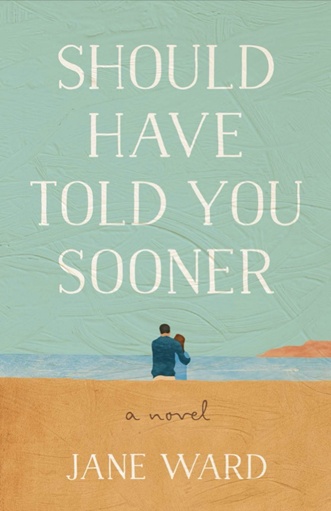
The cover was professionally designed by Mimi Bark, under the Direction of SWP Art Director, Julie Metz. They gave me several terrific choices, but when I saw this one, I knew it was perfect.
Do you have a marketing plan for the book or are you just winging it?
I have a publicist and a marketing plan. I need the external push. Marketing and publicity are not my strong suits.
Any advice that you would like to give to other newbies considering becoming Indie authors?
There are so many ways to get your stories out in the world these days, more than when I was starting out. It’s an exciting time to be an author. My advice: 1) Build your writing network of other authors, editors, and support people, and be a good literary citizen in return. 2) Be prepared to invest in yourself and advocate for yourself. 3) Have other eyes on your work and put out the most polished version of your book as possible.
About You
Where did you grow up?
I grew up in Stoneham, Massachusetts.
Where do you live now?
I currently live in Ipswich, Massachusetts. But if that sounds like I simply moved a few miles up the road, I assure you, it hasn’t been a straight line from there to here!
What would you like readers to know about you?
I’m a pretty good amateur food and travel photographer.
What are you working on now?
I’m working on the sequel to Should Have Told You Sooner. These characters aren’t finished with me yet.
End of Interview:
For more from Jane Ward visit her website and follow her on Threads, Instagram, and Facebook.
Get your copy of Should Have Told You Sooner from Amazon US.