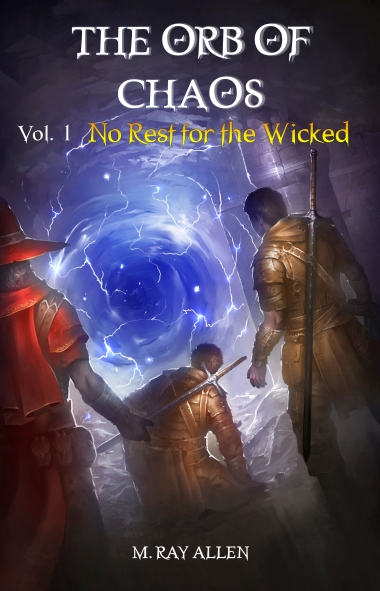
IndieView with M. Ray Allen, author of The Orb of Chaos Vol.1: No Rest for the Wicked

Indieview_OOC_Cover


I hate it when authors do that. I don’t want to have to buy a second book just to find out how the story ended, so I refuse to do that to someone else.  I’d rather read a slightly longer story and get the full sense of satisfaction of everything being resolved than to have to buy two books

M. Ray Allen – 31 October 2013 Continue reading

IndieView with Danielle Forrest, reviewer at The Eternal Scribe

the eternal scribe icon

That means paying somebody to make a professional cover, paying someone to edit the book, and possibly even paying someone to do formatting.  Almost all books I reject for review are due to a lack of proper editing

Danielle Forrest – 28 October 2013

Continue reading

#Free for your #Kindle, 10/28/2013

The author of each of these books has indicated their intent to schedule these books for a free day for the Kindle versions today on Amazon. Sometimes plans change or mistakes happen, so be sure to verify the price before hitting that “buy me” button.

My Daylight Monsters


My Daylight Monsters by Sarah Dalton

Amazon US

Amazon UK

Author’s interested in having their free book featured either here on Monday or a sister site on Thursday, visit this page for details.

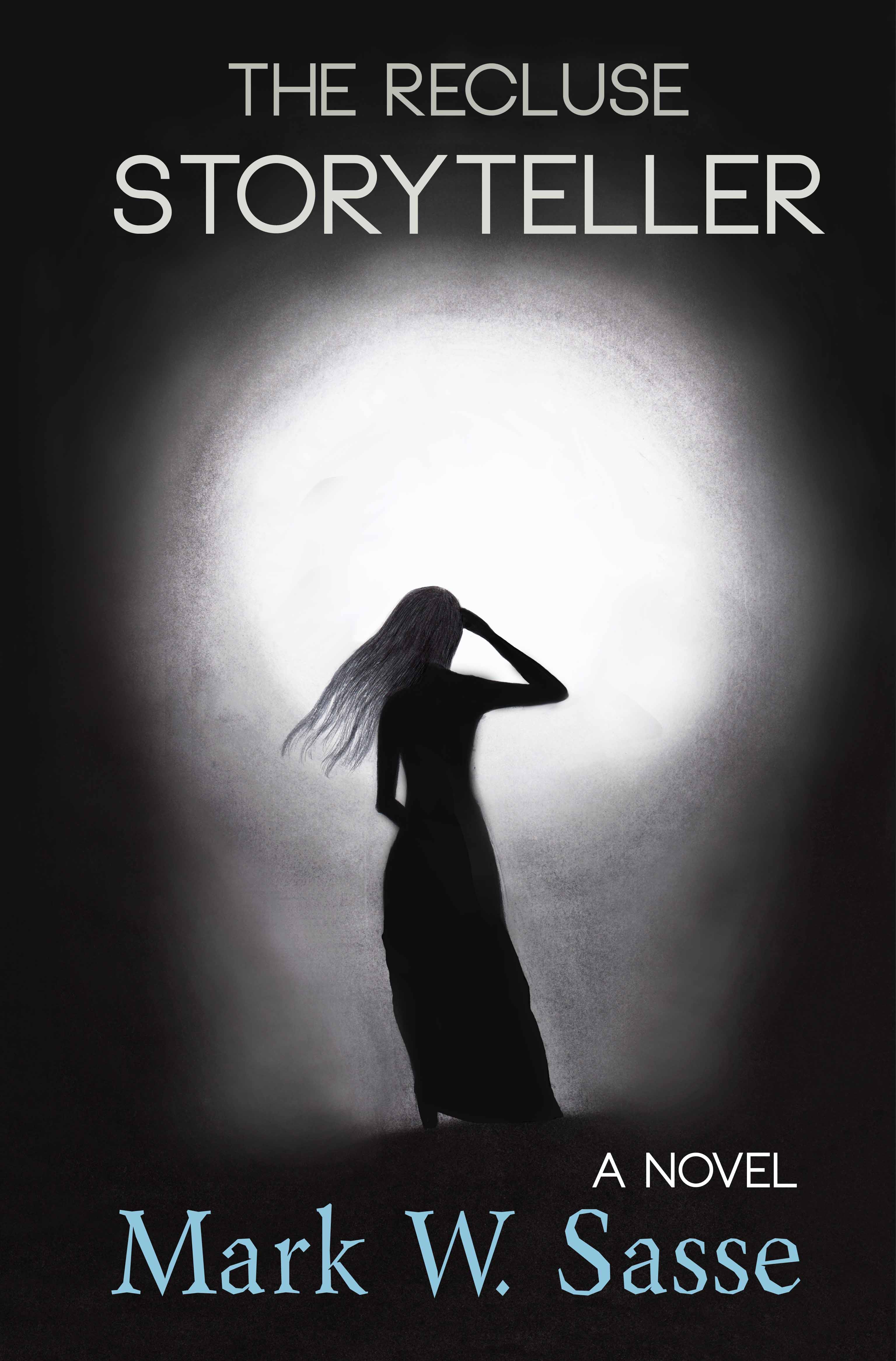
IndieView with Mark W. Sasse, author of The Recluse Storyteller

recluse storyteller cover small


I went twenty years being too afraid to write. Not anymore. I’m having a blast.

Mark W. Sasse – 27 October, 2013

The Back Flap

The Recluse Storyteller weaves five stories into one as the loner Margaret not only searches for meaning from her reclusive life, but also gives meaning in the most unexpected ways to the troubled souls of her apartment complex. Part adventure, part tragedy, and part discovery, The Recluse Storyteller bridges genres, bringing hope and redemption to the broken relationships of modern society.

About the book

What is the book about?

The Recluse Storyteller is about a middle-aged woman named Margaret, who uses her neighbors in her apartment block as inspiration for the stories that she tells out loud to herself. She develops a fascination, if not an obsession, with spying on her neighbors, which sends her into a trance-like state where she tells four distinct stories. But circumstances in her life leads the recluse in an unexpected direction as her stories start to get intertwined with the real lives of her neighbors.

When did you start writing the book?

I wrote the novel in the summer of 2012 over a two-month period. From that point, I continued editing and getting feedback from advanced readers. I’m thrilled to finally get it into print.

How long did it take you to write it?

Not long. Typically, once I get the idea, the story flows rather easily.  By June 2012, I was about 3000 words into the story. A month later, I had written more than 50,000 words and had the first draft completed.

Where did you get the idea from?

It’s funny that it all started with a picture of a woman in my mind, looking out her second story window onto the street watching a man in a red baseball cap. That’s all it took. I started thinking about what would make a woman be fascinated by a man in a red hat? From there, I let me imagination take control. It was a very fun exercise in discovery and creativity.

Were there any parts of the book where you struggled?

I struggled a little with trying to make all the stories that the recluse told become meaningful in unusual ways to her neighbors. Eventually, it all just fit, for which I am very glad.

What came easily?

The story related to the Vietnam War came easily, I suppose, because I had lived there for over ten years. I’m so accustomed to the Vietnam setting that the story and culture flowed easily.

Are your characters entirely fictitious or have you borrowed from real world people you know?

My characters in The Recluse Storyteller are completely fictitious except for one of the characters in the story Margaret told about Vietnam. There is a story about a man named Vinh who was a preacher and desired to go into prison to bring hope to the inmates. This is loosely related to a man I used to know where something like that happened. The details and names were completely different, but the amazing story remained.

We all know how important it is for writers to read. Are there any particular authors that have influenced how you write and, if so, how have they influenced you?

Honestly, I’m not much of a reader anymore. I’ve done plenty of it in the past. I was even an English major in college so I hit many of the classics. Nowadays, I find that I don’t need creative inspiration. I have plenty of it. I just need to time to write. So when I do have time, I tend to write, not read.

Do you have a target reader?

I’m not a genre writer. I don’t write about vampires or sci-fi or dystopian fantasies. I write about real-life and real people in, hopefully, creative ways. I think my stories attract readers who like substance, enjoy thinking about issues and circumstances, and just like to be pulled along in interesting and new directions.

About Writing

Do you have a writing process? If so can you please describe it?

I take an idea and charge into it head-on. I’m not much of an outliner. I love creative discovery. I love getting a spur of the moment idea and charging off in unexpected directions.

Do you outline? If so, do you do so extensively or just chapter headings and a couple of sentences?

As I mentioned above, no. But once the ideas come, I do tend to jot down what comes to my mind. Possibly just a sentence or two that gives me some direction.

Do you edit as you go or wait until you’ve finished?

I used to just fly along and not worry about editing. However, I’ve somewhat changed. Now when I write, I realize how easy it is be a little more careful in my editing. This makes my life much easier in the future.

Did you hire a professional editor?

For The Recluse Storyteller, I hired someone who is not a professional editor by trade but is very talented at editing. Perhaps someday she will be a professional. For now, I’m just glad she helped me.

Do you listen to music while you write? If yes, what gets the fingers tapping?

No.

About Publishing

Did you submit your work to Agents?

I did not submit this work to agents. I am very happy to go the indie route on this one.

What made you decide to go Indie, whether self-publishing or with an indie publisher? Was it a particular event or a gradual process?

I realized that I love being in control of my own destiny. I am my own biggest fan. And so I use that to promote and hopefully get people to try my writing. This is a great time to be an indie writer.

Did you get your book cover professionally done or did you do it yourself?

I hired an artist friend of mine to design the cover.

Do you have a marketing plan for the book or are you just winging it?

I do have a plan. But I’ve learned to adapt and try new things if something isn’t working. I’ve been through the process before with my first book so I’ve learned a lot about what is and isn’t effective. But there is still a lot to learn.

Any advice that you would like to give to other newbies considering becoming Indie authors?

Only do it if you are passionate about writing. Don’t do it to make money. Do it for the joy you receive in the creative process. Any money that you do make is just bonus.

About You

Where did you grow up?

I grew up in western Pennsylvania just north of Pittsburgh. I’m a huge, long-suffering Pirates fan, who is thrilled to death to have a successful season after 20 long years.

Where do you live now?

I currently live in Malaysia. I teach history and drama. I write plays and novels. I love the tropical climate.

What would you like readers to know about you?

I went twenty years being too afraid to write. Not anymore. I’m having a blast.

What are you working on now?

Two main things. I’m very excited that I just completed my third novel entitled The Reach of the Banyan Tree. This is the novel I’ve been trying to write for a dozen years and finally it has come to fruition. I’m so excited about it. It’s my longest novel set in the year 2000 and the year 1945 Vietnam. It’s currently being read by a select group of advance readers. It’s scheduled for a 2014 release.

I’m also writing a full-fledged Broadway-style musical which I will be producing for the stage in the first half of 2014. I’m working with a group of high school students on this project. It’s a lot of fun. I’m blessed to be able to do what I do.

End of Inteview:

For more from Mark visit his website and his Goodreads page, or like his facebook page.

Get your copy of The Recluse Storyteller from Amazon US (paper or ebook), Amazon UK (paper or ebook), Barnes & Noble, or Smashwords.

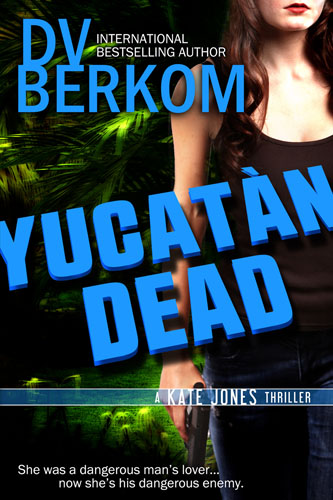
IndieView with DV Berkom, author of Yucatan Dead

DVBerkom_YucatanDead_333x500


The first author I read who had a real impact on me was Ken Follett. I devoured Eye of the Needle, finally finding a heroine who fought back with no apologies.

DV Berkom – 24 October, 2013 Continue reading

IndieView with Jackie Driggers, reviewer at JD’s Leisure Zone

JD's Leisure Zone


Writers should share with and instruct other writers.  Beginning writers should take the time to learn before they do, and not rush to publish.  Readers should support the authors who are doing a good job and reward them with their support.  And all writers should strive to put out the best product that they can, and not just throw something out there.  

Jackie Driggers – 21 October 2013 Continue reading

#Free for your #Kindle, 10/21/2013

The author of each of these books has indicated their intent to schedule these books for a free day for the Kindle versions today on Amazon. Sometimes plans change or mistakes happen, so be sure to verify the price before hitting that “buy me” button.

The Ultimate Inferior Beings


The Ultimate Inferior Beings by Mark Roman

Amazon US

Amazon UK

Tribesman

Tribesman by Paul Freeman

Amazon US

Amazon UK

Learn Uke

21 Songs in 6 Days: Learn to Play Ukulele the Easy Way by Rebecca Bogart and Jenny Peters

Amazon US

Amazon UK

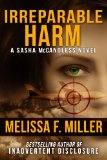
Irreparable Harm

Irreperable Harm by Melissa F. Miller

Amazon US

Amazon UK

Author’s interested in having their free book featured either here on Monday or a sister site on Thursday, visit this page for details.

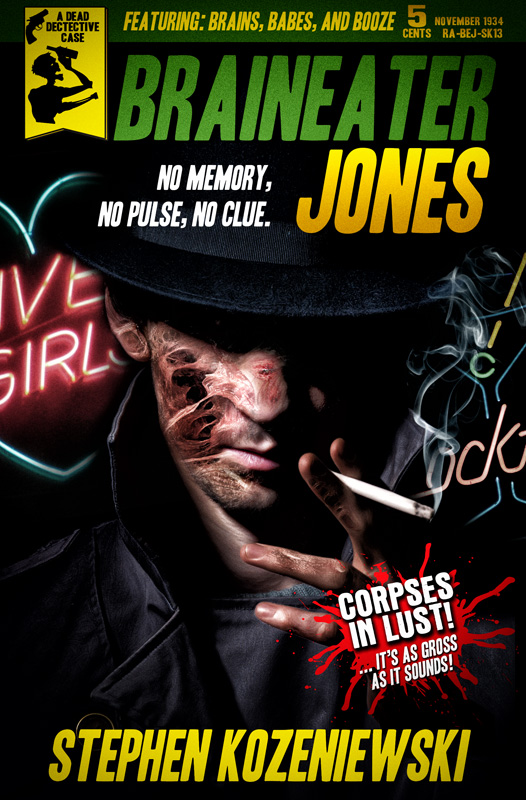
IndieView with Stephen Kozeniewski, author of Braineater Jones

Braineater Jones 800 Cover Reveal and Promotional


Then around 2009 I’m pretty sure I had a flash of inspiration at the horrible dental insurance phone bank that I worked at about what, precisely, the universe of a zombie detective would look like.  I more or less wrote the entire worldbuilding rules during smoke breaks on a Steno pad in a single day.

Stephen Kozeniewski – 20 October 2013 Continue reading

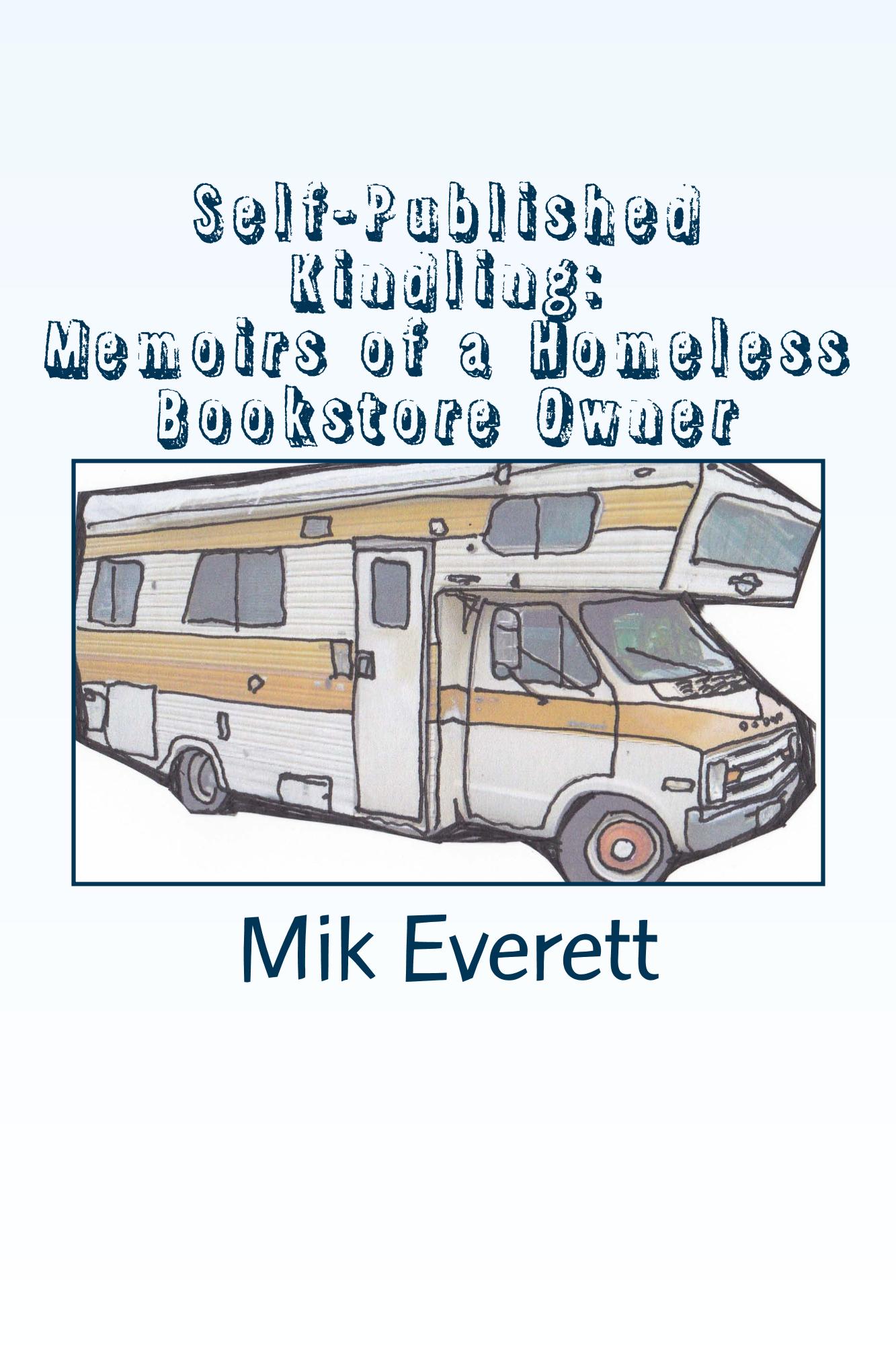
IndieView with Mik Everett, author of Self-Published Kindling: Memoirs of a Homeless Bookstore Owner

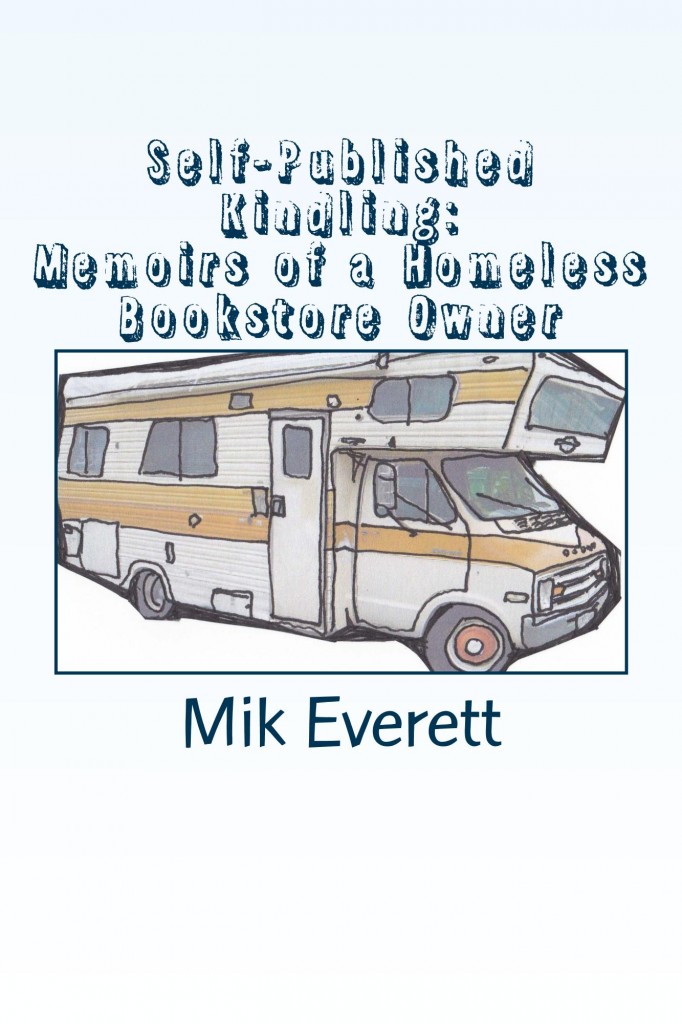
Self-Published_Kindl_Cover_for_Kindle


I did not submit Self-Published Kindling: Memoirs of a Homeless Bookstore Owner to any agents. I mean, it’s a book about self-publishing and how agents are essentially the leeches of a corrupt and incestuous modern publishing industry. What agent was going to look at that and say, “Yes, I’ll take it immediately”?

Mik Everett – 17 October 2013

The Back Flap

A young family opens a unique bookstore to help independently-published authors tell their story. But as the traditional publishing industry begins to fall, e-books dominate the book market, and the economy slows, the family winds up homeless– a big secret to keep, as business owners. While some authors struggle with addiction and others struggle to tell their story, a young family struggles simply to survive

About the book

What is the book about?

Self-Published Kindling: Memoirs of a Homeless Bookstore Owner is the true story of a young homeless family that runs a unique bookstore; They own the only brick-and-mortar bookstore in the world that sells exclusively independently-published literature. The story is primarily about the disjunct between idealism and reality: Though every patron to enter the store gushes and raves about what a fantastic resource the bookstore is for both readers and authors, nobody buys any books, and self-published books wind up being little more than fireplace kindling even to the authors who write them.

When did you start writing the book?

Let’s see. I decided to write it after a young writer told me about his plans to hitch-hike across America, becoming a transient like Kerouac. There’s this romanticized notion of what happens when the idealist decides to give up comfort and security in exchange for perceived literary benefits. I went home that night– our home was an RV broken down in a Wal-Mart parking lot– and I fed my kids stale bread for dinner and then I started writing this book. It’s a true story.

How long did it take you to write it?

I wrote Memoirs of a Homeless Bookstore Owner in two weeks. I charged my laptop at my bookstore during the day, and then at night I would write until my laptop died. I averaged about 7,000 words a night, though much of it was cut from the final manuscript.

Where did you get the idea from?

I had wanted to write an answer for On The Road for a long time. My family had traveled around quite a bit before opening the bookstore– Though we had plenty of money, we lived out of a truck, moving from campsite to campsite up and down the Rocky Mountains before settling in Longmont, where we opened the bookstore. I knew I wanted to write some kind of reply to On The Road, some kind of companion or rebuttal. It wasn’t until I watched this young kid– a really talented writer– talking about literature and freedom with pure unadulterated idealism and romanticism, and I looked down at my own kids, who were playing on the floor of the bookstore but hadn’t had a bath in a week and had mostly been eating stale bread, that I realized what story I needed to tell.

Were there any parts of the book where you struggled?

Every night was a struggle. About halfway through writing the book, my family was approved for food stamps, but before that, we weren’t eating much. We got sandwiches from the food pantry but I divided them all between my kids, so most nights, I hadn’t had anything to eat in several days besides stale bread. I wrote through hunger pains. I wrote to keep them quiet. Once we got food stamps, it got a little easier.

What came easily?

I didn’t have to make anything up. Every night, I would write down what had happened that lead us to this situation, and I wrote it down exactly as it happened. Then I just cut out everything that wasn’t important. It was soothing to see myself only as a character in a story, not as a person who had really lost her home, whose children were really living without electricity or running water. It replaced reality for me, in a lot of ways. Some who are homeless become addicted to drugs or alcohol as a means of separating themselves from their situation. I was addicted to writing.

Are your characters entirely fictitious or have you borrowed from real world people you know?

I have done my absolute best to represent each character in the story exactly as they exist in real life. Many of the characters are individuals who were also homeless, and they are all real people, human beings. You won’t find any caricatures of the homeless in my book, characters drawn from stereotypes you’ve seen sitting on street corners in ten different cities. They are all people, presented with their own actions and words, not constructed out of shortcomings and skills.

We all know how important it is for writers to read. Are there any particular authors that have influenced how you write and, if so, how have they influenced you?

Hemingway is one of my biggest influences: As a former journalist for the Kansas City Star, he tells everything as it is, clearly and concisely, without either editorializing or adding flowery language. Hunter S Thompson is another journalist who influenced me; his writing tells the truth in a different way, through the lens of absurdism and copious amounts of drugs. Maxine Hong Kingston and Margaret Atwood are two others who have influenced my method of storytelling.

Do you have a target reader?

My target reader is the conscientious reader, the thinking reader, the reader who considers herself or himself an agent of change.

About Writing

Do you have a writing process? If so can you please describe it?

I’m always confused by this question. I write; what else is there to it?

Do you outline? If so, do you do so extensively or just chapter headings and a couple of sentences?

Only if the story requires it. Memoirs of a Homeless Bookstore Owner is a true story told chronologically, so it didn’t require much outline. My first book, Turtle: The American Contrition of Franz Ferdinand, is also non-fiction narrative, but it is told cyclicly, bouncing back and forth in time, so it required more planning. After I’d written every scene in the book, I made a Post-It note for each scene, color coded by the season in which they occur. I played with the Post-It notes all over my bedroom wall till I had an order I liked. My upcoming novel, A Two-Member Universe, has required by far the most planning. Each chapter acts out a different logical syllogism, with the end result being an entire logical proof, culminating in an invalidity table. It’s similar to Lewis Carrol’s Through the Looking Glass, in which the narrative effectively emulates a game of chess. It requires a lot of planning. I use a note card for each step in the proof.

Do you edit as you go or wait until you’ve finished?

I edit as I read. I often read what I’ve written up until the point I’ve left off, to make it easier to continue seamlessly, and I edit as I’m reading that. Then when I’m finished, I re-read and re-read, editing each time.

Did you hire a professional editor?

I used to edit philosophy papers at my university, and I have quite a few former colleagues who still work in editing, most at the academic level. I can always find one or two who specialize in editing narrative who are willing to give me a line edit for some sort of trade. I tend to pay my editors in alcohol and books, to be honest.

Do you listen to music while you write? If yes, what gets the fingers tapping?

To be honest, I totally zone out when I’m writing. I can write through anything. But as far as my favorite music: White Stripes (anything Jack White has done ever, really), Kid Cudi, Emily Wells, Coco Rosie, and Aaron Lee Martin.

About Publishing

Did you submit your work to Agents?

I did not submit Self-Published Kindling: Memoirs of a Homeless Bookstore Owner to any agents. I mean, it’s a book about self-publishing and how agents are essentially the leeches of a corrupt and incestuous modern publishing industry. What agent was going to look at that and say, “Yes, I’ll take it immediately”?

What made you decide to go Indie, whether self-publishing or with an indie publisher? Was it a particular event or a gradual process?

I was writing a book about how independent publishing is the only thing that can save the modern publishing industry. I was writing a story about a family that believed in independent publishing so much that they were willing to lose their home over it. I was writing from a broken-down RV with no electricity or running water. It seemed the obvious decision.

Did you get your book cover professionally done or did you do it yourself?

I did the original cover myself. I have a friend in marketing who recently re-did the cover for Turtle, and she’s working on a new cover for Memoirs of a Homeless Bookstore Owner as well. I’m excited to see it.

Do you have a marketing plan for the book or are you just winging it?

I have fragments and pieces of a marketing plan, thanks to my good friends at The Sunshine Machine.

Any advice that you would like to give to other newbies considering becoming Indie authors?

Make friends. Make a lot of friends. In the good ol’ days, Hemingway and Fitzgerald and Gertrude Stein were friends, and their editors and their publishers were their friends, too. Make friends at the indie presses, submit stuff to the micro presses, make friends with some editors. Go down to your local university and find some kids in marketing, graphic design, and editing. Make friends with them. They know what they’re doing, or they’re at least learning to, and most of them would love to have a real live book in their portfolio. Network yourself. Don’t do anything alone.

About You

Where did you grow up?

I was born in Wichita, Kansas, and lived a little all over.

Where do you live now?

After my bookstore experiment in Colorado, I’m back in Kansas, working in literature promotion and Open Mic event planning.

What would you like readers to know about you?

I’m a human being too. Everyone you meet is.

What are you working on now?

I have an anthology of short stories and essays coming out this fall: If a Writer Falls In Love With You, You Can Never Die. It’s titled after the popular quote from my most well-read essay, “What Happens If You Fall In Love With a Writer?” I’m also working on a new adult novel I mentioned previously, A Two-Member Universe.

End of Interview:

For more, visit Mik’s website or her Tumblr blog, follow her on twitter, like her page on facebook, and visit her Goodreads page.

Get your copy of Self-Published Kindling: Memoirs of a Homeless Bookstore Owner from Amazon US (paper or ebook) or Amazon UK (paper or ebook).

#Free for your #Kindle, 10/14/2013

The author of each of these books has indicated their intent to schedule these books for a free day for the Kindle versions today on Amazon. Sometimes plans change or mistakes happen, so be sure to verify the price before hitting that “buy me” button.Eternidad Cimmeran Rising

Eternidad Cimmerian Rising by B Thomas Harwood

Amazon US

Amazon UK

A Chance for Charity

Amazon US

Amazon UK

Author’s interested in having their free book featured either here on Monday or a sister site on Thursday, visit this page for details.