That being said, the one message I would like to convey to all readers through Lola’s story is that people come in various shapes and sizes, yes, but they also come in various mindsets and psychological states. Everyone has their own struggles and their own way of dealing with them.
Sahar Ayachi – 23 May 2017
The Back Flap
“You will bring light to my darkness, you will bring hope to my despair. You will be my knight though you will first be a slave, but I know which spots to hit to make you brave.”
Dreamy, impulsive, but mostly confused—this is Lola. On a journey where she just tries to live, love, and be loved, Lola is being followed by the one thing she thought she escaped from—a presence that will find her wherever she goes… a presence that isn’t happy with her decisions—not happy at all.
Follow Lola through a story where the lines between dreams and reality are blurred, where she will be faced with struggle—emotionally and physically—and where she is trying her best to make sense of the confusing situation she got herself into.
What is this scary unknown that Lola is running away from, and will she eventually be able to face it?
About the book
What is the book about?
The Orchid is a novel that tells the story of a young girl called Lola who travels far away from her home country, escaping a secret she has always had, and that started to become unbearable. That’s how her new adventure begins. She settles in a new place, begins a new life and starts believing she successfully managed to run away.
But, what Lola ignores is that her secret never left her. It will start to manifest itself to her in strange ways she won’t understand at first. She will struggle, physically and mentally; she will be dragged into some kind of a weird “game” that will make her confuse dream and reality… until she will eventually fall face to face with the embodiment of her secret and will have to face it.
The book is a little difficult for me to “categorize”. It falls under “general fiction”, but it has a big love storyline and an even bigger psychological component. We can say that this book is the story of a person suffering from a light case of psychosis, trying to find her way through a specific portion of her life.
When did you start writing the book?
I started writing this book in May-June 2016, but some sections of it have been written for almost 10 years already.
How long did it take you to write it?
All in all, nine months.
Where did you get the idea from?
The idea to write this book came to me early in 2016, when I decided to gather old and new writings of mine. In doing so, I noticed there were several essays that talked about almost the same topic. So, I decided to collect them and build a story around them. That’s what I meant earlier by “some sections of it have been written for almost 10 years already.”
Were there any parts of the book where you struggled?
Yes, there were! I had two major struggles while writing this book:
- Writing “on demand”: even though I have been writing for almost 15 years now, I never sat down with a pen and a paper and decided “ok, let’s write”. Writing, for me, has been a very personal activity. I wrote to express myself, to deal with various situations, because I was never courageous/capable enough to openly express myself. While writing this book, I had deadlines to respect (that I set to myself), and so, there were many times where I had to actually sit down and start writing. It became a little easier with time, but it still is a major issue until now.
- Disconnecting the character of Lola from my own person: like I mentioned, writing has always been a personal activity. Most of what I wrote was about myself, even though I didn’t always write in first person. To deal with the author block that came with the “writing on demand” issue, I had to dig in my own past experiences to find the proper emotions. As the book isn’t really a happy story, and as some parts of Lola’s storyline are based on my own life, it was very stressful to bring up older feelings and emotions. What didn’t help was the fact that the book was written in first person, at first; until one day I decided to turn every “I” into a “she”.
What came easily?
Descriptions of feelings. As you might have guessed by now, there is a huge emotional component to The Orchid. Finding the right emotional setting was a struggle, but once I got there, it just streamed like magic. I loved using all kind of figures of speech: comparisons, metaphors, pleonasms, personifications, hyperboles, euphemisms, antiphrasis, oxymora… I wanted to convey the message so clearly, I might have overdone it a little bit with descriptions.
Are your characters entirely fictitious or have you borrowed from real world people you know?
All characters are borrowed from real world people I know. Even though the book only focuses on 2 characters, apart from Lola, each one is inspired from several real-world people.
We all know how important it is for writers to read. Are there any particular authors that have influenced how you write and, if so, how have they influenced you?
There is one author in particular that has influenced me the most, and that’s Amélie Nothomb. I love her style of writing so much, I keep reading and re-reading her books. Unwillingly, I found myself writing in a style that is, I wouldn’t dare to say similar, but clearly influenced by hers: the important presence of different figures of speech, the use of complex images and figurative ways to describe easier events…
Do you have a target reader?
Not really. I would say maybe an adult or young adult audience, due to the (light) presence of one or two intimate scenes, but no real restrictions. That being said, the one message I would like to convey to all readers through Lola’s story is that people come in various shapes and sizes, yes, but they also come in various mindsets and psychological states. Everyone has their own struggles and their own way of dealing with them. In the book, there’s a lot of talks and conversations that just happen in the main character’s head to explain the reasons behind her reactions and behaviors. It’s targeted to those who would relate to her as well as those who wouldn’t understand people like her.
About Writing
Do you have a writing process? If so can you please describe it?
I usually don’t. I just write whenever I have something to express, so I just sit and do it. That being said, the process for this book in particular was to first gather two or three older essays I wrote before, with a couple other newer ones and think about the full story. Some of these became the first chapters, some went to the end. I had to fill in the blanks in between, aka the core of the story.
Do you outline? If so, do you do so extensively or just chapter headings and a couple of sentences?
Yes, absolutely. The general idea and progress of the story was clear in my mind since the beginning. I knew how I wanted the book to start and how I wanted it to end. I had a clear outline written down with the various chapters and the main idea in each one. Of course, the idea organization and some of the content was modified a few times as the story progressed, but the general outlining stayed the same.
Do you edit as you go or wait until you’ve finished?
I usually wait until I am finished to edit. I wrote my book as separate chapters first, and not in order, then connected them. First, there was chapter editing, then a general editing once I put all parts together.
Did you hire a professional editor?
For the content, no, I did not hire a professional editor. I still got an editor/writer to read and review my final manuscript. For the layout/internal design editing, it was done by professional from the publisher I worked with.
Do you listen to music while you write? If yes, what gets the fingers tapping?
I don’t. I usually need complete silence to write. It gets too loud in my head already when I write, and sometimes thoughts become faster than my writing speed. I wouldn’t be able to catch up and concentrate in the presence of any other type of noise around.
About Publishing
Did you submit your work to Agents?
As a newbie author, I signed a self-publishing contract with Partridge Singapore in June 2016 because the publishing plan they provided sounded interesting for first time writers. I was, and still am, very new to the world of authors and publishers, so I am learning as I go.
What made you decide to go Indie, whether self-publishing or with an indie publisher? Was it a particular event or a gradual process?
I just decided to go indie because first, I am still very new to the field, but also because the self-published contract I found had no strict deadlines. When I signed it, I was still doing my masters of science in a very demanding field, so I didn’t want more strict deadlines in my life.
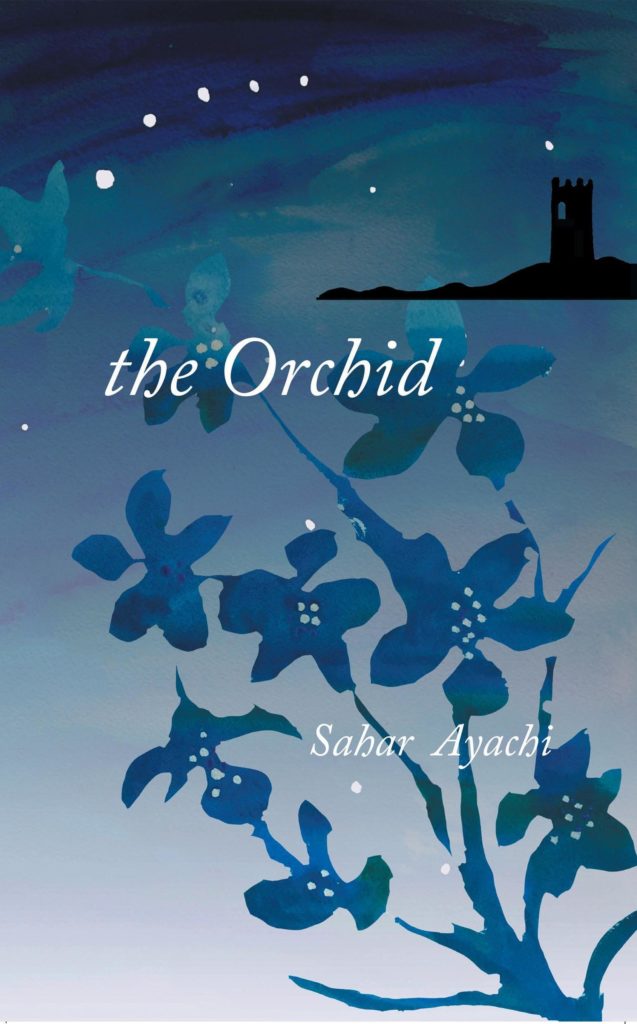
Did you get your book cover professionally done or did you do it yourself?
My book cover was designed by a designer friend of mine. I would like to call it “professionally” done, because she has put so much effort and professionalism into it. But maybe just like my “indie” content editor, my cover was also done by an “indie” designer.
Do you have a marketing plan for the book or are you just winging it?
I am just winging it honestly. As my publisher is in Singapore, and as I am currently back to my home country (Tunisia), I am trying to get as much online marketing as possible. It’s not easy, but it’s a very interesting experience. I am learning so much as I go, and I love it!
Any advice that you would like to give to other newbies considering becoming Indie authors?
It’s not going to be an easy task! You will find yourself doing most of the work alone, whether it’s editing, designing and especially marketing, publicity and reviews. But it’s an amazing experience with all its challenges and its frustrations. Every small step will feel like an immense win, you will have more opportunities to feel accomplished and happy about your own achievements. Such moments are what make the indie experience worth it.
About You
Where did you grow up?
I grew up in Tunisia, North Africa. Born and raised there, and even though I traveled abroad a lot, I only really left in 2011, when I moved to Seoul, South Korea for undergraduate studies.
Where do you live now?
Right now, I am back in Tunisia for some time.
What would you like readers to know about you?
I would like my readers to know that I am just a girl trying to find her way through life. I do so with a huge interest in scientific fields (in which I majored for my bachelor and my master studies), and an even bigger interest in writing. The Orchid is my very first published work, but I also write song lyrics. I am currently working on musical projects, and potentially another book, so you’ll probably see me again. In the meanwhile, I keep myself busy with reading and reviewing, dancing, traveling and learning all the languages my brain can fit.
What are you working on now?
Right now, I am working on song lyrics for some musical projects. I am taking a break from book writing for a while, but my brain is always active. I am considering a continuity to Lola’s story, but also couple other unrelated ideas, which will be developed later.
End of Interview:
For more from Sahar, follow her on Twitter.
Get your copy of The Orchid from Amazon US or Amazon UK.