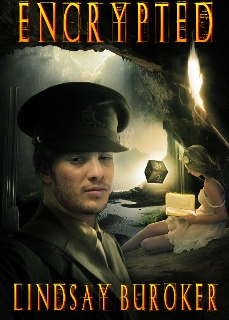
“I’ve been making a living blogging since 2004, though, so I wasn’t intimidated at the notion of learning to promote my work online. If anything, I was excited by the idea of having so much control over it. I can’t imagine being quite as motivated if I couldn’t see the sales numbers ticking upward day by day in the Amazon control panel. Your destiny really is in your own hands.” Lindsay Buroker 5 February 2011 Continue reading
Category Archives: Interviews
IndieView with Lindsay Buroker, author of, Encrypted
Posted in Interviews
IndieView with reviewer Isabela Morales of The Scattering
Today’s IndieView is with Isabela Morales of The Scattering. I met Isabela through her forum on Amazon and later tracked her down to her website. Reading the reviews I realized I had stumbled across a real hard core Sci-Fi junkie – Great! This interview is really good, funny, insightful, and just downright interesting. Here’s a little excerpt of what awaits…
It really is nice to have living authors to follow. Is that a weird thing to say? Isabela Morales 1 February 2011 Continue reading
Posted in Interviews
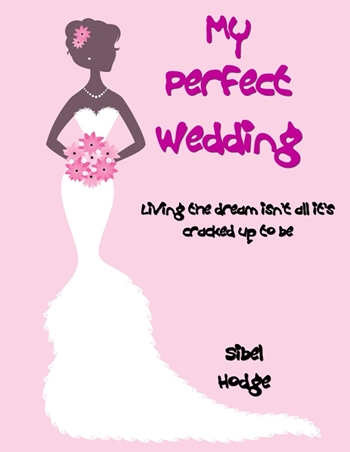
IndieView with Sibel Hodge, author of, My Perfect Wedding
“There are very few writers, if any, of Turkish Cypriot origin who write commercial fiction, so this was a great opportunity to introduce a unique infusion of British and Turkish Cypriot culture. It adds a new twist to contemporary romantic comedies.” Sibel Hodge 29 January 2011 Continue reading
Posted in Interviews, Writing
IndieView with Indie eBook Reader Caleb Blake
Putting A Human Face on Statistics
As an indie author I am keen to get my work in front of reviewers. I’m also interested in how other authors write, and promote their books. What I am especially interested in, is what readers think. There’s a lot of buzz around readers switching to reading in a digital format – stats fly thick and fast; stats are great, but what I want to know is the person behind the stats. Continue reading
Posted in ebook, Indie, Interviews
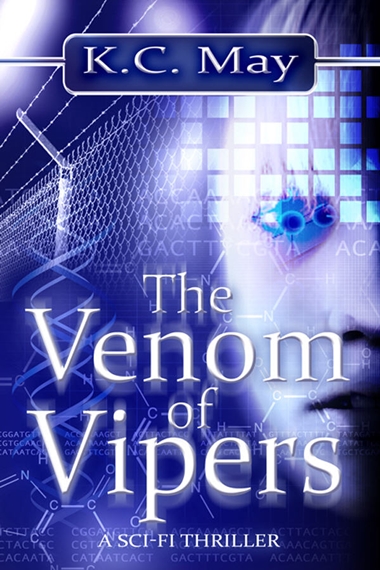
IndieView with K.C. May, author of, Venom Of Vipers
“For instance, I wanted to give Ryder a moral dilemma — one that had no right or wrong answer. To make it harder for him, I put him in a situation where his two choices deeply affected him personally. The story builds around that.”
K.C. May 26 January 2011
The Back Flap
A supervirus threatens to wipe out the human population.
The only hope for the future is a cure hidden inside Ryder Stone. Created in a lab and brutalized, betrayed and hated by humans, Ryder yearns for freedom. On the outside, a group of human genetic purists want him dead.
When Katie Marsh, a brilliant young geneticist, discovers his secret, she must fight to protect Ryder, gain his trust…and convince him to save humanity before the purists destroy them both.
About The Book
What is the book about?
The Venom of Vipers is about humanity and what it’s really all about. I introduce a new human subspecies, homo sapiens heredis (saphers for short), that’s designed to take over as stewards of earth once the last of our species has died from the horrible virus that has swept the globe.
At the time of the story, there are only a couple thousand of them world-wide, housed in genetic research facilities partly to keep them safe from the humans who would do them harm. The problem is that the females can’t carry a pregnancy to term, which doesn’t bode well for their survival once there are no more human surrogates.
Ryder Stone is an artistic 32-year-old with a 14-year-old daughter who’s the farthest along in her pregnancy than any other sapher, and Katie Marsh joins the staff at the research center to discover why and try to use that information to help the other females finish their pregnancies. The clock is ticking– humans are dying out with no cure for the virus in sight, and saphers need to be able to reproduce on their own if they’re to carry on when we’re gone.
Ryder discovers he can cure humans afflicted with the virus. He’s faced with a dilemma: does he make that information public or keep it secret?
When did you start writing the book?
I first got the idea that started the story in the late 1990s, but I didn’t start actively writing until the spring of 2009.
How long did it take you to write it?
I wrote 90% of the first draft in 2009, but then I decided to move across country from Arizona to Georgia. The story got put on hold for about six months, but that time gave me some much needed distance to solve some plot issues that had been plaguing me. Plus, I didn’t know exactly how to end it, so the first draft never got a proper ending.
Where did you get the idea from?
Science News magazine. If you’re not familiar, it’s a weekly publication with articles written for the “knowledgeable layperson.” One article was about the similarities between human hemoglobin and crocodile (or was it alligator? Now I can’t remember). I thought there was a science fiction story in that somewhere, and my mind started churning.
Were there any parts of the book where you struggled?
Yes! Pretty much the entire story. I had a ton of research to do because I didn’t understand how viruses worked, I needed to work out why and how we would need to create a subspecies that was different enough from us to stir fear or hatred in the hearts of our most zealous citizens, and I didn’t know how I was going to end it. I had two basic choices: happy or miserable.
What came easily?
Writing Ryder’s character came more easily than any other aspect of the story. I gave him a lot to care about then threatened to destroy it all. Some of the back story came easily, especially where Henry was concerned. I’d even written a short story showing how he and his late wife had first engineered the saphers.
Are your characters entirely fictitious or have you borrowed from real world people you know?
As far as I know, they are all entirely fictitious except for Henry, who is based loosely on my dad (rest his soul).
We all know how important it is for writers to read. Are there any particular authors that have influenced how you write and, if so, how have they influenced you?
There are some writers whose writing I adore, such as Robin Hobb and Brandon Sanderson, but their styles are vastly different from my own. As much as I’d like to write more like them (insofar as prose style is concerned), I don’t think I’m wired that way. When I look at prose styles and story layout, I have to wonder whether George R.R. Martin’s style influenced me. He moves from one character’s POV to another, and I quite enjoy that as a reader. I’m not one who wants or needs to stay in a single character’s head the entire story, so I rarely write in first person.
Do you have a target reader?
For this story, I thought my main audience would be men over 30, but it turns out that women like it as well. I didn’t load the story up with hard-core science — it’s more a light sci-fi with thriller tendencies than a hard sci-fi. My target reader is like me: somewhat interested in science without being a hard-core geek, preferring that stories focus on the human element.
About Writing
Do you have a writing process? If so can you please describe it?
Not really, no. I’m a fairly undisciplined writer. I make a few notes about my main character and let him or her evolve through the problems I throw at him. For instance, I wanted to give Ryder a moral dilemma — one that had no right or wrong answer. To make it harder for him, I put him in a situation where his two choices deeply affected him personally. The story builds around that.
Do you outline? If so, do you do so extensively or just chapter headings and a couple of sentences?
I used to be a heavy outliner, but I’ve moved away from that and toward a heading/notes and multi-draft approach. There are some scenes I write several different ways then choose later which one works best. Once the first draft of the story is done, I revise two or three times. For my debut novel, The Kinshield Legacy, I found that I needed to start over because I didn’t get it right. Trying to fix what I had was too confusing. I ended up writing that book three times from scratch, then revising the third draft a few more times.
Do you edit as you go or wait until you’ve finished?
I wouldn’t say I edit as I go. I often revise as I go, though. If I’ve decided to do something differently in order to get my characters from point B to point C, I can’t move on from there until the journey from point A to B is set properly. If I spot a typo, I’ll fix it, but I don’t try to tweak the phrasing or choose the best word until the story elements are all in place the way I want them.
Did you hire a professional editor?
No. I’m probably going to write a blog article about that topic sometime soon. Most indie authors (including me) could use the help of a developmental editor as well as a copy editor. A developmental editor helps with story structure, pacing, and so forth (this is not the same as a critique partner). A copy editor helps with the words on the page to make sure they flow well and everything’s grammatically correct. I don’t know of any experienced developmental editors available on a free-lance basis. Most people I’ve seen offering their services as an editor are copy editors (and many writers need a good copy editor). For writers with a strong grasp of grammar and spelling who employ the use of various self-editing techniques, a copy editor can be almost superfluous. Instead, I used a proofreader on my final draft to catch the three or four errors I’d missed. That said, I highly value my critique partners and beta readers. They aren’t developmental editors, but they are readers who tell me what works for them and what’s still rough. I use that information to adjust the story to get the effect I want.
Do you listen to music while you write? If yes, what gets the fingers tapping?
Not generally, but sometimes I enjoy listening to instrumental music. If there are lyrics, I tend to get distracted and want to sing along. Loreena McKennitt is a favorite.
About Publishing
Did you submit your work to Agents?
The Kinshield Legacy was originally published by a small press, and I had an agent for that. I did query my original agent about The Venom of Vipers, but I didn’t get a timely response, so I went ahead with my plans to self-publish it.
What made you decide to go Indie? Was it a particular event or a gradual process?
It was an ah-ha moment. After I got the rights back to The Kinshield Legacy, I was deciding whether to shop The Kinshield Legacy around to other publishers or put it out to pasture when it occurred to me that I could format it for the Kindle and re-release it. I’ve really enjoyed the process and control of self-publishing. With the publishing industry in flux, I decided not to spend years waiting to see if anyone would be interested in The Venom of Vipers. I figured I could start building a readership on my own. If a publisher takes interest in a new book down the road, I can evaluate what my best course of action is then.
Did you get your book cover professionally done or did it you do it yourself?
I wish I had the artistic talent and skill to create a nice cover. All of my covers were done by cover artists.
Do you have a marketing plan for the book or are you just winging it?
I’m learning as I go. What works for one writer may not work for me, but I’ve found a few things that have definitely worked and a few that have definitely not worked.
Any advice that you would like to give to other newbies considering becoming Indie authors?
Write a good story and polish it to a brilliant shine. Nobody wants to spend money on a product that fails to meet expectations. If your book is engaging and well-written, readers will find it, spread the word and look for more of your stories.
About You
Where did you grow up?
I grew up in the Midwest and in Hawaii. After high school, I went to Boulder, Colorado for my freshman year, then transferred to Tallahassee, Florida to get my B.A. in Russian from Florida State University. After a year in Taiwan learning Mandarin and teaching English, I moved to Phoenix, Arizona and spent 24 years there.
Where do you live now?
I live near Atlanta, Georgia.
What would you like readers to know about you?
I’m kind of a geek who loves reading, dogs and football. While in Arizona, I founded a Rottweiler rescue organization, studied karate, went backpacking, tried sky-diving, did some downhill skiing, got a couple motorcycles, wrote software, and spent time on the shooting range. I also love rollercoasters!
What are you working on now?
I’m working on the sequel to The Kinshield Legacy. The advice I got back in 2005 when it was first published was not to spend time writing the sequel to a book that doesn’t sell. I had about 30,000 words written, and that advice made sense to me, so I put it away. Sure enough, it didn’t sell! (Without much marketing, only a few dozen people were willing to pay $29 for a hardcover from an unknown writer.) It wasn’t until I re-released it that it started to sell. Now readers are eager for the sequel, and I’m running behind!
End Of Interview
You can buy Venom of Vipers at Amazon, Smashwords,
B&N or ibooks. KC’s website is here.
Posted in Interviews
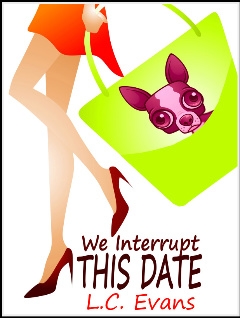
IndieView with L.C. Evans, author of, We Interrupt This Date
“I have definitely borrowed from real world people. I grew up in the South and got to know a good many women with strong views. These women, like Mama in the book, made it their chief occupation to run their children’s lives. Some of the other characters are based loosely on people I know, but I’ll never tell. I’ve had a number of readers contact me and tell me that Susan’s family is exactly like their family, so I must have struck a chord.” – L.C. Evans 24 January 2011 Continue reading
Posted in Interviews
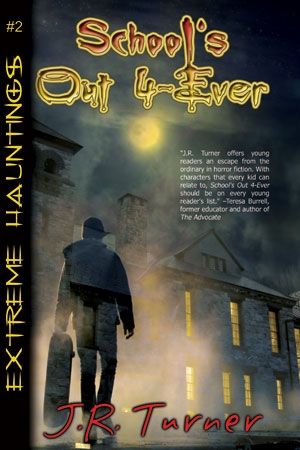
IndieView with J.R. Turner, author of, School’s Out 4-Ever
“I generally free write the first three chapters to see if an idea I have can sustain a full length novel, flesh out characters, and discover if this is something I’m excited enough about to pursue. If all those factors intrigue me, I stop and create an outline of events. In general, I leave character reactions for the first draft. This way, I’m dying to find out how they’ll react when they are confronted by the event.” – J. R. Turner 20 January 2011 Continue reading
Posted in Interviews
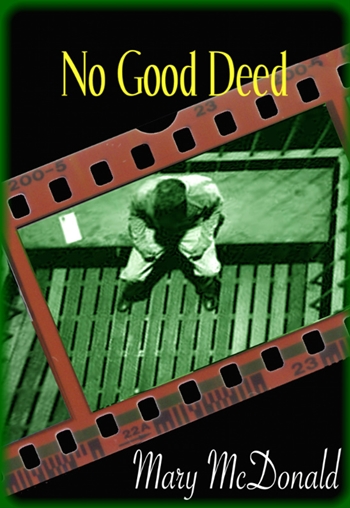
Indieview with Mary McDonald, author of, No Good Deed
“You absolutely have to commit to getting the word out about your book. Very few are successful by just uploading the book and hoping readers will find it on their own. I’ve made some mistakes along the way, but I’d rather have made those mistakes than to not try and having nothing happen because I’m worried about what people will think of me.” Mary McDonald 12 January 2011
The Back Flap
Mark Taylor discovers first hand that no good deed goes unpunished when the old camera he found during a freelance job in an Afghanistan bazaar gives him more than great photos. It triggers dreams of disasters. Tragedies that happen exactly as he envisions them. He learns that not only can he see the future, he can change it. Then the unthinkable happened and everyone ignored his frantic warnings. Thousands die. Suddenly, the Feds are pounding on his door and the name they have for Taylor isn’t urban hero. It’s enemy combatant. And, it means they can do anything they want to him. Anything at all.
About the Book
What is the book about?
The premise of No Good Deed is that photographer Mark Taylor has an old camera he bought in an Afghanistan bazaar while working on a photo job. When he uses the camera, it shows photos of near future events, mainly accidents where someone is killed, or other tragedies. After he views the photos, he then dreams about them, allowing him to fill in the details. If he chooses, he can try to change the events and prevent the bad things from happening.
The book opens with Mark being arrested as a suspected terrorist with connections to 9/11 because he’d seen the terrible tragedy in his photos the day before and tried to warn the authorities. Nobody believes him, and his phone calls he made the morning of the attacks, coupled with his trip to Afghanistan two years prior, is just too suspicious for the authorities to ignore. He’s named an enemy combatant and locked away without a trial, lawyer or any way to defend himself.
When did you start writing the book?
The book started out as a short story on a writing site, but after I posted it, feedback from readers indicated that they wanted to know what happened to Mark. (I left him rotting in the cell.) I wrote more, but then readers wanted more of what happened while he was in prison. Eventually, I scrapped that whole story and started over with a plan in mind. That was in January of 2009.
How long did it take you to write it?
About nine months, but then I changed scenes, added scenes and cut scenes after many months of querying agents.
Where did you get the idea from?
Initially, the writing site I began it on had a challenge to have your character wake up in a padded room and wonder how they got there. That scene is still in the book, but somewhat changed because the room isn’t padded as it’s now a regular cell. The reason that idea of the enemy combatant came up was because of stories in the news. I got to wondering what if someone who was innocent was arrested as an enemy combatant. However, I didn’t want the reader to have any doubt as to my character’s innocence, hence the idea for the limited ability to see images from the future.
Were there any parts of the book where you struggled?
The beginning and the ending, and possibly, a bit in the middle. heh. Seriously, the book has had about a dozen different opening scenes. I had one with Mark and Jessie in his loft, with the idea of introducing them as characters. I received feedback that the story didn’t open fast enough. So, I added the opening scene, but after that, Mark went back to his loft for the scene with Jessie. An agent commented that it wasn’t serious enough, so I cut that scene and aimed straight for the jugular. I had hoped that the opening scene with the baby set up Mark as a sympathetic character quickly enough for readers to care what happened to him.
What came easily?
I love writing the angsty scenes, so those just flowed. Anytime Mark had to confront someone or was being questioned, I had no problems writing those scenes. Also, parts where he’s remembering good times, and anything to do with food. lol. Many of the scenes combine the memories with the food, since most of us tend to think of happy times and associate it with special meals and celebrations.
Are your characters entirely fictitious or have you borrowed from real world people you know?
I don’t know anyone exactly like any of my characters, but I’ve borrowed mannerisms from people I know. I’m not naming names though. I’d rather keep my friends and relatives guessing.
We all know how important it is for writers to read. Are there any particular authors that have influenced how you write and, if so, how have they influenced you?
I love to read, but a lot of the stuff I enjoy is epic history, like James Michener novels, or James Clavell’s Sho-gun. I also really love The Grapes of Wrath. I’ve read that book a half-dozen times and it’s never the same. I wish I could say it’s influenced my writing, but I have no idea if it did.
The only author I consciously sat and re-read passages or noted what made a sentence work, was LaVryle Spencer, a best-selling romance novelist. Even though my book isn’t romance, I think she does an amazing job of making the readers feel for her characters, and that’s what I wanted readers to feel as they read my books. Morning Glory is my favorite romance novel of all-time, and I know that Will Parker influenced the character of Mark Taylor to some degree.
Do you have a target reader?
I expect my readers are adults who like fast-paced books with sympathetic characters in addition to plenty of characters. In fact, it always surprises me when readers say that it’s a non-stop book because I don’t see it as action oriented, but more about what Mark is feeling rather than what he’s doing at any given moment. Often, his feelings come out in his actions, but it’s not the same kind of thriller as, say, a Lee Child book, which has Jack Reacher fighting lots of bad guys–not to say Lee Child fans wouldn’t like this too, it’s just a bit different.
About Writing
Do you have a writing process? If so can you please describe it?
To get the words out initially, what works best for me is setting up a writing time with another writer friend of mine named Jessie (And yes, Jessie was kind enough to let me use her name for my main female character. ) We meet online and decide to write for an hour or so. She writes her thing, I write mine, and it’s sort of a competition to see who can write the most words in that time limit. I say sort of a competition because she always kicks my butt. lol. Where I might write 900 words, she’ll get 1500 done. However, in my defense, my husband and ten year old often interrupt me while I write to ask me a question, while Jessie just has to contend with a bunch of IMs from all her friends. 😉 We started doing this for short stories back in 2008, and it worked so well, we’ve each written a few novels using the process.
Do you outline? If so, do you do so extensively or just Chapter headings and a couple of sentences?
I don’t use an official outline, but I have used a very flexible one before. Not so much for No Good Deed as it already had been written in bits and pieces before I re-wrote the whole thing from scratch. I guess you could call that an outline of sorts. It was almost like a very rough first draft.
Do you edit as you go or wait until you’ve finished?
I’ll often start a writing session by editing the previous writing sessions scenes. It gets me in the flow of the story, but sometimes it’s hard to get back to writing new stuff. It’s easier to edit what I’ve already written.
I had some issues with editing No Good Deed, mostly because I had to use about five different word processors because my computer crashed half-way through writing the book. I didn’t get a new computer for about five months, so I was writing some on Google Docs, and some on Word, and then pasting bits back and forth. I also had a beta reader who would make suggestions on the Google Docs parts, which were great, but that added lots of hidden code to the document when I copied it back to Word. It ended up being a nightmare to clean up. With the sequel, I’m sticking to one word processor and not adding notes to the main copy. Live and learn, I guess.
Did you hire a professional editor?
No, I wish I could have, but it wasn’t in the cards. My husband had been laid off for two years, so finances were too tight to be able to afford a professional editor.
Do you listen to music while you write? If yes, what gets the fingers tapping?
I love to listen to music while I write. In fact, it helps block out the questions by my daughter and husband. 😉 Just kidding. Sort of. I have a playlist on Zune with music from Explosions in the Sky, which is amazing mood music. I also have songs that capture the emotion of the characters, and some of those are Collide, by Howie Day, Superman, by Five for Fighting, Hero, by David Crosby, The Garden That You Planted, I Made a Resolution, and Leaves in the River, by Sea Wolf.
I also will listen to Pandora. I’ve found lots of new songs using the above artists as favorites and finding similar music.
About Publishing
Did you submit your work to Agents?
I did. I probably queried too soon, and by the time I’d changed the opening chapter to what it is now, I’d used up just about all the agents who handled my genre. I don’t know if it would have made a difference though. A lot of agents never reply, or conversly, will reply so quickly, you know they never read anything.
I studied the art of querying, had it critiqued, bought books on it, etc, but none of it seemed to work. One agent asked for a partial. He’s the one that suggested that it wasn’t a serious enough beginning. I changed it, but I didn’t resubmit as he didn’t ask to see it again. The day after I uploaded the book to Amazon, I had a reply from a few months prior asking for a full. I told the agent about uploading it, and he then declined to read it.
What made you decide to go Indie? Was it a particular event or a gradual process?
After months of querying, I read J.A. Konrath’s blog, and thought what do I have to lose? I can upload the book and see what happens, or I can keep it forever hidden in a file on my computer. It was a no-brainer. I can’t say there was one moment where I changed course though. It was a bit gradual. I went from thinking I’d never self-publish, to reading about the changing attitude, and thinking, well, maybe I’ll self-publish, to just talking it over with my husband who thought it was a great idea.
Did you get your book cover professionally done or did it you do it yourself?
I had an original cover that I did completely by myself. It was a sketch of a man who looked like how I pictured Mark Taylor. He was in the crosshairs of a rifle nightvision scope. The whole thing was sort of a black and neon green with yellow text. It was very eye-catching, but definitely not professional looking. I liked it for sentimental reasons, as did my husband, but I changed it with the help of a couple of other people. I’m not happy with the title font though, and would love to change it. I’m not skilled in Photoshop though.
Do you have a marketing plan for the book or are you just winging it?
I’m winging it, definitely. I’ve been fortunate enough to ‘meet’ many other indie authors and I’m trying to learn from their successes. I spend a lot of time chatting on forums.
Any advice that you would like to give to other newbies considering becoming Indie authors?
You absolutely have to commit to getting the word out about your book. Very few are successful by just uploading the book and hoping readers will find it on their own. I’ve made some mistakes along the way, but I’d rather have made those mistakes than to not try and having nothing happen because I’m worried about what people will think of me.
About You
I’m from a big family one of eight kids. I just celebrated my 25th wedding anniversary, and my husband and I have three children. I work full-time as a respiratory therapist.
Where did you grow up?
I grew up in Waukegan, Illinois, the town Ray Bradbury grew up in, and also famous comedian Jack Benny. In fact, I went to Jack Benny Junior High.
Where do you live now?
I recently moved to Silver Lake, Wisconsin and we’re enjoying it very much. It’s a small town with a lake and a river. I can’t wait until next summer when we get to be here for the whole summer. We moved at the end of last summer, so only had a few days to get to the nearby beach.
What are you working on now?
I’m finishing up the sequel to No Good Deed. It will be titled ‘March Into Hell’ and since I had so much fun putting Mark Taylor through the wringer in NGD, I thought I’d up the ante in March Into Hell. I hope to have it ready by mid-January of 2011.
End of Interview
You can buy No Good Deed, here, and you can read my review of Mary’s book here.

Posted in Interviews, Publishing
An IndieView with Grace
Readers familiar with my blog, know that I admire and respect the work of indie reviewers, and none more so than GraceKrispy.
Just to get you in the mode, here’s a thread where Grace posted the question: “Authors reviewing their own works?”
“Is anyone else weirded out when authors review their own books? I’ve run across a few instances of this lately. One some sites, it looks like authors can give stars to their own work (and several have), and on another site I saw a glowing review from an author (if the name was to be believed, middle initial and all) about his own work. It really did look like his writing, as the errors I saw in the book were also present in the review.” Continue reading
Posted in Interviews
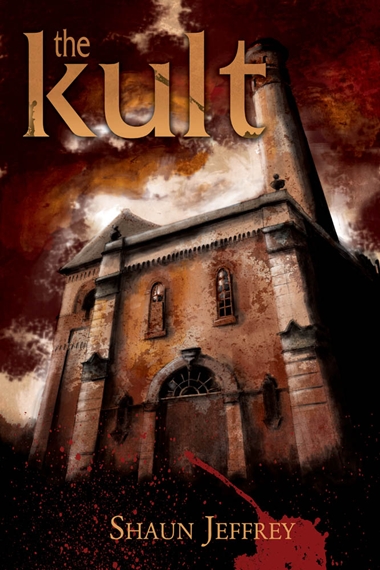
Indieview Shaun Jeffrey, author of, the Kult
Special HOT BREAKING NEWS!!!
I just received an email from Shaun with this great offer. Here it is from the man himself:
“I’ve started my newsletter campaign, now just to get people to sign up. If anyone would like to help, here’s the scoop: Sign up to the newsletter and receive a coupon code to download ebook, Dead Man’s Eye for free. Continue reading
Posted in Interviews