Category Archives: Indieview author

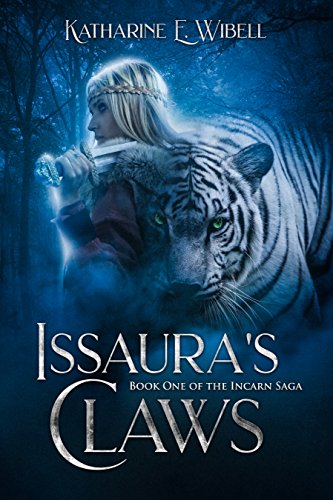
IndieView with Katharine E. Wibell, author of Issaura’s Claws

This story was loosely inspired by a dream which involved a military camp; the recruits being trained were animals that could speak: I was a white tiger. Strange but true! 

Katharine E. Wibell – 11 February 2018

The Back Flap

“According to legend, when the world was young, the goddess Issaura appeared among men. Those who treated her with kindness received the gift of the gods—the ability to transform into an animal form. This was a great honor but one that separated this race from other humans. Before Issaura departed the mortal realm, she promised to return if her people were ever at the point of destruction.

“Now a threat is rising from a land across the mists of the ocean, a threat that will push this race to the brink of extinction. Responding to the call to war, seventeen-year-old Lluava heads off to find her destiny, one that will carve her name in history.”

About the book

What is the book about?

Issaura’s Claws is the first of a four-book series entitled the Incarn Saga. This young adult war fantasy takes place in the fictional kingdom of Elysia where there are two races of beings: the ruling humans and the Theriomorphs who can transform into an animal at will. Though the two races distrust each other, they must unite when invaders from across the ocean, known as Raiders, attack the Elysians. The protagonist, Lluava, is a seventeen-year-old Theriomorph who is drafted into the army. Through her eyes, you see how dire the situation really is and experience the many adventures she endures.

When did you start writing the book?

I came up with the concept for this book in 2007.

How long did it take you to write it?

The answer to this is a bit strange. Right before I headed to college, Issaura’s Claws began to manifest itself. Surprisingly, the plot was based on a dream. Although the book was on hold for a four-year hiatus, post-graduation I returned to write it in its entirety. After completion of the first draft, I realized that Issaura’s Claws was just one installment in a series.  So, conception to publication took about ten years. However, my subsequent books take 9 months on average to write and about another year to edit and publish.

Where did you get the idea from?

This story was loosely inspired by a dream which involved a military camp; the recruits being trained were animals that could speak: I was a white tiger. Strange but true! The rest of the story revealed itself to me as soon as I began typing. I drew upon my own knowledge as well as personal experiences for some of the minor details. You have probably heard this before, but write what you know. The details make fantasy seem real and believable.

Were there any parts of the book where you struggled?

Although building and fleshing out the backstory is essential, I can get bored. If I don’t force myself to push through, I can stall for long periods of time until I return to a high-action scene.

What came easily?

I love action scenes especially when there are multiple occurrences happening at once. The mythology of the Theriomorphs (the shapeshifters) also seemed to come easily to me when writing.

Are your characters entirely fictitious or have you borrowed from real world people you know?

Though none of my characters are based on real people, I do pull in personal experiences to interweave amongst them. As for their development, initially, the characters seemed to present themselves to me at once. Yet, as I began to write, others that I had not expected, breathed life into themselves and took the book down some strange and unexpected paths. In this series, the Theriomorphs were a lot of fun to write about as some of the physical characteristics and personality traits of the animals they can change into are replicated in their human form.

We all know how important it is for writers to read. Are there any particular authors that have influenced how you write and, if so, how have they influenced you?

My favorite genre is ancient epics including but not limited to the Odyssey, Ramayana and all of the Nordic Sagas. Many myths and legends derive from these old stories. This is the same for my mythology-based fantasy. More recently, I read A Song of Ice and Fire by George R.R. Martin. I appreciate how this author is able to encompass so many events and characters and is not afraid to kill off a seemingly valuable character.

Do you have a target reader?

My target readers are older teenagers and adults who enjoy battle-heavy fantasy books ranging from The Hunger Games to A Song of Ice and Fire.

About Writing

Do you have a writing process? If so can you please describe it?

My process may be different than the majority of other authors. I was able to conceive the entire plotlines of my first two series almost instantaneously with very little change during actual writing. I develop a simple outline of the books and then a short description for each chapter. Since I split my work between art and writing, mornings are typically dedicated to writing new material with a few afternoons spent on editing and marketing. When the first draft is completed, three to four rounds of self-editing follow before the manuscript is sent to my professional editor. I must admit that lots of coffee and a square of chocolate always help start my writing off right.

Do you outline? If so, do you do so extensively or just chapter headings and a couple of sentences?

As I mentioned above, I write out a simple outline of the books and then a short description for each chapter before I tackle it.

Do you edit as you go or wait until you’ve finished?

I typically wait until my first draft is completed so I can work through the entirety in a fluid fashion.

Did you hire a professional editor?

Spelling is not my strong suit, so I did hire a professional editor.  Spelling and grammar checking programs are helpful, but often miss the mark. I am fortunate to use the same editor for my second book – and hopefully the other two as well – which means there is both familiarity and continuity with both the storyline and my writing style.

Do you listen to music while you write? If yes, what gets the fingers tapping?

I enjoy making playlists that are relevant to my current works but I only listen to them to get in the mood of writing and not while I am actually working. For that, I need complete silence. As I am drafting the first book of my second series, one of my favorite groups to listen to is Epic North. Imagine their music as a movie theme!

About Publishing

Did you submit your work to Agents?

I did mainly to fully understand this process better.

What made you decide to go Indie, whether self-publishing or with an indie publisher? Was it a particular event or a gradual process?

I loved this first series and felt that regardless of the means, this story deserved to be told. I already knew some Indie fantasy authors so “going Indie” was an easy decision though it came with a huge learning curve.

Did you get your book cover professionally done or did you do it yourself?

I had a clear vision for my first series of books and their covers. As a professional artist, I wanted the main focal point to be images that I painted. From there, I worked with a graphic designer to create the actual cover.

Do you have a marketing plan for the book or are you just winging it?

This again speaks to the learning curve for self-publishing. I am continually discovering new and better ways to market by reading, watching, and talking to those who are far more knowledgeable than me in these areas. I know marketing is my weakest link, but I hope that will not be the case much longer.

Any advice that you would like to give to other newbies considering becoming Indie authors?

Take the time to learn about all your options. Make connections with other Indie authors and see what information they are willing to share. The process can be frustrating, but the more prepared you are, the easier it will be.

About You

Where did you grow up?

You could call me a southern girl. I was born in Texas, grew up in Georgia, and live in New Orleans, LA. Most of my childhood was spent in the country where I was blessed with opportunities to work with a wide range of animals as well as encouraged to play “make-believe” with my sister and friends. I know my imaginary childhood adventures helped further my ability to become a fantasy writer. Moreover, my experience with animals greatly influenced my first book series, the Incarn Saga. I am also an artist and specialize in reverse-glass paintings with a New Orleans theme. My dog, Alli, appears in many of these artworks either making gumbo or trying on Mardi Gras masks.

What would you like readers to know about you?

I have always had an eclectic range of interests from competitive archery and wildlife rehabilitation to dog training and step dance competitions. I love trying new things!

What are you working on now?

Currently, I am working on publishing Ullr’s Fangs, book two of the Incarn Saga. Also, as the last two books in that series are already written, I am actively writing the first book of my second series.

End of Interview:

For more from Katharine, visit her website, follow her on Twitter, or like her Facebook page.

Get your copy of Issaura’s Claws from Amazon US or Amazon UK.
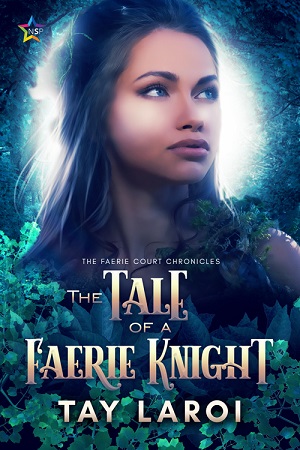
BookView with Tay LaRoi, author of The Tale of a Faerie Knight

Putting a piece of myself into characters always makes me a little nervous, but it’s the easiest way I know how to tell my audience, “You’re not alone. Others are going though similar stuff and made it though. You’re going to be okay. I promise.” 

Tay LaRoi – 8 February 2018

The Back Flap

After the fall of Queen Mab, DJ Suzuki resolves herself to an aimless life of entertaining, drinking, and hooking up within the Faerie Realm. After twenty ageless years, she knows she can’t go back to her family, despite the fact that her brother still searches for her and the small voice telling her that her parents might have had a change of heart about her orientation.

When a young woman named Talia shows up at DJ’s workplace desperate for help, DJ sees a way to rid herself of the guilt of staying away: she’ll take Talia where she needs to go if Talia rids DJ’s family of all memory of her. Talia will be safe and DJ will be free to live in the Faerie Realm with a clear conscious. Everyone wins.

Except there’s more to Talia and her situation than she’s letting on. Her pursuers want more than just her. They want the Faerie Court, and Talia is the key to getting it. If DJ can’t get Talia to safety before they catch up, a guilty conscious will be the least of her worries. She just might have a faerie civil war on her hands.

About the book

What is the book about?

“Tale” is about an ex-faerie knight that is struggling to find where she belongs now that she’s on her own. She’s human, so she doesn’t completely fit in the Faerie Realm, but she’s been there so long that she doesn’t feel like she fits in among humans either. I grew up mixed (my mom is white, dad is black), so it’s a conflict that hits pretty close to home for me, except I didn’t grow up around magic.

On top of that, she went through some pretty dark stuff thanks to the queen she served (Queen Mab from the last book, Portraits of a Faerie Queen). So, as a bigger picture, I guess you could say it’s about finding one’s way in the world when the road map so far has been a mess. Here’s a spoiler: it helps when you have people who love you there to help untangle everything. 🙂

When did you start writing the book?

The summer of 2016. It started out as a Camp NaNoWriMo project.

 How long did it take you to write it?

About two months. I really wanted to push myself to see what I could accomplish in a short amount of time. Considering how much I had to edit afterwards (sorry, Jason), I still think I did a pretty solid job for the timeline I put myself on.

 Where did you get the idea from?

When I wrapped up Portraits of a Faerie Queen, I knew I wanted to find out what happened to the court after Jocelyn left and I knew Talia was going to be a key part–though I can’t tell you why–but I struggled for a long time with who would narrate the story. Zedd’s song “Daisy” came on Spotify one day when I was about to give up and try an entirely new angle, and, thus, Daisy Jane was born.

Were there any parts of the book where you struggled?

DJ’s motivations were really had to pin down. I knew right away that she was the kind of person not to wear her heart on her sleeve, so her actions motivated by her rough exterior were easy to figure out, but the more nuanced, complicated things I knew she had to do were really hard to figure out.

What came easily?

DJ’s chemistry with the characters around her. For some reason, character interactions are always the easiest thing for me to write. When they are alone with themselves or dealing with the larger plot, things get more difficult.

Are your characters entirely fictitious or have you borrowed from real world people you know?

I try not to borrow too much from people, because I don’t think I could do their stories justice. There’s just so much of it I wouldn’t know. I borrow from my own life from time to time, though. DJ’s struggle with her family was inspired by things I was going through while I was writing her story, more so internal fears and questions rather than real events. Putting a piece of myself into characters always makes me a little nervous, but it’s the easiest way I know how to tell my audience, “You’re not alone. Others are going though similar stuff and made it though. You’re going to be okay. I promise.”

Do you have a target reader for this book?

Like Portraits of a Faerie Queen, “Tale” is YA with a special focus on queer teen girls. If teens of any other variety feel drawn to it, then by all means, give it a read! I’m always happy to give someone a story, but this story was definitely written with queer girls in mind since I didn’t have any stories like this when I was their age.

How was writing this book different from what you’d experienced writing previous books?

The timeline flew by a lot faster. “Portraits” only took six months more from conception to release, but I didn’t take nearly as much writing time on “Tale.” Between writing and edits, I’d say I only took three months total. All that other time was due to other stuff.

What new things did you learn about writing, publishing, and/or yourself while writing and preparing this book for publication?

Writing wise, I learned that character motivation is everything. I took that for granted with Portraits of a Faerie Queen because Jocelyn’s motivation was clear from the get go. DJ’s definitely was not, but once I found it, everything fell into place.

As far as myself goes, I’ve learned that I’m actually kinda cool. Not to say I felt there was anything particularly wrong with myself before, but I tell people I’ve written books that are published and their eyes light up, even if my stuff isn’t in a genre they like. To get that reaction has sort of made me stop and examine how I see myself. That may or may not play a part in the theme of the next Faerie Court Chronicle. You’ll have to keep up with these crazy characters to find out!

End of Interview:

Get your copy of The Tale of a Faerie Knight from Amazon US or Amazon UK.
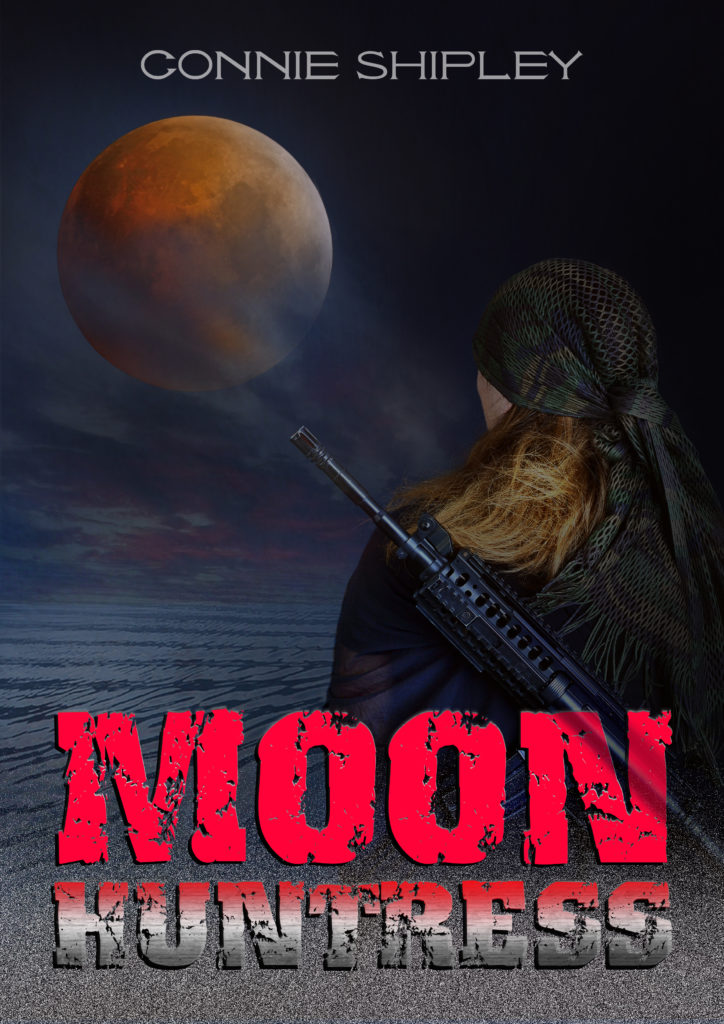
IndieView with Connie Shipley, author of MoonHuntress

Yes, I think if you want a good book on the market, you need to get a professional editor. 

Connie Shipley – 6 February 2018 Continue reading

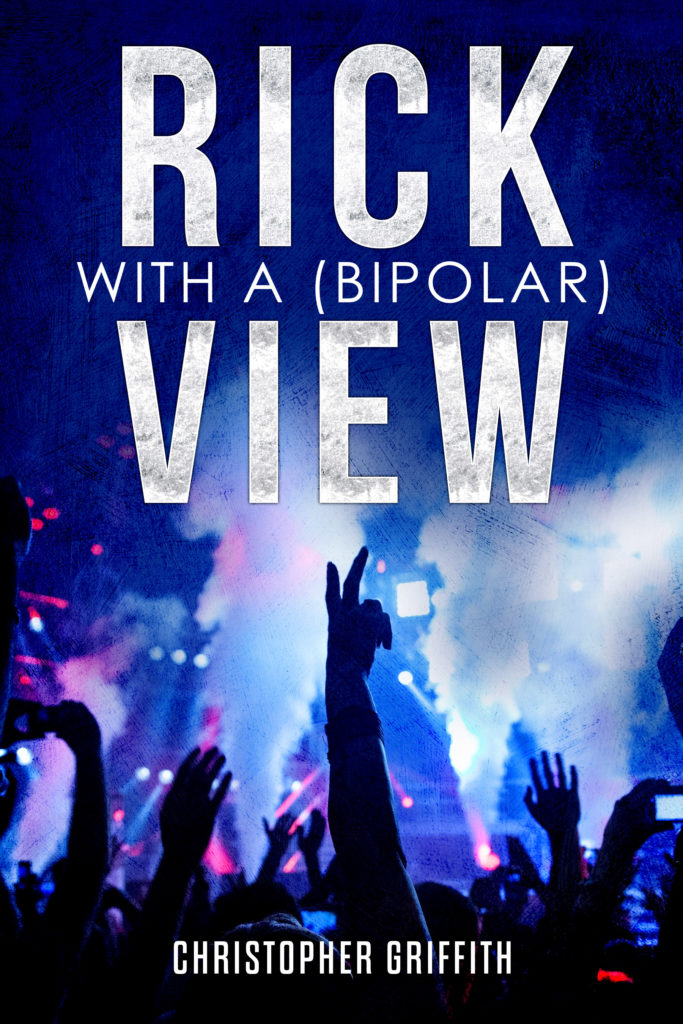
IndieView with Christopher Griffith, author of Rick with A (Bipolar) View

The five main characters, Rick, Jenny, Lucy, Jimmy and Paul seemed to be ready made to feed off one another – when character drives plot, that’s when it’s easy to write.

Christopher Griffith – 1 February 2018 Continue reading

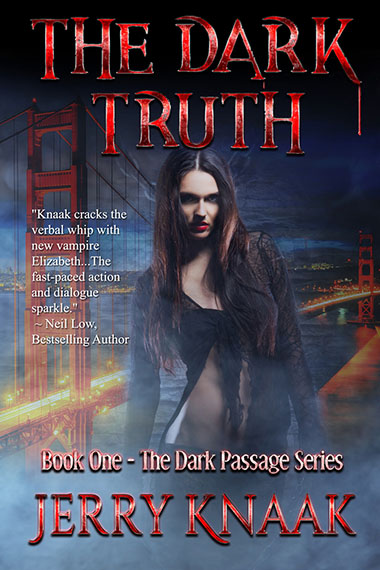
IndieView with Jerry Knaak, author of The Dark Truth

The main character is essentially a female version of me – sarcastic, foul-mouthed, quick-witted (sometimes).

Jerry Knaak, 30 January 2018 Continue reading

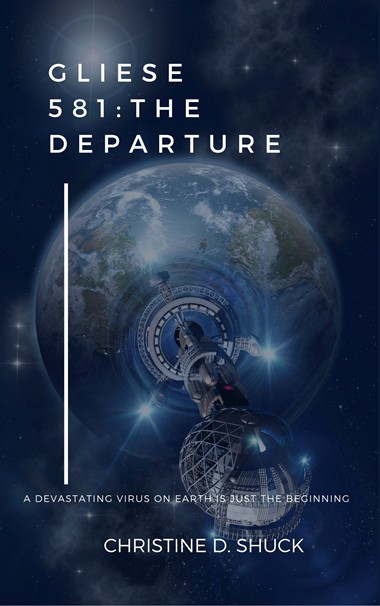
IndieView with Christine D. Shuck, author of Gliese 581: The Departure

Do not allow your fears or doubts to control/inhibit your progress. Be open to criticism but do not let it stop you in your tracks. . A book is not your baby. You can test this by throwing your book on the floor. See, the book is just fine. By the way, do NOT do this with a baby.

Christine D. Shuck – 28 January 2018 Continue reading

IndieView with Tom McHale, author of The Constitution – A Revolutionary Story

I was worried about how to keep this book strictly non-partisan. With all the angst over politics these days I wanted to make sure this book didn’t fall into the same trap. That actually turned out to be easy. 

Tom McHale – 25 January 2018 Continue reading

IndieView with Mariuccia Milla, author of Meet Me in Milano

I myself left New York at age 25 to spend eighteen years in Italy, with no clear plan except to look for work. So I started my life in the same way the book starts. Then the story took on a life of its own.

Mariuccia Milla – 23 January 2018 Continue reading

IndieView with Tyler Omichinski, author of Plague in Paris


A large part of it comes from the bizarre world we live in. Naturally, I tend to be drawn to the bleak realities that we’re facing as a species. How we like to pretend we’re so enlightened but in whole swaths of the world we’re still engaged in the horrendous activities that defined us hundreds of years ago …

Tyler Omichinski – 21 January 2018 Continue reading

IndieView with Ashley Borodin, author of The Jealous Flock

You use whatever works at the time. Mood, environment, memory, it all plays a role. And I just try to respond to that confluence of stuff swirling about in my skull. If you or anyone has a method that works every time and gets consistent results then I applaud you.

Ashley Borodin – 25 November 2017

The Back Flap

Forced from their collective comfort zone, all three members of Martin’s family come face to face with the realities that underpin their urbane way of life. Each is faced with a paradox that will test their belief in themselves and their image of the tolerant, liberal society they believe they inhabit.

An epic in miniature, The Jealous Flock takes readers from the cloistered air of Professional London through the harsh realities of the Middle East and on to the culture war simmering beneath the surface in Australia.

Through their interwoven narratives each character tries to grapple with change as they question their authenticity and value as individuals amidst The Jealous Flock.

About the book

What is the book about?

The Jealous Flock is about unique individuals dealing with the hypocrisy and trauma of the modern world.

When did you start writing the book?

About 4-5 years ago.

How long did it take you to write it?

Approximately 1 year from beginning to final edit. Though it’s lost to the mists of time as to when I actually started or finished. When you’ve carried these observations and ideas boiling within you your whole life, it’s very hard to say they had a beginning or an end. The best I can say is the book occurred somewhere in the middle and the story continues in me, and in you every day of our lives.

Where did you get the idea from?

From myself with many refinements coming from life, the news and other authors I met along the way. As I was forming these ideas, this narrative, into a book I was observing several distinct undercurrents in world events. These were being studiously ignored or deliberately misrepresented by the mainstream of the time. And still are in many respects. That sort of arrogance from mainstream society, indeed ignorance, always gets on my goat. It provides the catalyst for me to delve deeper into what’s going on, what’s important and what’s taboo.

Were there any parts of the book where you struggled?

I can honestly say I struggled with most of it. A good portion was drawn from my direct experience so that was more a case of transcribing notebooks or expanding on observations and ideas. That was the easy part. Imagining how happy, successful people go about their lives – that was nearly impossible.

What came easily?

The pain. The insights.

Are your characters entirely fictitious or have you borrowed from real world people you know?

I’ve based at least one character almost entirely on myself and an amalgam of my grandfather. The others are all aspects of me with various tweaks of background and circumstance that caused them to neglect their principles or generally turn out very different.

We all know how important it is for writers to read. Are there any particular authors that have influenced how you write and, if so, how have they influenced you?

I diverge from this belief. It’s important for writers to experience, to think. Above all to process their experience. Which is all thinking really means. I don’t read. I mean, well, I have to to get by, but I do it grudgingly and I’ve never enjoyed it. So I certainly don’t feel malice towards anyone who can’t or doesn’t read.

On the other hand. I’ve watched active reading transform my wife in the last 3 years. By active, I mean she began to really think of her self-interest as a reader, as a thinker. She went out of her way to look for better authors and better books and inevitably found them. Her vocabulary alone has easily doubled. She comes from a studiously ignorant family and I say that as a plain fact. Her mother was convinced I was in fact the Devil incarnate at one point. Not in a metaphorical sense mind you. The Devil. El Diablo in the flesh. Reading actively, voraciously has helped her break free from that stultifying background.

But though I come from similar stock, it’s made little difference to me one way or the other and my eyes are crap so it’s rarely worth the bother.

I have to pretend to have influences for the sake of convention. Just like I might pretend to acknowledge the existence of genre-fiction for the same reason. In actuality neither is the case.

I said earlier some authors influenced my writing – what I meant is that they influenced or refined my thinking but not my writing. Unless you think I write like Desmond Morris, Alice Miller or John Fowles in The Aristos. I would say, probably not.

Do you have a target reader?

Nope. Although, I imagine this book appealing to professionals, politicians, students and anyone placed to effect change in themselves and the world. Anyone who likes Zombie books need not apply. That’s been my experience – they get most upset.

About Writing

Do you have a writing process? If so can you please describe it?

I like to use a variety of approaches. Speech-to-text is great for dialogue and furtive, impulsive scenes and detail. So that involves really getting into character, dimming the lights, imaging the scene. Perhaps watching a documentary about the Middle East or something pertinent to the scene I’m immersing myself in. And then I start describing what’s going on. If there’s a wall, I simply tell the computer: “a wall stretched out before me, narrowing into the haze. It was parched where the sun had eaten into it and cracked where the mortar should give one confidence it won’t fall down. This place held no pretence of safety. I was in danger and the wall itself was an imminent threat.”

That sort of thing.

I also write just like a normal person at times. I prefer to look down at my hands and away from the screen and just bash away till something intelligible comes out.

Do you outline? If so, do you do so extensively or just chapter headings and a couple of sentences?

I never learned to write properly,  so to give a clever answer to your question I would need to look up what you’re actually talking about instead of revealing my ignorance as I am doing here. So no, probably not.

Except when I do. I write down ideas and settings. I use Scrivener and make endless lists and stacks of cards. I collect pictures and bookmark news stories. And sometimes I just improvise. I think it’s like music, like anything. You use whatever works at the time. Mood, environment, memory, it all plays a role. And I just try to respond to that confluence of stuff swirling about in my skull. If you or anyone has a method that works every time and gets consistent results, then I applaud you. That’s never happened to me.

Do you edit as you go or wait until you’ve finished?

Both. But I prefer to get my wife to edit.

Did you hire a professional editor?

Can’t afford it, so no.

Do you listen to music while you write? If yes, what gets the fingers tapping?

Again, sometimes. I discovered ASMR recently and though it still seems pretty weird, I’ve found that someone brushing my hair and whispering in Korean helps me find that calm, entranced state.

I also have my Foobar playlists tagged by Mood. And Anxious was one I used a lot whilst writing The Jealous Flock. It has a lot of modern classical and unsettling ambient music in there. Chase scenes from films, atonal strings, bowed cymbals and stuff like that.

About Publishing

Did you submit your work to Agents?

I tried a dozen or so, probably all the wrong ones and then just collapsed from exhaustion. They didn’t seem terribly bright if I can be blunt. Or very genuine. I was looking for someone who actually cared about books, not a kind of hawker who just needed celebrities in the bag to make a quick buck. That’s all they seemed to be interested in. Certainly not Literature. I’m not against agents in principle. I could really use one now because all this publicity crap is doing my head in, but such is life.

What made you decide to go Indie, whether self-publishing or with an indie publisher? Was it a particular event or a gradual process?

It was a failure to connect with anyone decent in the industry. Either through their predisposition or my own ineptitude at finding and relating to people who will act in my interest.

Did you get your book cover professionally done or did you do it yourself?

Don’t look too closely is all I will say in answer to that.

Do you have a marketing plan for the book or are you just winging it?

I have some semblance of an idea. But I’m also winging as I go. Fail early, fail often and don’t tell the wife what it costs. If I could have that in Latin it would be pride of place in my writing den.

Any advice that you would like to give to other newbies considering becoming Indie authors?

Don’t.

Or if that fails, make sure you are being read by an active reader – which is like an active listener. Someone who leans in when you’re talking and asks pertinent questions. Be interviewed, interrogated by your reader/s, and get that in place from the start. That will ensure you are telling stories rather than just writing. Anyone can write. 3 year olds do it. Monkeys can and probably dolphins too.

Although I believe bees can tell stories, so that kind of throws a spanner in my narrative there… but the point is to become a storyteller, not just a writer. I couldn’t tell stories. I still struggle with it. Having a reader helps you to relate to the bees, or humans, if you haven’t got any bees. It makes your stories count. It’s not about writing to a genre or the lowest common denominator. That’s not storytelling anymore than a car commercial is. Which of course it can be, but hopefully you’ll aspire to do a little better than that.

About You

What would you like readers to know about you?

I grew up a Fundamentalist Christian in a very poor, single parent family. I was surrounded by women with a hatred of aboriginals, ibis and Islam. So naturally I’m quite fond of all those things. And as you’d expect, I have a fairly unromanticised view of women as a group. Though I don’t tend to think of groups if I can help it. I don’t have any illusions about people in general. It’s taken me awhile to get to this point, a great deal of disappointment, but I can now indulge in a thoroughly healthy pessimism about humankind free of ideology for the most part.

If you watch this conversation between a secular gay-married Jew and a Traditionalist Catholic bishop – then throw a drunk Bukowski in there saying ‘I’ll take on any o’ you girly-armed losers’ – that’s basically what my head looks like.

https://www.youtube.com/watch?v=OYWBNMOCrlo&ab_channel=TheRubinReport

The decor is wonderful, but basically none of these people should be in a room together. But they are and they can’t get out, so they have to make it work. That’s who I am and that’s more or less my entire worldview.

What are you working on now?

I’m trying my best to market The Jealous Flock and build my author platform so that someone, somewhere will take me seriously.

I’m also tinkering with two new projects – one is a coffee table book of my best poems and the other is a novel set around the 1930’s in Australia, and focusses on the life of a runaway farm-school orphan.

End of Inteview:

For more, follow Ashley on Twitter or check out this website.

Get your copy of The Jealous Flock from Amazon US or Amazon UK.