I have a masters in psychology and have always been curious about how the mind works. Mostly disappointed by how mental health disorders have been depicted in literature, I thought writing the truth about my own experience might expand people’s understanding of psychosis.
Linda Bass – 20 January 2026
The Back Flap
From an author with a psychology background, a candid memoir about the interior of her own psychotic episode.
After the culture shock of moving from a small Wisconsin town to the tumult of Los Angeles in 1967, Linda’s family disintegrates: her parents decide to divorce, and she and her younger brother, Brian, suddenly must fend for themselves. While she finds a foothold in academic pursuits, Brian spirals downward into schizophrenia and, finally, commits an irrevocable act. Plagued with guilt, Linda loses her sense of purpose, abandons a promising career in psychology, and finds herself in a life she never envisioned—poor, alcoholic, an accidental parent in an unhappy marriage, feeling invisible and alone.
When Linda sees a psychologist, Sam, he helps her recover what she has lost: her sense of self. Feeling truly seen, she falls in love with him and suspects her feelings might be reciprocated, but can’t be certain. The ambiguity, mingled with other overwhelming stresses, triggers her descent into a psychotic episode—one that echoes her dreams, Brian’s experience, and Sam’s own phobia. Will Linda follow in her brother’s footsteps, or will this episode prove to be the wake-up call she needs to change course?
About the book
What is the book about?
At the heart of A Tiny White Light: A Memoir of a Mind in Crisis is a transcendent experience and subsequent psychotic episode that immerses the reader in my own interior experience, but I also showed, in narrative form, the elements I believed led up to and contributed to it.
The content of the psychotic experience itself was meaningful and embodied my own persistent search for meaning, purpose, and love.
When did you start writing the book?
I wrote an initial version in 1984. In the early ‘90s, I wrote a second version told in flashback, from a present-day fictitious love story to provide what I thought was necessary comic relief; in the early 2020s, after I retired, I wrote a third version, sans the love story, but adding in a semi-comic afterlife, again to add more light to the story. Finally, my readers told me the main story was what intrigued them, and so, voila, A Tiny White Light.
How long did it take you to write it?
Given the number of iterations, that’s impossible to say. I’m lucky in that I don’t have trouble getting words on the page. The struggle for me is in reducing word count and cutting scenes.
Where did you get the idea from?
This was probably the most fascinating experience of my life (so far!)—even as I was living it. I have a masters in psychology and have always been curious about how the mind works. Mostly disappointed by how mental health disorders have been depicted in literature, I thought writing the truth about my own experience might expand people’s understanding of psychosis.
Were there any parts of the book where you struggled?
I was undecided about structure for a long time, whether to build in backstory with, e.g., alternating time periods or not, but as a reader I sometimes find that structure annoying, since I’m taken away from the story I’m engaged in at the time. I ultimately decided I wanted to write the book chronologically for the most part, so I could show how different elements of my life wove together, accrued, and converged over time to result in the psychotic episode. Part I of the book is primarily about my brother and my relationship with him, and I’m a bit player, but since what happened to him set the stage for some of my own challenges, it felt necessary to focus on him first. Beleaguered by the need to limit word count, I wasn’t able to flesh out my own life as much as I would have liked in Part I, but that actually mirrors that time of my life—I plodded away at building a life for myself, while the drama surrounding him persistently interrupted daily life and absorbed a lot of emotional energy.
What came easily?
The words. So many words. So much cutting, decidedly not easy.
Are your characters entirely fictitious or have you borrowed from real world people you know?
This is a memoir, so it’s a true story. I changed people’s names, except for my own first name, and changed a few details about them that weren’t critical to the story. I also created a fictional hospital name and changed some town names.
We all know how important it is for writers to read. Are there any particular authors that have influenced how you write and, if so, how have they influenced you?
I can’t imagine a day without reading, so I’ve read thousands of books. There are certain authors I love to read, and I’m sure I’ve unconsciously absorbed some writing techniques, but I couldn’t pinpoint a particular author. I mostly read women’s literary fiction, and I particularly like reading Elizabeth Strout, Ann Patchett, Geraldine Brooks, Zadie Smith, Kristin Hannah, the late Alice Munro, the late Toni Morrison, Alice Hoffman, Emma Straub, Gabrielle Zevin, Celeste Ng, Maggie O’Farrell, Gail Godwin, Anna Quindlen, Anne Tyler, Margaret Atwood, and Joyce Carol Oates. Among male authors, I like John Irving, Ian McEwen, Abraham Verghese, Anthony Doerr, Augusten Burroughs, Khaled Hussein, Matt Haig, Richard Ford, Richard Russo, and yes, Stephen King. For sheer entertainment, I also enjoy reading thrillers, mysteries, police procedurals, e.g., Louise Penny, Harlan Coben, Dennis Lehane, John Sanford, Michael Connelly.
Do you have a target reader?
I try not to think about the reader as I write, but to write something that I find thought-provoking or fun, but also true to life, and I hope that some readers will share my particular sensibilities or at least be interested in them.
About Writing
Do you have a writing process? If so can you please describe it?
Memoirs are a little more restrictive than writing fiction, but I listed certain critical events that I wanted to include, along with a timeline, before starting. I’m a list-maker.
For short stories, it’s usually something I saw, heard, or read that triggers an idea, e.g., a skateboarder racing down a steep hill while holding a gasoline can and approaching a busy intersection.
Do you outline? If so, do you do so extensively or just chapter headings and a couple of sentences?
I don’t exactly outline, but I list things, and I have charted narrative arcs. I then create chapter summaries mostly after the fact.
Do you edit as you go or wait until you’ve finished?
Both. I edit a little as I go along, but when I think I’m done, I review order and continuity and sometimes move paragraphs, etc., and also check whether some bits are necessary to the story. And, of course, the work never feels finished.
Do you listen to music while you write? If yes, what gets the fingers tapping?
I usually prefer silence, but sometimes will listen to jazz. Diana Krall or Chris Botti are favorites.
About Publishing
Did you submit your work to Agents?
Yes, I submitted to 28 agents (not the recommended 40) before my soul felt suitably crushed.
What made you decide to go Indie, whether self-publishing or with an indie publisher? Was it a particular event or a gradual process?
It appeared to me that, in memoir/autobiography, traditional publishers were prioritizing books by the famous, and otherwise were focused on money-maker genres, romance, sci-fi, mystery, thrillers, etc., while also providing little support (e.g., marketing) for lesser-known authors. In addition, authors seem to be required to cede too much control with respect to covers, editing, etc.
Instead of self-publishing, I decided to go with an indie publisher, She Writes Press, particularly because of their distribution network (Simon & Schuster), but also because I didn’t want to have to cope with some other tasks, proofreading, cover development, getting an ISBN, etc. I also appreciated that SWP provided a comprehensive author guidebook and worked hard to develop a sense of community among authors. I’m part of several author groups that support each other.
Did you get your book cover professionally done or did you do it yourself?
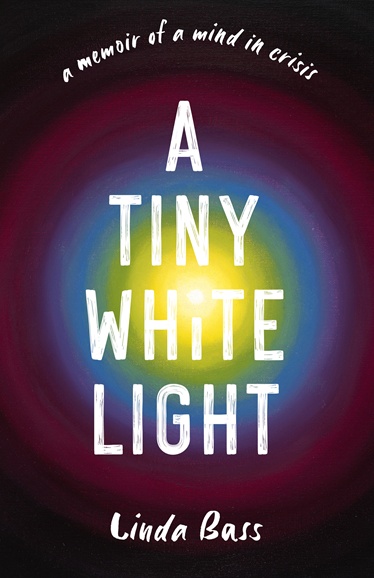
After reviewing proposed covers, I submitted a mockup based on my own concept, which they liked, so I painted the background art, had it professionally photographed, and submitted it, and then the publisher used that, finalized the layout, and provided the lettering.
Do you have a marketing plan for the book or are you just winging it?
I hired a PR firm, BookSparksPR, and also have a small marketing budget. I’m doing a little marketing on my own on social media, using materials the PR firm created for me, and have talked to a couple of book stores (more to do), and created an email list and sent reminders about pre-ordering. SWP has distributed the book cover to many on-line retailers so it will have visibility for months before my January 2026 pub date.
Any advice that you would like to give to other newbies considering becoming Indie authors?
A small press is a great option to gain support during the publishing process and is more likely to result in visibility for your book, especially if you are able to invest in PR and marketing.
About You
Where did you grow up?
A town of 401 people in Wisconsin.
Where do you live now?
Western Massachusetts
What would you like readers to know about you?
My author website: https://lindabass.com
My art website: https://lindabassart.com
What are you working on now?
I am fine-tuning a compilation of short stories for my second book, and then plan to write another memoir or novel.
End of Interview:
Get your copy of A Tiny White Light from Amazon US.