It really started with a question: what if a Southern mama could bake your soulmate into being? That idea came from a writing prompt in a short story class I took years ago—and I just couldn’t shake it. The image of someone using food, especially biscuits, to stir up love and mischief stuck with me.
Arlon Jay Staggs – 9 October 2025
The Back Flap
It’s 1982 in Bailey Springs, Alabama, where secrets aren’t just whispered—they’re baked right into the biscuits.
Trudy has kept her head down since high school, when her unexpected pregnancy and marriage to star-quarterback Jimmie Beaumont scandalized the town. A few years later, after Jimmie’s tragic demise, folks still haven’t forgiven her and blame her for his death. Now engaged to a blue-blood politician, Haskel Moody, Trudy’s back in the spotlight—especially after taking a job teaching chemistry to save his campaign for mayor.
As Trudy encounters old high-school ghosts, she also confronts Coach Shug Meechum, whose laid-back charm and infuriating grin incite more than just her frustrations. Meanwhile, Trudy’s mother, Leta Pearl, has been giving some chemistry lessons of her own—slipping her mysterious love-inducing biscuits to men in town to advance her own agenda.
In Bailey Springs, football, tradition, and appearances often mean more than truth. So, when secret recipes are uncovered, and new desires collide with a long-buried tragedy, Trudy must decide if she’ll play by the rules or risk everything for the life she wants.
A laugh-out-loud romp with a smidge of Southern magic, Leta Pearl’s Love Biscuits confirms that true love—like the best biscuits—takes some heat to rise.
About the book
What is the book about?
Leta Pearl’s Love Biscuits is set in 1982 in a small Alabama town called Bailey Springs, where appearances are everything and secrets don’t stay buried for long. The story follows Trudy Abernathy, who’s spent years keeping her head down after a scandal in high school involving her unexpected pregnancy and the star quarterback, Jimmie Beaumont. Now she’s engaged to Haskel Moody—a polished, blue-blood politician running for mayor—and trying to play by the town’s rules. But when she takes a job teaching chemistry to help his campaign, things get complicated fast.
Especially because her mother, Leta Pearl, has been giving out her own chemistry lessons—by baking mysterious love-inducing biscuits and slipping them to unsuspecting men around town. Add in Coach Shug Meechum, the town’s beloved football coach with a grin that drives Trudy crazy in more ways than one, and you’ve got a recipe for drama.
The book is full of small-town gossip, Southern charm, and a little bit of magic. It’s funny, tender, and ultimately about what happens when we stop trying to please everyone and start choosing the life—and love—we actually want. As I like to say, true love—like the best biscuits—takes a little heat to rise.
When did you start writing the book?
I started working on the earliest version of the book in 2017, but quickly realized that even though I had worked as a copywriter for 20 years, I didn’t know much about how to write long-form fiction. So in 2020, I decided to go back to school and get my MFA in creative writing and this novel served as my thesis. I wrote the final drafts soon after I graduated in 2022.
How long did it take you to write it?
All told, it took about seven years—including a major revision after I completed my MFA and another round of edits when the manuscript sold. I’ve rewritten the first chapter more times than I can count, but I believe it found the voice it was always meant to have.
Where did you get the idea from?
It really started with a question: what if a Southern mama could bake your soulmate into being? That idea came from a writing prompt in a short story class I took years ago—and I just couldn’t shake it. The image of someone using food, especially biscuits, to stir up love and mischief stuck with me.
But underneath that whimsy is something deeply personal. Growing up, my parents loved telling the story of how they met—my mom was a science teacher and my dad was the football coach who taught across the hall. Just like Trudy and Shug. She was a single mother in the 1960s, raising my older brother Paul in a time and place that wasn’t especially kind to women trying to make it on their own. Her grit, grace, and quiet humor have always inspired me.
From there, the story grew into this world of small-town politics, football worship, maternal meddling, and the age-old question of whether we’re living the life we want—or the one people expect us to live. That’s where Leta Pearl’s Love Biscuits was born.
Were there any parts of the book where you struggled?
Absolutely. Writing about grief, mental illness, and gay boys in the 1980s South required care and precision. I didn’t want to make the book heavy, but I also didn’t want to look away from the emotional truth of those experiences. That balance—being honest without being bleak—was tricky.
And honestly? The biscuits were hard. I almost cut them more than once. They walk a fine line between fantasy, magical realism, and plain old Southern tall tale. I felt like I needed to explain just enough to let the reader believe, but not so much that I kill the mystery or flatten the metaphor. Hyper-literal readers are probably going to hate it—and I’ve made peace with that. The biscuits are obviously a metaphor, and I love what they stand for.
I also love how Southern stories use humor to explore serious things—but that’s gotten harder to pull off. These days, writing with humor can sometimes be misread as making light of serious issues, and I worked hard to make sure the book felt both respectful and real. Humor is how we survive, especially in the South. It’s not a punchline—it’s a coping mechanism.
What came easily?
The dialogue. I grew up around Southern women who could serve shade, sugar, and scripture in the same sentence. Once I found the voice, the conversations just poured out. And I loved writing the banter—often I wrote whole chapters only in dialogue and then went back and added the narrative voice.
Are your characters entirely fictitious or have you borrowed from real world people you know?
They’re fictional, but definitely flavored by real people. Trudy is inspired by my mom, Leta Pearl is a composite of several Southern matriarchs I both feared and adored, and Barbara Beaumont—the queen bee columnist—was born from a mix of small-town society ladies, gossip columnists, and my own inner critic.
We all know how important it is for writers to read. Are there any particular authors that have influenced how you write and, if so, how have they influenced you?
Fannie Flagg’s Fried Green Tomatoes showed me how to write with humor and heart. Teven Rowley (The Guncle) gave me permission to be funny even when writing about grief. Sarah Addison Allen taught me the power of magical realism when it’s grounded in community. And Andrew Sean Greer and Rebecca Wells have both influenced the emotional layering in my storytelling.
Do you have a target reader?
Yes. I actually have two! One I call “Susan”—she’s a Southern woman, 45 to 65, who cherishes tradition, family, and heartfelt stories about belonging. The other I call “Elliot”—a gay man, 30 to 60, who loves character-driven fiction that balances humor and depth, especially when it touches on identity and chosen family. Basically, it’s the same audience you’d find at a Cher concert: Gen X women and gay men, cheering and crying together.
About Writing
Do you have a writing process? If so can you please describe it?
It’s a mix of discipline and chaos, honestly. I write best in the mornings, and I try to show up to the page even when I’m not inspired—because inspiration often shows up after I do. That said, I’m a deep reviser. I’ll write a scene, then tweak it endlessly until it sounds like how the character would really say it. I need to hear the music in the sentence.
Do you outline? If so, do you do so extensively or just chapter headings and a couple of sentences?
Sort of. I use a 15-point plot structure that I like to map out before I start writing, and I usually begin with that framework on a giant dry erase board in my office. That board is my happy place—it gives me comfort, clarity, and just enough structure to keep me moving forward.
I’m not rigid about it, though. As I write, things inevitably shift. Sometimes I’ll look up and realize I’ve strayed from the original plan—and that’s often a good thing. The white board lets me zoom out, take a breath, and either course-correct or rework the outline right then and there. So yes, I outline—but I treat it more like a living document than a rulebook.
Do you edit as you go or wait until you’ve finished?
Both—but if I’m being honest, I lean heavily toward editing as I go. I spent two decades as a copywriter, mostly writing shortform, so I developed the habit of polishing each sentence until it sounds just right. That rhythm is hard to unlearn. I’ll often write a line, then rewrite it five or six times before I move on.
That said, I do try to get a full draft out before I start major revisions. The first draft is for me—to explore, discover, and make a mess. Every draft after that is for the reader. But yeah… my inner copywriter is always lurking, trying to clean things up before I’ve even figured out what I’m really trying to say.
Did you hire a professional editor?
Yes. Before I submitted the manuscript to my publisher, I hired a freelance editor to give feedback on a couple of later drafts. That input helped me tighten the story and identify areas that still needed work. Once the publishing contract was signed, I had the benefit of working with the incredible editorial team at Koehler Books, who took it even further.
Do you listen to music while you write? If yes, what gets the fingers tapping?
I actually have to write in complete silence. I wish I were one of those people who could write in a coffee shop with music playing, but I need quiet to hear the rhythm of the sentences in my head.
That said, when I’m stuck or trying to reconnect emotionally with a scene, I’ll sometimes listen to Broadway soundtracks—especially Waitress and Dear Evan Hansen. I know it sounds cheesy, but I can feel the story in the music. It reminds me of what the characters want, what they’re afraid of, what they’re not saying. I also played a lot of early Kacey Musgraves while writing Love Biscuits—her sharp, honest take on small Southern towns hit the exact tone I was aiming for. It helped me keep one foot in affection and the other in critique.
About Publishing
Did you submit your work to Agents?
Yes, I did—and I had a surprisingly positive experience with it. I queried a small batch at a time and ended up with seven or eight full manuscript requests. The feedback I received, even from those who ultimately passed, was incredibly thoughtful and encouraging. A couple of agents were genuinely enthusiastic about the story but felt it wasn’t quite the right fit for their lists.
In many ways, I used the querying process as a kind of revision lab. I’d tweak the manuscript based on what I was hearing, sharpen the pitch, and pay attention to where the momentum was (or wasn’t). It helped me see the story more clearly and made the book stronger before I found the right publishing path.
What made you decide to go Indie, whether self-publishing or with an indie publisher? Was it a particular event or a gradual process?
It was both gradual and sudden—if that makes sense. I had been querying agents and doing all the things you’re “supposed” to do to land a traditional deal. But then I connected with the editor at Koehler Books, and we hit it off immediately. It was one of those rare moments where everything just clicked. I hadn’t planned to go the hybrid route, but it felt like a match—collaborative, enthusiastic, and aligned with my vision for the book. It was serendipitous, and I trusted it.
And if I’m being honest, it was such a stark contrast to my experience with traditional publishing. The ghosting. The vague promises to follow up that never materialized. The glacial timelines—twelve months to query, another twelve to sell, and fourteen more before the book hits shelves. It’s wild. At some point, I realized I was chasing a version of success that was mostly about ego. Once I saw there was another way—one that still honored the work but didn’t require years of waiting or watering down what made it special—I took it. And I haven’t looked back.
Did you get your book cover professionally done or did you do it yourself?
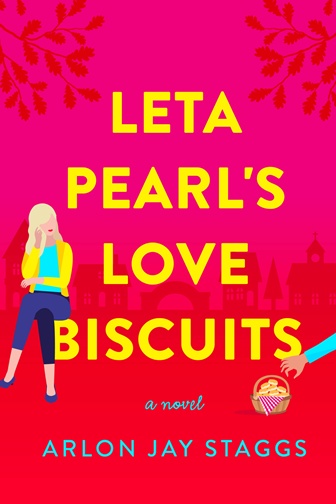
Professionally done! Koehler Books designed the cover in-house, and they were fantastic to work with. I got to give a lot of input throughout the process, and they really listened. On top of that, they held a public cover vote where readers could weigh in on the final design. It turned into a big engagement moment on social media—and it was so fun to see people connect with the visual side of the story. The final cover felt like the perfect match for the tone of the book: warm, Southern, a little nostalgic, and just whimsical enough.
Do you have a marketing plan for the book or are you just winging it?
Oh, I have a plan. I might be winging it with intention now and then, but there’s a solid foundation behind the scenes. I’ve been working with Method Agency, who coach and train authors in a proven marketing system—and that structure has been a game-changer. I’ve built out a content strategy, developed detailed reader personas (Susan and Elliot, I see you), and created a newsletter and email list with real engagement behind it.
I’ve also booked live events, hired an excellent publicist, and leaned into social media.
Any advice that you would like to give to other newbies considering becoming Indie authors?
Know your voice, protect your weirdness, and don’t be afraid to build the career you want—not just the one the industry expects. Take your time. Sometimes the waiting is where the story finds its shape. And surround yourself with people who believe in your work as much as you do—it makes all the difference.
Also? Give traditional publishing a shot—even if you think you don’t want to go that route. Submitting yourself to that brutal process will teach you a ton—not just about your craft, but about the business side of writing. You’ll learn how to pitch your work, how to take feedback, how to clarify your audience, and how to keep going when the door doesn’t open on the first knock. Then, when it’s time to make a decision about your publishing path, you’ll be choosing from a place of power and experience—not guessing.

About You
Where did you grow up?
I grew up in a little town called St. Florian, Alabama (pronounced “Saint flow-REEN”) which is just outside Florence—part of the Muscle Shoals area in the northwest corner of the state. It’s a small town with a big musical legacy and even bigger personalities. That place is stitched into everything I write.
Where do you live now?
These days, my husband and I split our time between Santa Rosa Beach, Florida (along the 30A coastline) and San Diego, California. I like to say we go back and forth between sweet tea and green juice.
What would you like readers to know about you?
I’m a Southern storyteller at heart, drawn to humor, heartache, and the beautifully complicated spaces in between. I worked as a copywriter for over twenty years, taught writing at the college level, and went to law school once upon a time—because why not add that to the resume? Now I’m a debut novelist at 50, which just proves it’s never too late to bet on yourself.
I also preach—literally. I’m a licensed lay preacher in the Episcopal Church, which means I often find myself behind a pulpit trying to say something inspiring. That lens—grace, doubt, love, redemption—shows up in my fiction too, even when I’m writing about biscuits and small-town scandal.
I don’t mean to be, but I imagine I’m a contradiction in a lot of ways. I believe in magic and structure, reverence and irreverence, Scripture and sarcasm. I grew up in a conservative church and now live in both Florida and California with my husband and our rescue dogs.
Also, I’m not above posting a shirtless reel to sell a book. Gotta keep things interesting.
What are you working on now?
I’m working on my next novel, Dottie’s Boys. It’s another Southern story—equal parts funny and heartfelt—about two childhood best friends who learn they’ve been named in a will with a strange stipulation: they’ll inherit a fortune, but only if they’re both married by the time the woman dies. The problem? One’s engaged to the wrong person, and the other has a history of sabotaging every relationship—especially the one he secretly wishes he had. It’s a story about love, loyalty, and the shadows of our pasts—told, of course, with a wink and a drawl.
End of Interview:
For more from Arlon Jay Staggs visit his website and follow him on Instagram, Facebook, Twitter, and Tik Tok.
Get your copy of Leta Pearl’s Love Biscuits from Amazon US or Amazon UK.