One of my favorite authors of all time, Simone de Beauvoir, taught me how write philosophical fiction about women’s lives. She inspired me to write things that are fun to read, but that also explore important themes and questions.
Patricia Leavy – 15 September 2025
The Back Flap
Legendary actor Finn Forrester and his wife philosopher Ella Sinclair Forrester met on the location shoot for Jean Mercier’s film Celebration. The world has been captivated by their fairy-tale romance since Finn famously proposed on the red carpet at the Cannes Film Festival. As the couple now prepares to celebrate their thirtieth wedding anniversary, they wonder if their children will ever find love.
Eldest daughter Betty is excelling in a medical residency program in New York City—and has convinced herself that distancing herself from emotions is the path to success. Youngest son Albert, a recent college graduate, is trying to find his footing in Boston as he struggles with his identity. Free-spirited Georgia, her mother’s spitting image and an actress following in her father’s footsteps, has been cast in Jean Mercier’s final film, mysteriously titled Beauty. When she arrives on set in Iceland and meets her costar, sparks fly. Is history repeating itself? How has growing up in the shadow of the world’s most iconic love story affected each of the Forrester children?
About the book
What is the book about?
It follows the three adult children of a Hollywood golden couple. Each one is affected by the shadow of their parents’ iconic romance, and each is struggling with their own personal life. The middle child, Georgia, has the main storyline. She’s an actress starring in a Jean Mercier film that’s shooting on location in Iceland and much of the book centers on the process of making the film and a romance that ensues on set. Really, Cinematic Destinies is about love, friendship, family, beauty, and art. Mostly, it’s about what it means to live life and to do so well.
When did you start writing the book?
It started during the lockdown. Like so many others, I was bored at home, binge watching movies, double fisting potato chips, and filled with existential doom. I wanted to escape to someplace joyful, romantic, and creative. Someplace affectionate where you could hug and kiss people without fear of killing them. Due to the pandemic, I was thinking about the big questions of life, and so I decided to write a novel following a group making a film about the meaning of life and living together in seclusion. Given the topic of the film, Ella, my heroine is a philosopher. When Ella arrives on set in Sweden Hollywood star Finn Forrester is instantly enchanted by her and a romance ensues. That book is called The Location Shoot. I loved writing it so much that although the lockdown was over, my desire to spend more time with the characters was not. So next came, After the Red Carpet, and finally, Cinematic Destinies.
How long did it take you to write it?
I don’t really keep track, but I’d say about a couple months. Revisions always take longer.
Where did you get the idea from?
Each book in the trilogy inspired the next. The second book, After the Red Carpet, sees Ella and Finn building a life together and starting a family in the shadow of Hollywood. I wanted to explore the lives of those three children when they were grown up. How would the public fascination with their parents’ love story affect them each and their love stories? Ella was always fascinated by what love might look like and feel like over a lifetime, so I also wanted to know how that unfolded for her and Finn. Finally, what ever happened to Jean, the filmmaker that brought them all together in the first place? What does it mean to create art for a lifetime? How might one look back? All these questions inspired Cinematic Destinies, my personal favorite in the trilogy.
Were there any parts of the book where you struggled?
Not really. It was a joy to write. There were some parts that required more time and thought. For example, Albert’s storyline required sensitivity, so I took extra care with it.
What came easily?
The scenes with Ella and Finn, since at this point I know them so well.
Are your characters entirely fictitious or have you borrowed from real world people you know?
The characters are all completely from my imagination except for the filmmaker, Jean Mercier, who while fictional, was partly inspired by people I’ve known.
We all know how important it is for writers to read. Are there any particular authors that have influenced how you write and, if so, how have they influenced you?
Carolyn Ellis and Laurel Richardson have taught me to be vulnerable and brave, and how to weave social commentary into creative writing. Meg Donahue has shown me how to write with compassion and give characters depth. Colleen Hoover reminds me to be honest about women’s experiences, including their fantasies. Candace Bushnell reminds me to always have fun with it, and balance the tender moments with humor, lightness, and a little irreverence. One of my favorite authors of all time, Simone de Beauvoir, taught me how write philosophical fiction about women’s lives. She inspired me to write things that are fun to read, but that also explore important themes and questions.
Do you have a target reader?
Fans of romance and women’s fiction. Anyone who enjoys a Hollywood, celebrity story. My ideal reader loves books about love—romantic, whimsical, aspirational love stories written for smart readers who like some witty banter and big ideas rolled into the silk sheets. Beyond that, any reader looking for a light, feel-good read with some food for thought.
About Writing
Do you have a writing process? If so can you please describe it?
It always starts with an idea. These can from anywhere: a personal experience, something I see or hear, a topic or theme I’m interested in, a world event, a piece of art like a song, movie, or painting, or sometimes it’s a line of dialogue or a conversation I hear in my mind. Whatever the idea is, I stew on it until it crystalizes. Once I can see an entire scene unfold in my mind like a film, or sometimes an entire novel, I start writing, or in some cases doing research to enable me to write. Creativity never happens exactly the same way twice which is why I’m still so in love with writing.
Do you outline? If so, do you do so extensively or just chapter headings and a couple of sentences?
I outline extensively for nonfiction. With fiction, I fly by the seat of my pants. When I have an idea that I feel is really there—at least par baked—I just start writing. I have written novels chronologically, but more often, I write scenes, out of order, and then stitch them together.
Do you edit as you go or wait until you’ve finished?
I edit as I go, usually dozens of times per chapter or even per scene. I solicit feedback chapter by chapter and edit more. Then when I have a full draft, I edit many more times before it goes to a copyeditor, which always leads to more revisions.
Do you listen to music while you write? If yes, what gets the fingers tapping?
I don’t, but I listen to music just about every waking moment when I’m not writing. I especially love women singer-songwriters. You can learn a lot about structure, using repetition purposefully, developing tone, building emotionality, writing with specificity but also with metaphor and symbolism, and writing from the perspectives of girls and women.
About Publishing
Did you submit your work to Agents?
I have, but decided it was not the right path for me. You never know what the future will hold, but these days I’m happy where I am.
What made you decide to go Indie, whether self-publishing or with an indie publisher? Was it a particular event or a gradual process?
I’ve worked with all different kinds of publishers over the years. Early in my career I worked with one of the biggest. Let’s just say, it didn’t live up to my fantasies. Since then, I’ve worked with all different kinds of publishers. My best experiences have consistently been with indie presses, some small, some larger. It’s more personal, more humanizing. There’s more support for what’s always a bumpy journey. You feel like you’re in it together. I’m glad to be involved in all phases of the process, from production to promotion. I also like having more ownership over my work—after two decades and 50 plus books—that’s become vitally important to me as an artist. The funny thing is, over the course of my career, my most successful books have always been with indie presses. It’s so counter to what people assume.
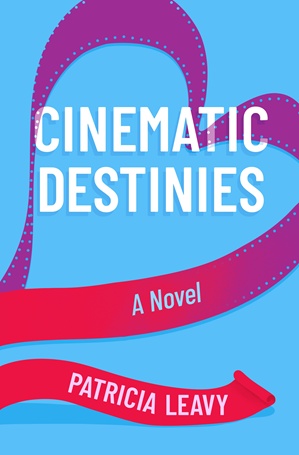
Did you get your book cover professionally done or did you do it yourself?
It was professionally done. The designer came up with the concept. I absolutely love the result.
Do you have a marketing plan for the book or are you just winging it?
I was fortunate to be able to hire a terrific publicity team as well as a marketing expert. I do also have my own marketing plan, which I do for all my books, regardless of the publisher and any outside help.
Any advice that you would like to give to other newbies considering becoming Indie authors?
Learn as much as you can about the process. Understand that you’ll need to wear two hats, as a writer and as an author working in the publishing industry. They’re not the same thing. Writers spend their days in story worlds. It’s very private. Authors negotiate, pitch themselves and their work, deal with critique, and more. It’s very public. Try to find ways to protect the creative side of yourself, while doing what you need to do to be an author. Have fun with it.
About You
Where did you grow up?
Outside of Boston.
Where do you live now?
Maine, not far from the sea.
What would you like readers to know about you?
I had an entirely different career. I wanted to be a writer since I was very little but was too afraid to pursue it. Instead, I became a professor. Yet writing was my true passion. For years, I pursued it as a side hustle until I finally made the leap more than a decade ago. I’ve never looked back. I share this so that others will know, it’s never too late to follow your bliss.
What are you working on now?
I have a nonfiction book, part memoir part guidebook, called The Artist Academic coming out in October. It’s the first book I’ve written of this kind and I’m excited to share it. My next novel comes out March 24 and it’s called Twinkle of Doubt. It’s the second book in a big series I’ve written called The Celestial Bodies Romances which follows the healing love story of a novelist and federal agent. For people interested in the series, the lead title Shooting Stars Above is available everywhere books are sold. There are many other novels done and ready to be rolled out, but I’m keeping them under wraps for now. I promise more romances and a few surprises.
End of Interview:
For more from Patricia Leavey visit her website and follow her on Instagram, Facebook, and Twitter.
Get your copy of Cinematic Destinies from Amazon US.